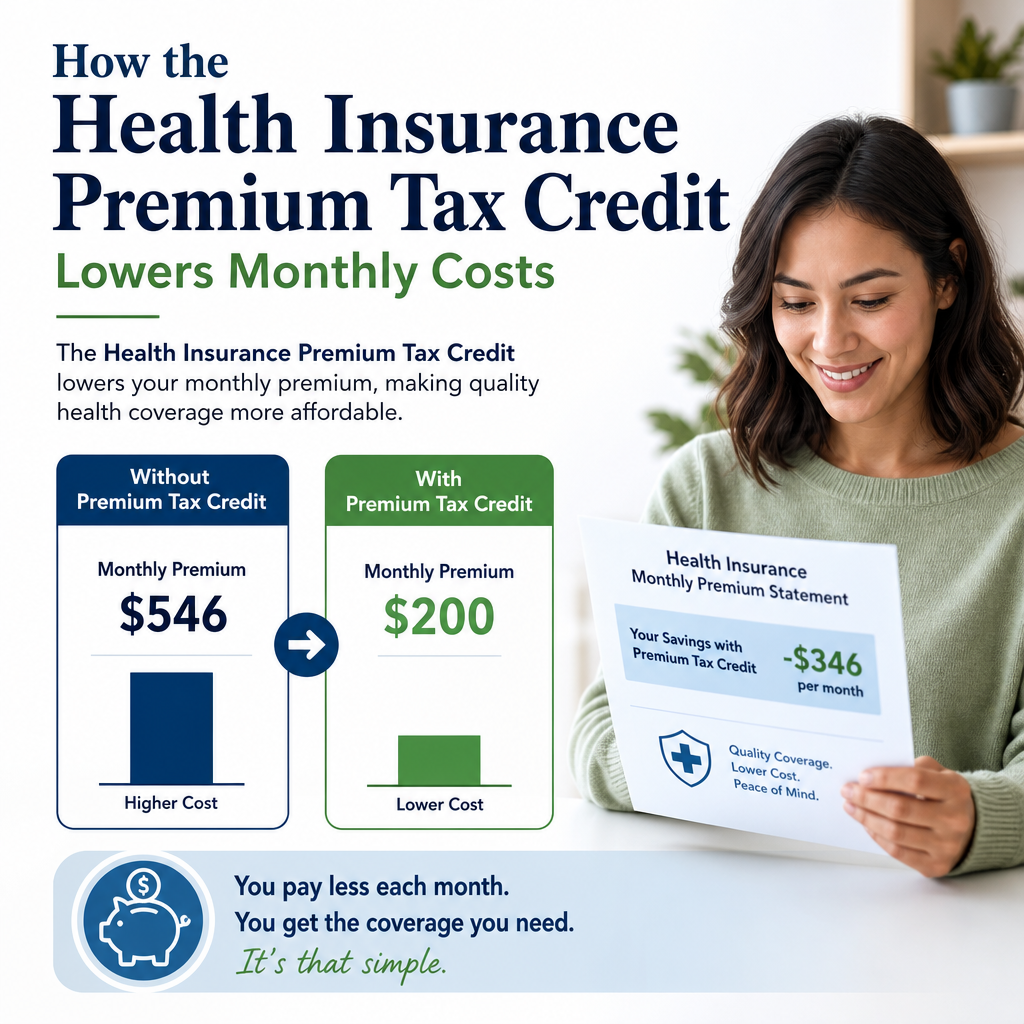
How the Health Insurance Premium Tax Credit Lowers Monthly Costs
The health insurance premium tax credit can make Marketplace coverage much more affordable by lowering what you pay each month. If you qualify, this federal credit helps stretch your budget while still giving you access to the health plan you need.
By: Emily Adams on July 29, 2026
Health insurance can be expensive, especially when you’re buying coverage on your own through the Marketplace. For many households, the health insurance premium tax credit is what makes monthly premiums manageable. This federal tax credit helps lower the cost of qualifying health plans, making coverage more accessible for millions of people.
If you’ve ever wondered why one person pays far less for the same type of Marketplace plan than another, the answer is often the premium tax credit. Understanding how it works can help you choose a plan with confidence, avoid surprises at tax time, and make the most of the savings available to you.
What Is the Health Insurance Premium Tax Credit?
The health insurance premium tax credit is a federal credit that helps eligible individuals and families pay for health insurance purchased through the Health Insurance Marketplace. Its main purpose is simple: reduce your monthly premium costs.
Unlike a deduction, which lowers taxable income, a tax credit directly lowers the amount of tax you owe. In the case of the premium tax credit, the savings can also be applied in advance to reduce your monthly insurance bill.
How the credit works in practice
When you apply for Marketplace coverage, the Marketplace estimates whether you qualify for the tax credit based on factors like:
Household income
Household size
Expected access to other health coverage
Where you live
If you qualify, you can choose to use the credit in one of two ways:
Apply it in advance to lower your monthly premium payments.
Claim it when you file your federal tax return and receive the credit later.
Most people who qualify choose advance payments because it reduces what they owe each month.
How the Health Insurance Premium Tax Credit Lowers Monthly Costs
The biggest benefit of the health insurance premium tax credit is immediate monthly savings. Instead of paying the full sticker price of your Marketplace plan, the federal government pays part of the premium directly to your insurer on your behalf.
That means your monthly bill is lower from the start.
Example of monthly savings
Let’s say your Marketplace plan costs $650 per month before any assistance. If your premium tax credit is $400 per month, you would only pay $250 each month.
That’s not a discount from the insurer. It’s a tax credit helping cover a portion of the premium, which lowers your out-of-pocket monthly cost.
Why the savings vary
The amount you receive depends on several factors, including:
Your projected annual household income
The cost of benchmark plans in your area
Your family size
Your eligibility for other coverage options
Because the credit is tied to income and local plan prices, two people with similar incomes may receive different amounts depending on where they live or how many people are in their household.
Who Qualifies for the Premium Tax Credit?
Not everyone is eligible for the premium tax credit. To qualify, you generally must meet several conditions.
Common eligibility requirements
You may qualify if you:
Buy coverage through the Health Insurance Marketplace
Are not eligible for affordable employer-sponsored coverage
Are not enrolled in Medicare, Medicaid, or certain other coverage types
File taxes using the proper filing status
Have household income within the eligible range for Marketplace assistance
Income matters
Your household income plays a major role in determining eligibility. The Marketplace uses a measure based on your expected annual income for the year of coverage. If your income changes during the year, your credit amount may change too.
That’s why it’s important to report updates promptly if you:
Get a raise
Lose a job
Start earning freelance income
Add or remove a household member
Move to a new state
Keeping your information current helps prevent underpayment or repayment issues at tax time.
Advance Premium Tax Credit vs. Tax Time Credit
One of the most important things to understand is the difference between using the credit in advance and claiming it later on your tax return.
Advance Premium Tax Credit
This option lowers your monthly premium right away. The Marketplace sends the credit amount directly to your insurance company, and you pay the difference.
This is the most common choice for people who need lower monthly bills.
Credit claimed on your tax return
If you don’t use the advance credit, you may claim the full amount when you file your taxes. This can result in a larger refund or a lower tax bill, depending on your situation.
Reconciling the credit
At tax time, you’ll compare:
The amount of premium tax credit you were allowed to receive
The amount that was actually paid in advance
If your income was lower than expected, you might qualify for more credit than was paid in advance. If your income ended up higher, you may have to repay some or all of the excess advance credit.
This is why accurate income estimates matter so much.
How to Estimate Your Savings
Estimating your savings before you enroll can help you choose a plan that fits your budget.
Steps to estimate your premium tax credit
Estimate your annual household income
Include wages, self-employment income, unemployment benefits, and other taxable income sources.
Count your household members
The number of people on your tax return affects the credit calculation.
Compare Marketplace plans
Premium costs vary by metal tier, insurer, and location.
Look at the benchmark plan
The credit is often based on the cost of a benchmark Silver plan in your area.
Use the Marketplace calculator
The official Marketplace estimator can help you get a realistic idea of what you may owe each month.
Practical budgeting tip
A plan with a lower premium is not always the cheapest overall choice. Consider:
Monthly premium after the tax credit
Deductible
Copays
Prescription coverage
Out-of-pocket maximum
In some cases, paying a slightly higher premium for a better plan may save money later if you need care.
Common Mistakes to Avoid
The health insurance premium tax credit can provide meaningful relief, but mistakes can reduce your savings or create repayment problems later.
1. Underestimating or overestimating income
If your estimated income is too low, you may receive more advance credit than you should. If it’s too high, you may miss out on savings during the year.
Try to estimate income as accurately as possible, especially if you have variable earnings.
2. Not reporting life changes
Marriage, divorce, a new baby, a job change, or a move can all affect your eligibility and credit amount. Reporting these changes quickly helps keep your subsidy accurate.
3. Ignoring the annual tax filing requirement
If you receive advance premium tax credits, you must file a federal tax return and reconcile the credit. Missing this step can affect future eligibility.
4. Choosing a plan based only on the premium
A lower premium is attractive, but the cheapest plan may not be the best fit. Look at the full picture, including the deductible and network.
How the Credit Helps Different Types of Households
The premium tax credit can help many kinds of households, not just one type of family.
Individuals buying coverage alone
If you’re self-employed, between jobs, or not covered by an employer, the credit can significantly lower the cost of an individual Marketplace plan.
Families with children
Families often benefit because household size increases the likelihood of eligibility and can increase the total amount of assistance available.
Early retirees
People who retire before Medicare eligibility often rely on Marketplace plans. The premium tax credit can make that transition more affordable.
Freelancers and gig workers
Self-employed workers often have fluctuating income, so the credit can be especially valuable. Just be sure to update your projected income if your earnings change.
Why the Premium Tax Credit Matters Beyond the Monthly Bill
The most obvious benefit is lower monthly premiums, but the credit also creates broader financial stability.
It supports continuous coverage
When coverage is more affordable, more people can stay insured year-round instead of going without care.
It helps reduce financial stress
Health insurance costs can crowd out other essentials. Lower monthly premiums may free up room in your budget for:
Rent
Groceries
Childcare
Transportation
Emergency savings
It can make better coverage more realistic
Without the premium tax credit, some households may feel forced into bare-bones plans. With assistance, they may be able to choose coverage that better fits their medical and financial needs.
Tips for Getting the Most from the Credit
To use the health insurance premium tax credit effectively, keep these best practices in mind.
Review your Marketplace application carefully
Make sure your income, household size, and filing status are correct before you enroll.
Update your account during the year
If your situation changes, report it as soon as possible. This can help prevent large discrepancies at tax time.
Compare plans, not just prices
Sometimes a Silver plan with a moderate premium tax credit may offer the best balance between monthly cost and expected medical expenses.
Save your tax documents
Keep records such as:
Form 1095-A
Income documentation
Notices from the Marketplace
Tax returns
These documents make it easier to reconcile the credit correctly.
Frequently Asked Questions
What is the health insurance premium tax credit?
The health insurance premium tax credit is a federal subsidy that helps eligible people lower the cost of Marketplace health insurance premiums. You can apply it in advance to reduce monthly payments or claim it later on your tax return.
Can I get the premium tax credit if I have a job?
Possibly. Having a job does not automatically disqualify you. What matters is whether your employer offers affordable health coverage and whether your household income falls within the eligibility rules.
Do I have to pay back the advance premium tax credit?
Maybe. If your final household income is higher than expected, you may need to repay some or all of the advance credit when you file taxes. If your income is lower, you may receive an additional credit.
Can the premium tax credit lower my cost to zero?
In some cases, yes, but it depends on your income, family size, and the cost of plans in your area. Even when it doesn’t bring the premium to zero, it can still significantly reduce monthly costs.
What if my income changes after I enroll?
You should report the change to the Marketplace as soon as possible. Updating your income helps adjust your premium tax credit and reduces the chance of owing money at tax time.
The health insurance premium tax credit is one of the most important tools available for lowering the monthly cost of Marketplace coverage. By reducing what you pay each month, it can make health insurance more affordable for individuals, families, freelancers, retirees, and others who do not have access to low-cost employer coverage.
The key to getting the most value from this credit is accuracy. Estimate your income carefully, update your Marketplace account when life changes happen, and compare plans based on total cost—not just the premium. A smart choice can save money month after month while still giving you coverage that fits your health needs and budget.
If you’re shopping for health insurance, don’t overlook this credit. For many households, it is the difference between struggling to afford coverage and having a plan that feels sustainable. Learning how it works is the first step toward making a more confident, informed insurance decision.
Emily A, holds a Master's degree in Public Administration (MPA) and has over 7 years of experience researching federal and state assistance programs. She writes educational content focused on government benefits, public policy, and community resources, using information from official agencies to help readers understand available programs and eligibility requirements.