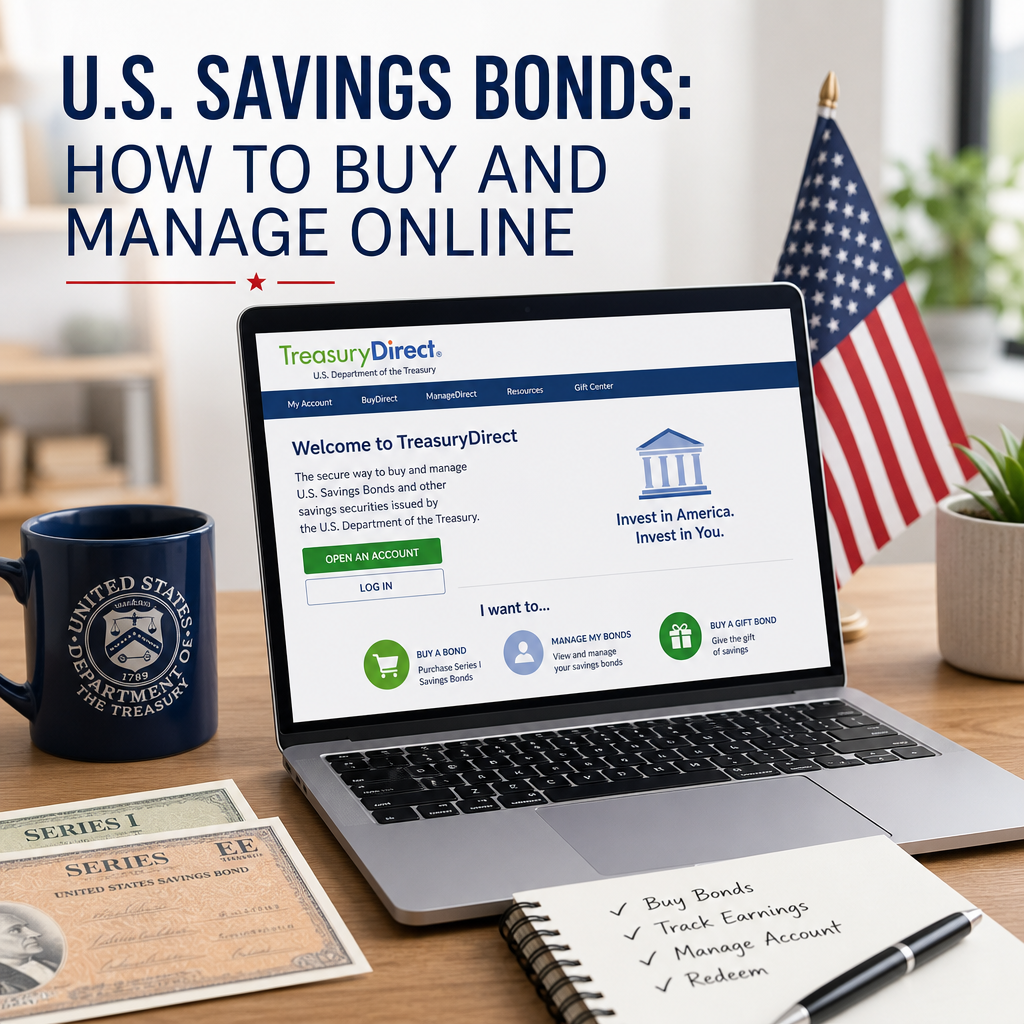
U.S. savings bonds offer a simple, low-risk way to grow your money, and buying them online makes the process even easier. With a Treasury account, you can purchase, track, and manage US savings bonds from one secure place without any paper certificates.
By: Mary Mitchell on July 28, 2026
U.S. savings bonds remain one of the most accessible, low-risk ways to save money for the future, and today the process is easier than ever. With U.S. Savings Bonds: How to Buy and Manage Them Online, you can purchase eligible bonds, track their value, and manage your account without paper certificates or trips to the bank. Whether you’re saving for long-term goals, building a safety net, or giving a meaningful gift, online tools can simplify the entire process.
In this guide, you’ll learn how savings bonds work, how to buy them through the Treasury’s online system, how to manage them after purchase, and what to know before getting started.
What Are U.S. Savings Bonds?
U.S. savings bonds are government-backed debt securities issued by the U.S. Treasury. When you buy one, you’re lending money to the federal government in exchange for future value. They’re designed for people who want a safe, predictable savings option rather than a high-risk investment.
The two main types of savings bonds
Today, most individual investors can buy:
Series EE savings bonds
Series I savings bonds
Here’s a quick breakdown:
Series EE Savings Bonds
Series EE bonds earn a fixed rate of interest. The Treasury guarantees that they will double in value after 20 years if held that long, even if the fixed rate alone wouldn’t normally reach that amount.
Series I Savings Bonds
Series I bonds are designed to help protect savings from inflation. Their interest rate includes:
A fixed rate
An inflation-adjusted rate that changes every six months
That makes them attractive during periods when inflation is a concern.
Why Buy Savings Bonds Online?
Buying savings bonds online is convenient, secure, and easy to monitor. The Treasury’s online platform gives you direct access to your holdings without relying on paper certificates.
Benefits of managing bonds digitally
Some of the biggest advantages include:
24/7 account access
Fast electronic purchases
Secure recordkeeping
Easy tracking of bond value
No risk of losing paper certificates
Simple redemption when eligible
For many savers, the biggest benefit is control. You can review your account, schedule transactions, and keep your investment records in one place.
How to Buy U.S. Savings Bonds Online
The official way to buy eligible savings bonds online is through TreasuryDirect, the U.S. Department of the Treasury’s secure website.
Step 1: Create a TreasuryDirect account
To begin, visit TreasuryDirect and open an account. You’ll need to provide personal information such as:
Your name
Social Security number or Taxpayer Identification Number
U.S. address
Bank account information for funding purchases
Email address and security details
Use accurate information because your account must match your legal identity.
Step 2: Link a bank account
TreasuryDirect uses an external bank account to transfer funds for purchases. You’ll enter your routing and account numbers during setup. This account is also used later if you redeem bonds electronically and request a deposit.
Step 3: Choose the type of bond
Once your account is open, you can select the bond type you want to buy. For individual investors, the main choices are usually:
Series EE bonds
Series I bonds
Think about your goals:
Choose EE bonds if you want a fixed-rate savings option.
Choose I bonds if you want inflation protection and a long-term savings tool.
Step 4: Decide on the purchase amount
You can buy bonds in increments set by the Treasury. The annual purchase limits are important, especially for Series I bonds, which have specific yearly limits per Social Security number.
If you’re planning to buy for yourself and a family member, remember that each person has separate limits.
Step 5: Submit your purchase
After reviewing the details, confirm the purchase. TreasuryDirect will process the transaction and issue the bond electronically to your account.
How to Manage Savings Bonds Online
Buying the bond is only the first step. Online management helps you keep track of value, interest, and redemption options.
View your bond portfolio
TreasuryDirect provides an account dashboard where you can see:
Bonds you own
Issue dates
Current value
Interest history
Maturity or redemption eligibility dates
This makes it much easier to manage multiple bonds over time.
Check accrued interest and value
Savings bonds grow over time, and their current worth may be different from the original purchase price. TreasuryDirect allows you to estimate or view the current value of your bond portfolio so you can understand how your savings are progressing.
Update account information
If your address, email, or bank account changes, update your TreasuryDirect profile promptly. Keeping your records current helps prevent delays with notices, redemptions, and account access.
Redeem bonds when eligible
When a bond reaches the appropriate holding period, you may redeem it through TreasuryDirect. The proceeds are typically deposited into your linked bank account.
Before redeeming, check:
Whether the bond is still subject to an early-redemption penalty
Whether the bond has reached final maturity
How the payout fits your financial goals
Important Rules and Limits to Know
Before you buy, it helps to understand the basic rules that apply to savings bonds.
Purchase limits
Savings bond purchase limits can change, so always verify current rules on the Treasury’s website. This is especially important for Series I bonds, which have annual limits.
Holding period rules
Savings bonds are meant for medium- to long-term savings. If you cash them in too early, you may lose some interest.
For example:
Series EE bonds generally must be held at least one year before redemption
Series I bonds also have a minimum holding period, and redemption before five years can reduce earnings
Tax considerations
Interest from U.S. savings bonds is subject to federal income tax, but generally not state or local income tax. Depending on how you use the bond, you may owe tax when you redeem it or when it reaches maturity, unless you qualify for certain education-related exclusions.
Because tax rules can be nuanced, it’s wise to review the latest guidance from the IRS.
Buying Savings Bonds as Gifts or for Children
One useful feature of TreasuryDirect is the ability to buy bonds as gifts or for another person, if they meet the requirements. This can be a thoughtful way to give a long-term financial gift for birthdays, graduations, or holidays.
Common reasons to gift a bond
A child’s future education expenses
A newborn’s long-term savings
A graduation gift with lasting value
A simple way to introduce someone to saving
What to keep in mind
Gift bonds must be handled carefully:
The recipient usually needs a TreasuryDirect account to receive the bond
Ownership and registration must be entered correctly
The bond stays in the giver’s “gift box” until delivery
If you’re planning a savings bond gift, double-check the recipient’s information before submitting the purchase.
Best Practices for Managing Savings Bonds Online
A few simple habits can make online bond management easier and more secure.
Keep your login credentials safe
Because TreasuryDirect contains financial information, protect your account with strong passwords and secure access practices. Avoid sharing login details and review account activity regularly.
Store backup records
Even though your bonds are electronic, it’s smart to keep a personal record of:
Bond serial numbers or registration details
Purchase dates
Beneficiary information
Redemption dates and values
This can be useful for estate planning, tax reporting, or simple recordkeeping.
Review your goals once a year
A bond may fit one stage of life better than another. Each year, consider whether your savings bonds still match your goals. Ask yourself:
Do I want to keep holding this bond?
Is the bond nearing maturity?
Would I benefit from shifting to another savings strategy?
Am I using these bonds for a specific future expense?
Use savings bonds as part of a broader plan
Savings bonds can complement other financial tools such as:
Emergency savings accounts
Retirement accounts
Certificates of deposit
Brokerage investments
College savings plans
They’re often best viewed as one piece of a balanced financial picture.
Common Mistakes to Avoid
Even though online management is straightforward, a few mistakes can create headaches.
Entering incorrect account information
Typos in your Social Security number, bank routing number, or registration details can delay purchases and make account recovery more difficult.
Ignoring holding periods
Cashing in too early may reduce your return. Before redeeming, check the bond’s age and whether penalties apply.
Forgetting about tax reporting
Savings bond interest may need to be reported, depending on the situation. Keep good records and review IRS guidance if you’re unsure.
Losing track of beneficiary or registration details
Correct registration matters, especially if the bond is meant for a child or part of an estate plan. Review ownership details periodically.
Is TreasuryDirect Secure?
TreasuryDirect is an official U.S. government platform, and it uses security measures designed to protect user accounts and financial data. Still, account security depends partly on the user.
Good security habits
Use a strong, unique password
Don’t access your account on public devices
Sign out after each session
Monitor email for suspicious messages
Verify that you are on the official TreasuryDirect site before entering credentials
If you ever suspect unauthorized access, contact TreasuryDirect immediately.
How Savings Bonds Fit Into Long-Term Saving
Savings bonds are not designed to produce fast gains. Instead, they work well for people who want a steady, government-backed savings vehicle with clear rules and limited risk.
They may be a good fit if you want to:
Preserve principal
Save for medium- to long-term goals
Protect part of your money from inflation
Create a simple, low-maintenance savings strategy
They may be less ideal if you need immediate access to cash or want higher growth potential. That’s why understanding your time horizon matters.
Frequently Asked Questions
1. Can I buy U.S. savings bonds directly from my bank online?
In most cases, individual investors buy eligible U.S. savings bonds through TreasuryDirect, the U.S. Treasury’s official online system. Some older paper bond programs have been phased out, so TreasuryDirect is the main method for electronic purchases today.
2. How long do I need to hold a savings bond before cashing it in?
Savings bonds have minimum holding periods. If you redeem too early, you may lose interest. Series EE and Series I bonds are both intended for long-term savings, so check the exact redemption rules before cashing out.
3. Do savings bonds earn interest every month?
Savings bonds accrue interest over time, but the specific rate and timing depend on the bond type. Series EE bonds earn a fixed rate, while Series I bonds combine a fixed rate with an inflation-adjusted component that changes periodically.
4. Can I buy savings bonds for my child online?
Yes, you can purchase savings bonds for a child if you follow TreasuryDirect’s registration rules. The bond must be titled correctly, and the child or their guardian may need an account or a process for receiving the bond later.
5. Are savings bonds taxable?
The interest earned on U.S. savings bonds is subject to federal income tax. However, it is generally exempt from state and local income tax. In some cases, education-related tax benefits may apply if you meet IRS requirements.
U.S. savings bonds can be a smart, dependable addition to your financial plan, especially if you value safety, simplicity, and long-term growth. By using TreasuryDirect, you can buy eligible bonds online, monitor their progress, and redeem them when the time is right—all from one secure account.
The key is to understand the basics before you invest. Know the differences between Series EE and Series I bonds, pay attention to purchase and redemption rules, and keep your account information current. If you’re buying bonds for yourself, a child, or as a gift, online management makes the process far easier than it used to be.
For savers who want a government-backed option with clear terms and low hassle, savings bonds can be an excellent fit. Taking a few minutes to learn the process now can help you make more confident decisions later and get the most from your savings strategy.
Mary S, CFP®, is a Certified Financial Planner with over 12 years of experience in personal finance, retirement planning, and wealth management. She writes educational content that helps readers understand financial concepts and make informed decisions based on reliable information.