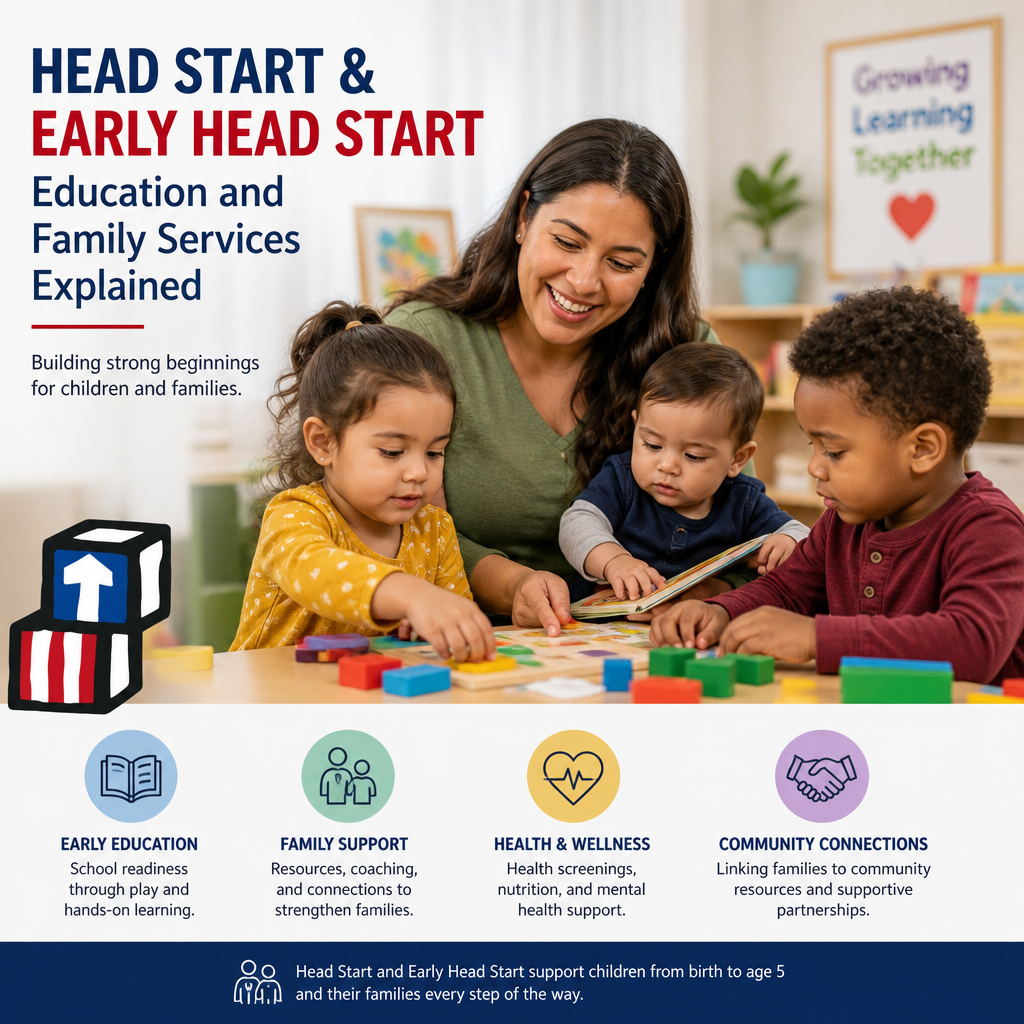
Head Start and Early Head Start Education and Family Services Explained
Head Start programs give young children a strong start by supporting early learning, healthy development, and family well-being all at once. In this guide, you’ll learn how Head Start and Early Head Start differ and what services families can expect from each.
By: Jennifer Collins - Education on July 28, 2026
When families begin looking for high-quality early childhood support, Head Start and Early Head Start often come up as trusted options. These federally funded programs do more than provide child care. They help young children build early learning skills, support healthy development, and connect families with practical resources that can make everyday life a little easier.
If you are trying to understand how these programs work, who they serve, and what services they offer, this guide breaks it down in plain language. You’ll learn the difference between Head Start and Early Head Start, what families can expect, and why these programs matter so much in a child’s early years.
What Are Head Start and Early Head Start?
Head Start and Early Head Start are national early childhood programs in the United States that support low-income families with young children. They are designed to promote school readiness, improve health and nutrition, and strengthen family well-being.
While both programs share the same mission, they serve different age groups:
Head Start typically serves children ages 3 to 5.
Early Head Start serves pregnant people, infants, toddlers, and their families.
These programs are not just about early education. They take a whole-child and whole-family approach, meaning they address learning, health, emotional development, and family needs together.
The Difference Between Head Start and Early Head Start
Understanding the difference between the two programs can help families find the right fit.
Head Start
Head Start focuses on preparing preschool-aged children for kindergarten and later school success. Children participate in learning activities that support:
Language and communication
Early math and literacy
Social and emotional development
Physical growth and motor skills
Problem-solving and curiosity
Head Start classrooms often follow a structured daily routine that includes group learning, outdoor play, meals, and rest time.
Early Head Start
Early Head Start serves children from birth to age 3, along with pregnant people and their families. Because babies and toddlers develop so quickly, the program emphasizes:
Responsive caregiving
Attachment and bonding
Early language development
Safe, nurturing environments
Parent coaching and support
Early Head Start may be offered in center-based settings, family child care homes, or through home visits, depending on the local program.
Education Services in Head Start and Early Head Start
One of the biggest strengths of Head Start and Early Head Start is their focus on early learning. These programs are built around the idea that children learn best through positive relationships, hands-on experiences, and consistent support.
Learning Through Play and Routine
Young children learn through play, exploration, and repetition. Head Start classrooms and Early Head Start environments use:
Songs, stories, and circle time
Blocks, puzzles, and art activities
Sensory play and outdoor exploration
Language-rich conversation
Teacher-guided and child-led activities
These experiences help children build the skills they need for school and life.
Individualized Learning
Each child develops at a different pace. Head Start and Early Head Start staff observe children closely and use that information to plan activities that match developmental needs. For example:
A toddler may work on naming objects and using gestures
A preschooler may practice writing their name or recognizing numbers
A child with delayed speech may receive extra language support
This individualized approach helps children grow with confidence.
Supporting School Readiness
School readiness does not mean only knowing letters and numbers. It also includes:
Following directions
Taking turns
Managing feelings
Building attention span
Working with others
Head Start and Early Head Start prepare children for the classroom experience by helping them develop these broader skills early.
Health, Nutrition, and Developmental Support
Education is only one part of the picture. Head Start and Early Head Start also place a strong emphasis on health and well-being.
Health Screenings and Care
Programs often help families connect with:
Vision and hearing screenings
Dental care
Immunizations
Well-child visits
Developmental screenings
These services can help identify concerns early, when support may be most effective.
Nutrition Services
Many programs provide healthy meals and snacks or help families access nutrition resources. Meals usually follow federal nutrition standards and are designed to support healthy growth and development.
For families, this can mean:
Reliable access to nutritious food during the day
Support for children with feeding challenges
Guidance on healthy eating habits
Developmental and Mental Health Support
Staff members are trained to notice developmental milestones and possible delays. They may also connect families with specialists for:
Speech and language concerns
Behavioral support
Social-emotional development
Mental health services for parents and children
This early support can be especially helpful for children who need extra encouragement or intervention.
Family Services: A Core Part of the Program
A defining feature of Head Start and Early Head Start is the way they support the entire family, not just the child. Programs recognize that children do better when their caregivers have access to stability, information, and resources.
Family Goal Setting
Many programs work with parents and caregivers to set personal goals. These might include:
Finding stable housing
Improving job skills
Continuing education
Managing health care needs
Building stronger routines at home
Family support staff may help connect caregivers with local services and check in on progress over time.
Parent Involvement
Parents and caregivers are considered partners in the program. Depending on the local site, families may be invited to:
Participate in classroom activities
Attend parent meetings
Help with program planning
Serve on policy councils or advisory committees
This involvement helps families stay connected to their child’s learning and have a voice in the program.
Resources and Referrals
Head Start and Early Head Start often help families access community resources such as:
Housing assistance
Food support
Transportation help
Adult education classes
Employment services
Parenting support
These referrals can reduce stress and help families build stronger foundations at home.
Who Is Eligible for Head Start and Early Head Start?
Eligibility is based primarily on family income, but other factors may also apply. Because local programs vary, families should contact their nearest provider for specific guidelines.
General Eligibility Factors
A family may qualify if they:
Meet income guidelines
Are experiencing homelessness
Receive public assistance in some cases
Have a child with a disability
Are pregnant and eligible for Early Head Start
Some programs reserve a portion of slots for children with special needs or for families facing significant challenges.
Why Families Should Apply Even If Unsure
If you are not sure whether you qualify, it is still worth applying or asking about the waitlist. Local programs often help families understand their options and may refer them to other services if they cannot enroll immediately.
How Head Start and Early Head Start Are Delivered
The structure of Head Start and Early Head Start can vary depending on the community. That flexibility allows programs to meet local needs more effectively.
Center-Based Programs
Children attend a classroom setting staffed by trained teachers and assistants. These programs often include:
Daily learning activities
Meals and snacks
Health and developmental support
Structured routines
Home-Based Programs
Some families, especially those in Early Head Start, receive home visits from staff. During visits, a home visitor may:
Share activities for parents and children
Model responsive caregiving
Discuss developmental milestones
Help set family goals
Home-based services can be especially useful for families who need flexibility or prefer support in the home environment.
Family Child Care Partnerships
In some communities, Head Start and Early Head Start partner with family child care providers. This can offer children a smaller setting with the support and oversight of the larger program.
What Families Can Expect Day to Day
A family joining Head Start and Early Head Start often wants to know what daily life looks like. While each program is different, there are some common experiences.
A Typical Day in Head Start
A preschool-aged child may take part in:
Arrival and greeting time
Circle time with songs and stories
Learning centers and guided play
Outdoor movement and gross motor activity
Lunch and conversation
Rest or quiet time
Afternoon activities and departure
A Typical Experience in Early Head Start
An infant or toddler may experience:
Warm, consistent caregiving
Feeding and diapering routines
Tummy time and movement activities
Simple language-rich interactions
Calm naps and predictable schedules
The goal is to create a secure environment where young children can thrive.
How Head Start and Early Head Start Support Parents and Caregivers
Parents often notice that the biggest benefit is not only what their child learns, but how the program supports the whole family.
Building Confidence
Caregivers often feel more confident when they understand child development better. Program staff may coach parents on:
Positive discipline
Language development
Healthy routines
Behavior management
Transitioning to preschool or kindergarten
Reducing Stress
When families have help with meals, referrals, transportation, or health screenings, day-to-day stress can ease. That support can make a meaningful difference, especially during challenging seasons.
Strengthening the Parent-Child Relationship
Early Head Start, in particular, focuses on the bond between caregiver and child. When parents feel supported, they are often better able to respond to their child with patience, consistency, and warmth.
Why Head Start and Early Head Start Matter
The early years are a crucial time for brain development, social growth, and learning. Quality early childhood services can create a strong start, especially for families facing barriers.
Head Start and Early Head Start matter because they:
Promote school readiness
Support healthy development
Connect families with essential resources
Encourage strong parent involvement
Identify concerns early
Help children build confidence and independence
For many families, the programs serve as an important bridge between early childhood and kindergarten, while also addressing broader needs at home.
How to Find a Local Program
If you are interested in enrolling your child, the best next step is to contact a local Head Start provider. Program availability varies by location, and application periods may differ.
Steps to Take
Search for programs in your area using the official Head Start locator.
Contact the program to ask about eligibility and openings.
Gather documents such as proof of income, age, and address if needed.
Ask whether the program offers center-based, home-based, or mixed services.
Apply as early as possible if there is a waitlist.
Being proactive can improve your chances of securing a slot and getting connected to services quickly.
Frequently Asked Questions
1. What is the difference between Head Start and Early Head Start?
Head Start generally serves children ages 3 to 5, while Early Head Start serves pregnant people, infants, toddlers, and their families. Both programs offer education, health, and family support, but Early Head Start focuses more on the earliest stages of development and caregiver-child bonding.
2. Is Head Start free?
Head Start and Early Head Start are federally funded, and many families do not pay tuition. However, eligibility rules apply, and services are based on available funding and local program capacity. Families should contact their local program to understand the details.
3. Do Head Start programs provide meals?
Yes, many Head Start and Early Head Start programs provide meals and snacks that follow nutrition guidelines. This helps ensure children receive healthy food during the day and supports good eating habits.
4. Can families who are homeless apply?
Yes. Families experiencing homelessness are often eligible for Head Start and Early Head Start services. The programs are designed to support children and families facing difficult circumstances, including housing instability.
5. How do I know if my child needs extra developmental support?
If your child is not meeting milestones, has trouble with speech, behavior, or social interaction, or if you simply have concerns, Head Start staff can help with developmental screening and referrals. Early support is often helpful, even when concerns seem small.
Head Start and Early Head Start provide much more than early learning opportunities. They support children’s development, help families access important health and nutrition services, and create stronger connections between home and school. For many families, these programs offer stability, encouragement, and practical tools during the most important years of a child’s growth.
Whether you are a parent exploring preschool options or a caregiver looking for support for an infant or toddler, understanding how these programs work can help you make informed decisions. The combination of education, family services, and community referrals makes Head Start and Early Head Start a valuable resource for eligible families across the country.
If you think your family may qualify, the best next step is to contact a local program, ask questions, and begin the application process. Early childhood support can make a lasting difference, and these programs are designed to help children and families start strong.
Jennifer, M.Ed., holds a degree in Higher Education Administration, with
a focus on U.S. college financial aid, admissions policy, and student
support systems. She researches and writes about scholarships, federal
aid programs, and the college planning process to help students and
families make informed, well-supported decisions.