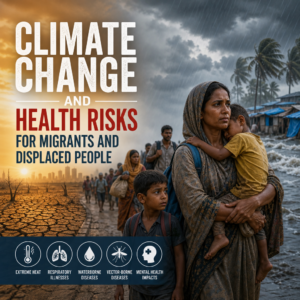
Climate Change and Health Risks for Migrants and Displaced People
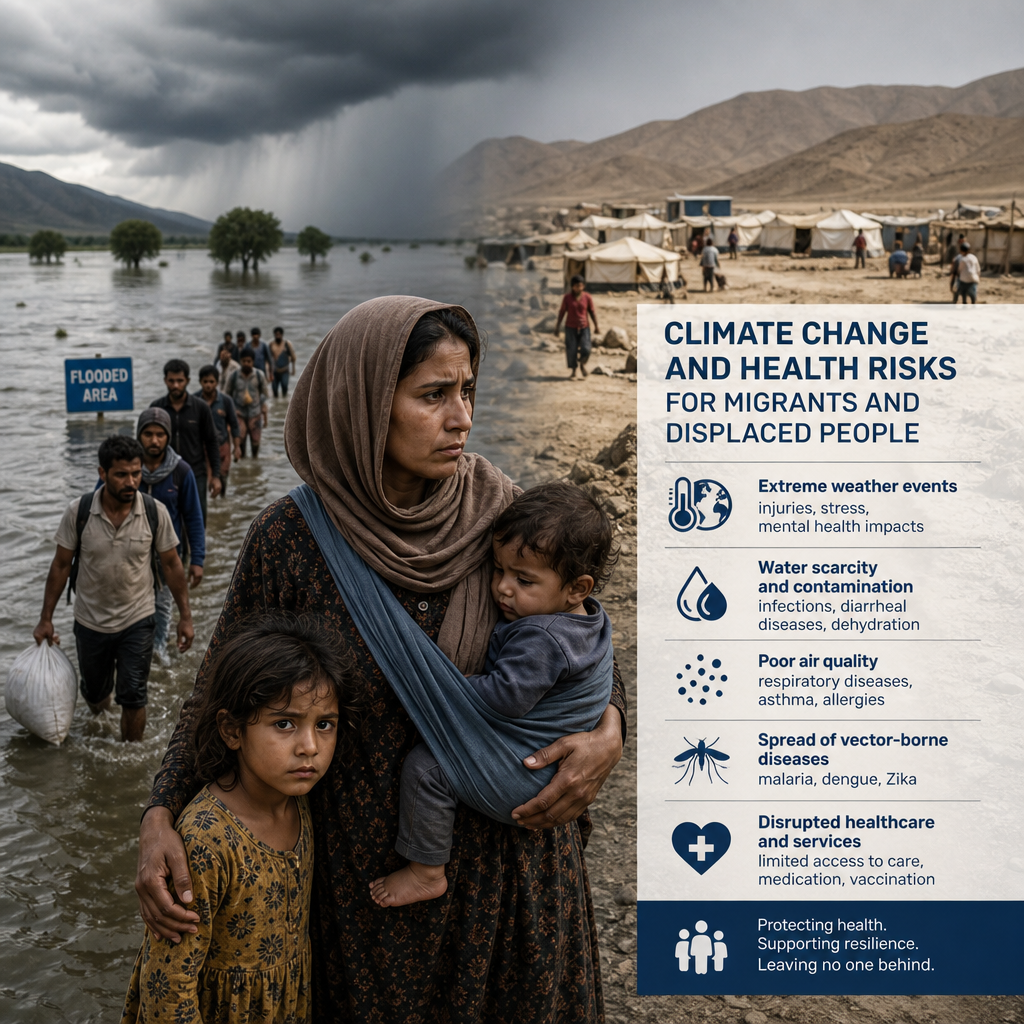
Climate change health risks are becoming a major concern for migrants and displaced people, turning displacement into a serious public health challenge. As extreme weather and environmental stress force more families to move, they often face unsafe conditions, interrupted care, and new threats along the way.
By: pedropadm2025@gmail.com on July 28, 2026
Climate change is no longer only an environmental issue. It is a public health emergency that is changing where people can live, how they travel, and what health risks they face along the way. For migrants and displaced people, the effects are especially severe. Rising temperatures, stronger storms, drought, flooding, and other climate-related disasters are increasing the number of people forced to move while also making that movement more dangerous.
Climate change and health risks for migrants and displaced people are now closely linked. People who leave home because of environmental stress often face interrupted medical care, crowded shelters, unsafe water, heat exposure, food insecurity, and psychological trauma. Many also travel through regions where local health systems are already stretched thin. Understanding these risks is essential for governments, aid organizations, healthcare workers, and communities that want to respond effectively and humanely.
Why Climate Change Is Increasing Displacement
Climate change affects migration in both direct and indirect ways. Some people are forced to leave suddenly after a hurricane, wildfire, flood, or landslide. Others move more gradually because repeated drought, crop failure, water scarcity, or coastal erosion makes daily life unsustainable.
Sudden-onset disasters
Extreme weather events can destroy homes, roads, clinics, and water systems in a matter of hours. In these situations, families may evacuate with little more than identification documents and a few personal items. That sudden disruption can make it hard to manage chronic illnesses, access medications, or keep up with vaccinations.
Slow-onset environmental stress
Not all displacement happens overnight. In many places, climate stress builds over time:
Farmers lose crops because of drought or shifting rainfall patterns
Communities face chronic flooding or saltwater intrusion
Heat waves make outdoor work unsafe
Water shortages reduce sanitation and food production
When livelihoods disappear, migration often becomes a survival strategy. But leaving home does not erase the health burden. In many cases, it simply shifts it.
Climate Change and Health Risks for Migrants and Displaced People
The health consequences of climate-driven migration are broad and interconnected. Migrants and displaced people often experience multiple risks at once, which can compound over time.
Heat-related illness
People on the move may spend long periods outdoors, in transit, or in shelters with poor ventilation. That increases the risk of dehydration, heat exhaustion, and heat stroke. Older adults, young children, pregnant people, and those with heart or kidney conditions are especially vulnerable.
Heat exposure can also worsen existing illnesses. Someone with asthma, diabetes, or high blood pressure may find it harder to stay stable in extreme temperatures, especially if they lack consistent access to care.
Infectious disease exposure
Crowded shelters, limited sanitation, and disrupted public health services can raise the risk of infectious disease outbreaks. Respiratory infections, diarrheal disease, and vector-borne illnesses can spread more easily when clean water, hygiene supplies, and routine medical services are unavailable.
Climate change also changes the geographic range of some disease-carrying insects and animals. Migrants moving into new areas may encounter unfamiliar health threats, especially if local systems are not prepared to provide screening or prevention.
Malnutrition and food insecurity
Climate change can damage crops, fisheries, and livestock systems, making food less available and more expensive. Displaced families may have to rely on emergency rations or irregular food access during transit or after arrival. Children, pregnant people, and older adults are at higher risk when diets become less reliable.
Malnutrition does not always appear immediately. Over time, it can weaken the immune system, delay recovery from illness, and make people more vulnerable to infection and fatigue.
Mental health impacts
Displacement is traumatic. Losing a home, community, income, and familiar routines can trigger anxiety, depression, grief, and post-traumatic stress. Climate-related displacement may also create a sense of uncertainty that never fully resolves, especially when families cannot return home or do not know whether their communities will still exist in the future.
Mental health needs are often overlooked in emergency settings, even though emotional distress can affect sleep, appetite, decision-making, and the ability to work or care for children.
Interrupted medical care
People with chronic conditions often face major barriers during displacement. They may lose prescriptions, medical records, mobility aids, or access to specialists. This can be dangerous for people who need:
Insulin or other diabetes treatment
Blood pressure medication
Prenatal care
Dialysis
HIV or tuberculosis treatment
Mental health support
Immunizations
Even short interruptions can lead to serious complications.
Why Migrants and Displaced People Face Higher Risk
Not everyone experiences climate-related migration in the same way. Health outcomes depend on age, income, legal status, language, disability, gender, and access to services.
Legal and administrative barriers
Undocumented migrants, asylum seekers, and people without secure legal status may avoid clinics or emergency services because they fear discrimination or deportation. This can delay diagnosis and treatment. It also makes public health outreach harder, especially when people move across multiple regions or borders.
Language and cultural barriers
Healthcare becomes more difficult when people cannot communicate symptoms, understand instructions, or navigate local systems. Without interpreters or culturally responsive care, even basic services can feel inaccessible.
Disability and chronic illness
People with disabilities often face additional barriers during evacuation and relocation. They may need assistive devices, accessible transportation, or personal care support. When these services are interrupted, health risks rise quickly.
Gender-based risks
Women and girls, as well as LGBTQ+ migrants and displaced people, may face increased risks of violence, exploitation, and harassment. These dangers can limit access to sanitation, shelter, and healthcare. Pregnancy and reproductive health needs may also be neglected in crisis settings.
How Health Systems Can Respond
Reducing the health risks of climate-related migration requires planning before emergencies happen. Health systems, public agencies, and humanitarian organizations all have a role to play.
Strengthen mobile and community-based care
When people are displaced, fixed clinics may be hard to reach. Mobile clinics, community health workers, telehealth options, and outreach programs can help fill the gap. These services are especially useful for vaccination, prenatal care, medication refills, and basic screening.
Make shelters safer and healthier
Emergency shelters should be designed with health in mind. That means:
Reliable access to drinking water
Handwashing and sanitation facilities
Cooling or heating as needed
Space to reduce overcrowding
Privacy for women, children, and families
Accessibility for people with disabilities
Shelters can also serve as critical points for health education and disease prevention.
Protect continuity of care
One of the simplest but most important strategies is helping displaced people keep access to medical information and treatment. That may include:
Portable paper or digital health records
Prescription refill coordination
Medication replacement plans
Referral systems across regions
Multilingual intake forms
These steps reduce the chance that a person with a manageable condition becomes critically ill because of a disruption in care.
Integrate mental health support
Mental health care should not be treated as optional. Crisis response teams can provide psychological first aid, peer support, counseling referrals, and trauma-informed services. Communities with strong social support networks often recover better, but they still need formal help.
Examples of Climate-Driven Health Pressures
To understand the issue more clearly, it helps to look at common real-world scenarios.
Flood displacement
After major flooding, families may spend days or weeks in temporary housing. Mold exposure, contaminated water, and crowded conditions can lead to respiratory problems and gastrointestinal illness. Children may miss school, while adults may lose work and income, increasing stress and food insecurity.
Drought migration
In areas affected by long-term drought, families may relocate in search of water, work, or farmland. During this transition, they may experience undernutrition, dehydration, and reduced access to healthcare. Rural health facilities in affected regions may also close or reduce services.
Heat-related movement
In places with extreme heat, people may be forced to migrate from regions where outdoor labor has become unsafe. Agricultural workers, construction workers, and informal laborers are especially exposed. Without protections, heat stress can become a chronic occupational health issue.
What Communities and Policymakers Can Do
Addressing climate change and health risks for migrants and displaced people requires more than emergency relief. It calls for long-term planning and fairness.
Invest in climate adaptation
Local and national governments can reduce displacement by supporting:
Flood control and drainage
Heat action plans
Drought-resistant agriculture
Water infrastructure
Early warning systems
Resilient healthcare facilities
Adaptation does not stop all migration, but it can reduce forced displacement and protect health.
Expand access to healthcare
Policies should make health services available regardless of migration status whenever possible. Public health improves when people can receive timely care without fear. This includes vaccination campaigns, maternal care, infectious disease screening, and chronic disease management.
Include migrants in emergency planning
Migrant and displaced communities should have a voice in planning. Their experience can help identify barriers that officials may overlook, such as transportation, language access, or unsafe shelter conditions. Community engagement improves trust and makes services more effective.
Support cross-border coordination
Climate-driven migration often crosses administrative or national borders. Health agencies, humanitarian groups, and local governments need shared protocols for referral, surveillance, and emergency response. Coordination helps prevent gaps in care when people move quickly or repeatedly.
The Human Side of Climate Migration
Behind every statistic is a person trying to stay safe, healthy, and connected. A parent who skipped their own medicine to make sure children had food. A grandmother who lost her home to flooding and now struggles with heat in a crowded shelter. A worker with asthma who can no longer breathe safely during wildfire season. These are not abstract policy challenges. They are daily realities.
Recognizing the health dimension of displacement helps shift the conversation. Migrants and displaced people are not simply moving populations. They are individuals and families carrying risk, loss, resilience, and hope.
Frequently Asked Questions
1. How does climate change affect migration and health at the same time?
Climate change can force people to move through disasters like floods, wildfires, and storms, or through slower pressures like drought and crop failure. Once people are displaced, they may lose access to healthcare, safe water, food, and stable shelter. That combination increases the risk of illness, injury, malnutrition, and mental health problems.
2. What are the most common health risks for climate-displaced people?
Common health risks include heat-related illness, infectious disease, dehydration, food insecurity, interrupted treatment for chronic conditions, and psychological distress. Risks often increase when shelters are crowded, sanitation is poor, or healthcare services are hard to reach.
3. Why are children and older adults especially vulnerable?
Children and older adults have less physical reserve and may struggle more with heat, dehydration, infection, and disrupted routines. Children are also more sensitive to malnutrition and trauma, while older adults may depend on regular medications or mobility support that can be difficult to replace during displacement.
4. What can healthcare providers do to help displaced migrants?
Healthcare providers can improve access by offering multilingual services, trauma-informed care, medication replacement, vaccinations, chronic disease management, and referral support. They can also help patients keep portable medical records and connect them with community resources.
5. Can climate migration be planned for in advance?
Yes. Governments and organizations can prepare by strengthening infrastructure, improving early warning systems, protecting healthcare access, and including migrants in emergency plans. Planning ahead reduces harm and makes response efforts more effective when displacement occurs.
Climate change is reshaping migration patterns, but it is also reshaping the health risks that follow people when they move. For migrants and displaced people, the challenge is rarely a single threat. It is the overlap of heat, hunger, disease exposure, interrupted care, trauma, and unsafe living conditions. That is why the response must be equally comprehensive.
Protecting health in climate-related displacement means building stronger systems before disaster strikes. It means making shelters safer, keeping care continuous, and ensuring that migrants are included in public health planning. It also means recognizing that legal status, language, disability, and poverty can intensify risk. When policymakers and health professionals address those realities directly, they improve outcomes for everyone.
The connection between climate change and health risks for migrants and displaced people will only grow more important in the years ahead. Learning about it is the first step. Acting on it is the next.
Peter B holds a degree in Journalism and has 5 years of experience covering U.S. economic policy, labor markets, and financial news. He writes data-driven news content on topics like inflation, interest rates, and employment trends.