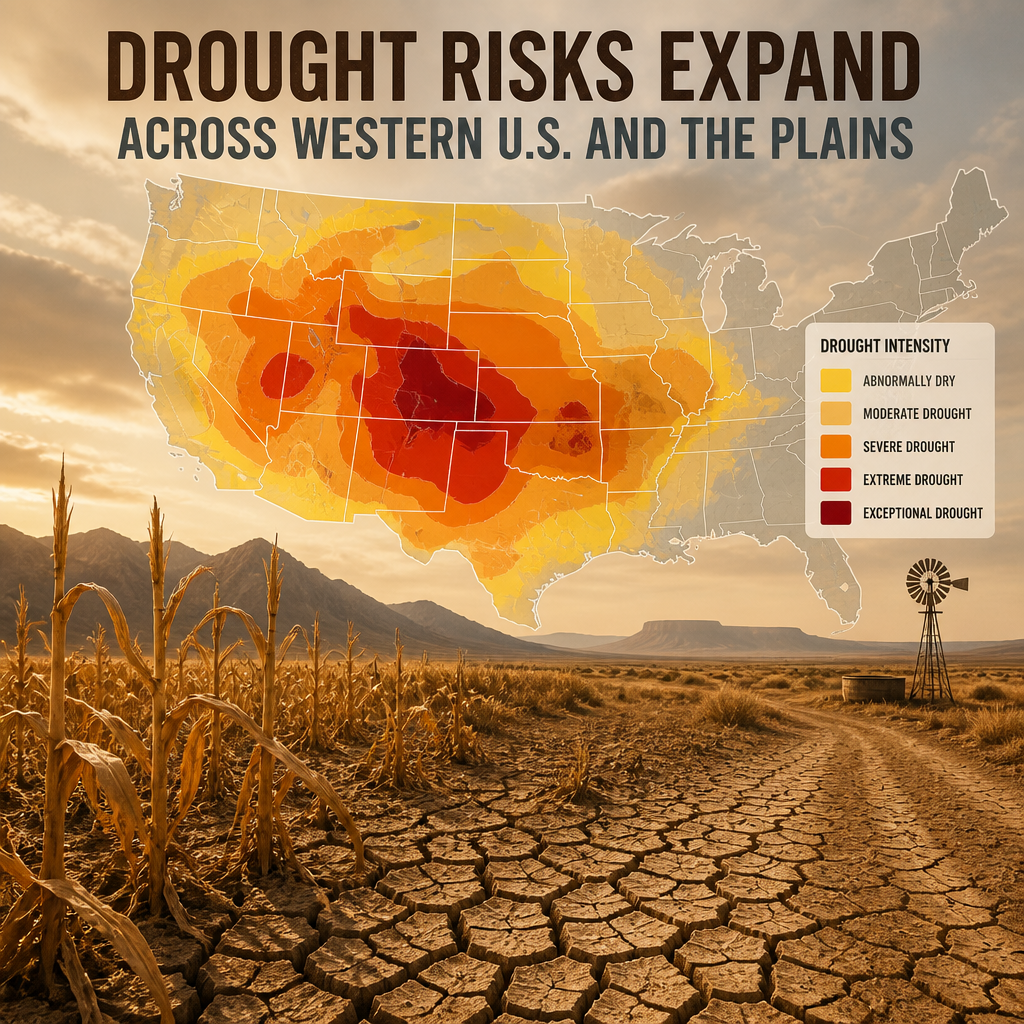
Drought Risks Expand Across Western U.S. and the Plains
Drought risks are rising across the Western United States and the Plains, bringing new pressure to crops, water supplies, and wildfire preparedness. As temperatures climb and rainfall stays uncertain, communities are being forced to plan ahead and adapt faster than ever.
By: pedropadm2025@gmail.com on July 28, 2026
Drought risks across the western United States and the Plains continue to shape life for farmers, ranchers, city water managers, and homeowners alike. When rainfall falls short and temperatures stay high, the effects can spread quickly—from stressed crops and lower reservoir levels to wildfire danger and tighter water restrictions. For many communities, drought is no longer a distant possibility; it is a recurring challenge that requires planning, adaptation, and close attention to changing conditions.
Understanding how drought develops, why it expands, and what people can do to prepare is essential. The good news is that there are practical ways to reduce risk, conserve water, and make better decisions before conditions become severe.
Why Drought Risks Across the Western United States and the Plains Are Growing
Drought does not happen for just one reason. It usually develops from a combination of weather patterns, rising temperatures, limited snowpack, and high water demand. In the western United States and the Plains, those factors often overlap.
Warmer temperatures intensify dry conditions
Even when rainfall is near normal, higher temperatures can dry out soil faster, increase evaporation from lakes and reservoirs, and place more strain on crops and rangeland. That means drought can worsen even without a dramatic drop in precipitation.
Snowpack matters more than many people realize
In much of the West, winter snowpack acts as a natural water reservoir. It melts gradually in spring and summer, feeding rivers and supporting irrigation, drinking water supplies, and hydropower. When snowpack is low or melts earlier than usual, water systems can feel the impact for months.
The Plains face a different but serious threat
Across the Plains, drought often affects agriculture directly. Dry topsoil can delay planting, reduce yields, and limit pasture growth for livestock. In some places, dry winds can also erode soil and turn mild dry spells into major agricultural losses.
How Drought Develops and Spreads
Drought is not just one dry week or one hot month. It often builds slowly, then accelerates.
1. Rainfall deficits begin
The first sign is often a pattern of below-average precipitation. If storms miss a region for several weeks or months, soil moisture starts to decline.
2. Soil moisture drops
Once the ground dries out, plants absorb less water. Crops, lawns, and native vegetation begin to show stress. This stage can happen quickly during warm, windy weather.
3. Streams and reservoirs decline
With less runoff and less snowmelt, rivers, lakes, and reservoirs may fall below normal levels. That can affect water supply, boating, irrigation, and ecosystem health.
4. Impacts spread beyond the weather
Drought can influence:
Crop yields
Livestock feed costs
Drinking water supplies
Hydropower generation
Wildfire conditions
Groundwater pumping demand
Household water restrictions
By the time these impacts are visible, drought has usually been developing for some time.
Major Impacts of Expanding Drought Risks
The effects of drought reach far beyond dry soil. In the western United States and the Plains, the consequences can be widespread and expensive.
Agriculture and ranching
Farmers and ranchers are often among the first to feel the strain. Drought can reduce crop yields, raise irrigation costs, and limit hay and pasture availability. Ranchers may have to buy supplemental feed, reduce herd sizes, or move animals earlier than planned.
Practical example: A corn producer relying on irrigation may need to choose between watering the highest-value fields and leaving some acreage fallow. That decision can affect revenue, labor, and long-term planting plans.
Municipal water supplies
Cities and towns depend on a mix of reservoirs, rivers, and groundwater. When drought reduces supply, water managers may impose conservation measures, limit outdoor watering, or delay new water service connections. Smaller communities can be especially vulnerable if they rely on a single source.
Wildfire risk
Dry vegetation provides fuel for wildfires. In the West, that can mean a longer fire season and faster fire spread. Drought does not cause every wildfire, but it can make fires more intense and harder to control.
Ecosystems and wildlife
Streams, wetlands, and grasslands all depend on reliable water. When drought persists, fish habitat can shrink, wetlands can dry up, and wildlife may have fewer food sources. Native plants also become more stressed and vulnerable to pests and disease.
Groundwater pressure
When surface water runs low, people often pump more groundwater. That can help in the short term, but heavy pumping can lower aquifer levels and create long-term sustainability issues.
Signs That Drought Is Becoming a Bigger Threat
Recognizing early warning signs can help communities and households act sooner.
Environmental signs
Soil cracks or dusty topsoil
Browning grass and stressed crops
Low streamflows
Falling reservoir levels
Earlier-than-normal snowmelt
Increased wildfire activity
Practical signs for households and businesses
Outdoor watering restrictions
Higher irrigation or water bills
Reduced water pressure in some areas
Changes in well performance
Supply concerns for farm operations or landscaping
The earlier these signs are noticed, the more options people have to respond.
What Communities Can Do to Reduce Drought Risk
Drought planning works best before conditions become severe. Communities that invest in preparation tend to recover faster and avoid deeper disruptions.
Improve water management
Water utilities and local governments can reduce drought risk by:
Repairing leaks in water systems
Expanding water reuse programs
Diversifying water sources
Updating reservoir operations
Encouraging efficient irrigation practices
Protect groundwater
Aquifers can serve as a critical backup, but they need careful management. Communities can monitor groundwater levels, limit overpumping, and encourage recharge projects where feasible.
Strengthen drought response plans
A good drought plan identifies triggers, priorities, and actions before a crisis hits. It may include:
Conservation targets
Public communication strategies
Emergency supply options
Coordination with agriculture and industry
Long-term infrastructure improvements
Support wildfire preparedness
Because drought and wildfire often overlap, local officials can reduce danger by clearing defensible space, improving emergency response plans, and educating residents about fire restrictions.
How Farmers and Ranchers Can Adapt
Agriculture in the West and Plains has always depended on weather, but more variable drought conditions require flexible strategies.
Use water more efficiently
Efficient irrigation can make a major difference. Farmers may consider:
Soil moisture monitoring
Drip irrigation where appropriate
Scheduling irrigation based on crop needs
Maintaining equipment to reduce losses
Matching crop choice to available water
Adjust planting and grazing plans
Some growers shift planting dates, choose drought-tolerant varieties, or reduce acreage in dry years. Ranchers may rotate grazing more carefully, protect pasture health, and secure feed supplies earlier.
Build resilience into farm decisions
A drought-ready operation often has multiple layers of protection:
Crop insurance
Storage for feed and water
Flexible marketing plans
Access to weather and drought outlooks
Relationships with extension agents and local experts
These steps will not prevent drought, but they can reduce financial damage.
What Homeowners Can Do Right Now
Drought preparedness is not only for farmers and water utilities. Homeowners can also lower demand and improve resilience.
Reduce outdoor water use
Outdoor irrigation is often the biggest water use category for households. Simple changes can save a significant amount of water over time.
Consider:
Watering early in the morning
Replacing thirsty turf with native or drought-tolerant landscaping
Using mulch to retain soil moisture
Fixing sprinkler leaks
Grouping plants by water needs
Check for indoor leaks
A slow leak can waste a surprising amount of water. Homeowners should look at:
Toilets
Faucets
Showerheads
Washing machine connections
Under-sink plumbing
Make use of local conservation programs
Many utilities offer rebates for efficient appliances, irrigation upgrades, or xeriscaping. These programs can help households save money while reducing demand during dry periods.
How to Stay Informed About Drought Conditions
Reliable information helps people make better decisions. Forecasts and drought maps do not predict the future perfectly, but they can show trends worth watching.
Useful information sources
U.S. Drought Monitor for current conditions
National Weather Service for forecasts and advisories
State water resources agencies for local restrictions
USDA and extension offices for agricultural guidance
Local utility updates for conservation rules
Build a habit of checking updates
For households and businesses in drought-prone areas, it helps to review conditions regularly rather than waiting for a crisis. A quick check once a week during dry periods can be enough to stay ahead of changes.
Long-Term Solutions That Matter
Short-term conservation is important, but lasting drought resilience depends on bigger investments and smarter land and water management.
Modernize infrastructure
Old pipes, leaky canals, and outdated storage systems can waste water. Upgrading infrastructure improves efficiency and reliability.
Support climate-smart land use
Healthy soils hold water better. Practices such as cover cropping, reduced tillage, and vegetation management can improve moisture retention and reduce erosion.
Plan for future water demand
Population growth, new development, and changing agricultural needs all affect water demand. Communities that account for long-term trends can avoid being caught off guard.
Preserve natural systems
Wetlands, watersheds, forests, and riparian areas help regulate water flows and support biodiversity. Protecting these systems can improve drought resilience and reduce downstream impacts.
Frequently Asked Questions
What is causing drought risks to expand across the western United States and the Plains?
Drought risks expand when below-average precipitation combines with high temperatures, low snowpack, and strong water demand. In the West, reduced mountain snowpack can limit summer water supplies. Across the Plains, dry soil and heat can quickly affect agriculture and water availability.
How does drought affect people living in cities?
Urban residents may face watering restrictions, higher water costs, lower reservoir levels, and increased wildfire smoke or dust issues. Drought can also affect local parks, landscaping, hydropower, and the availability of municipal water supplies.
Why is snowpack so important in the West?
Snowpack stores water during winter and releases it gradually in spring and summer. That slow melt helps refill rivers, reservoirs, and irrigation systems. When snowpack is low or melts too early, less water is available during the hottest part of the year.
What can farmers do to prepare for drought?
Farmers can improve irrigation efficiency, monitor soil moisture, choose drought-tolerant crops, adjust planting schedules, and use crop insurance or other financial tools. Planning early helps reduce losses when water becomes limited.
How can homeowners help during drought?
Homeowners can reduce outdoor watering, fix leaks, use mulch, install efficient fixtures, and replace thirsty landscaping with drought-tolerant plants. Small changes across many households can add up to meaningful water savings.
Drought risks across the western United States and the Plains are a serious and growing concern, but they are not impossible to manage. The key is to recognize that drought affects more than rainfall. It influences water supplies, agriculture, wildfire danger, ecosystems, and daily life in both rural and urban communities.
The most effective response combines awareness, planning, and practical action. Communities can improve water systems and prepare response plans. Farmers and ranchers can adopt efficient irrigation and flexible operations. Homeowners can conserve water and support local efforts. None of these steps eliminates drought, but each one helps reduce its impact.
Staying informed is just as important as taking action. By following trusted drought outlooks, watching local conditions, and making small changes before shortages deepen, individuals and communities can build resilience over time. In a region where dry conditions are part of the landscape, preparation is one of the best tools available.
Peter B holds a degree in Journalism and has 5 years of experience covering U.S. economic policy, labor markets, and financial news. He writes data-driven news content on topics like inflation, interest rates, and employment trends.