Global Job Quality Stagnates Despite Continued Employment Growth
Employment may be rising in many regions, but global job quality is still struggling to keep up. That means more workers are finding jobs without necessarily finding fair pay, stability, or safe conditions.
By: pedropadm2025@gmail.com on July 28, 2026
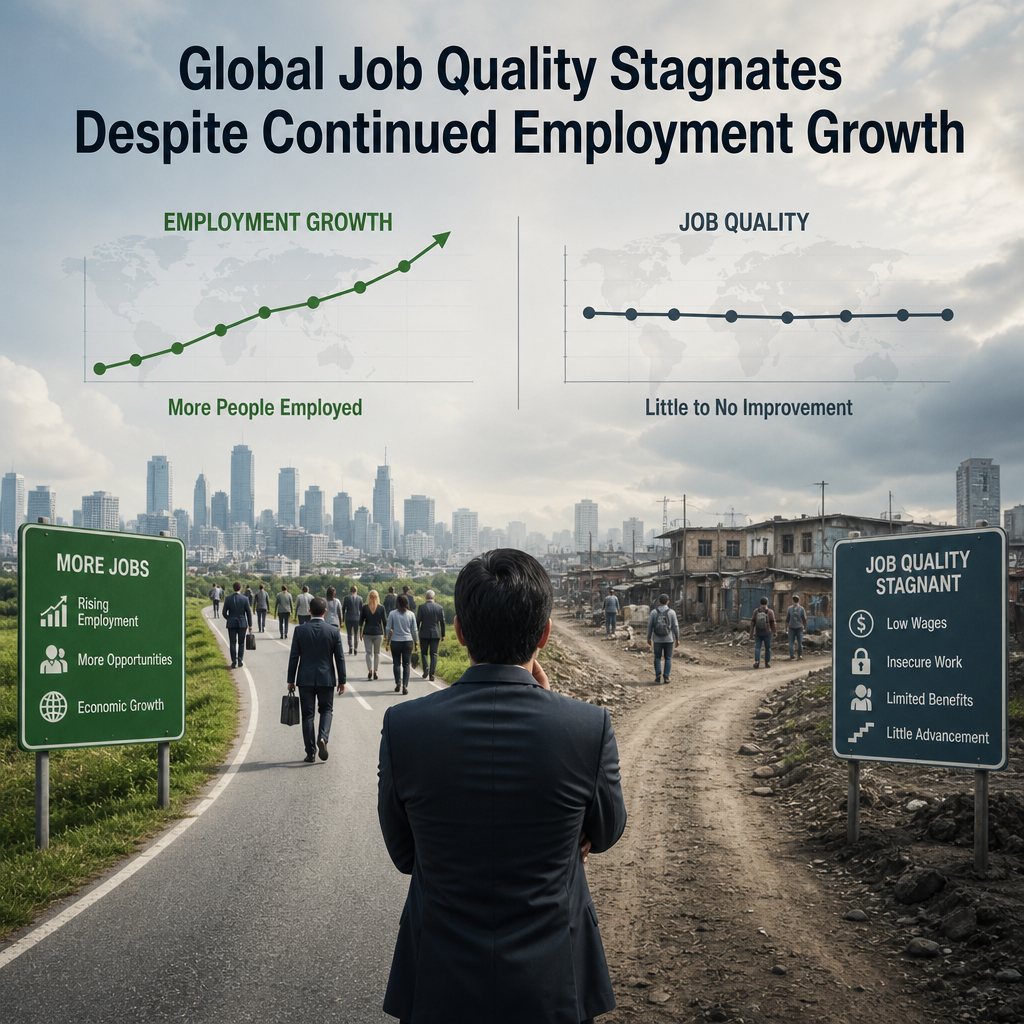
Employment is growing in many parts of the world, but global job quality is not keeping pace. That gap matters. A larger number of jobs does not automatically mean better livelihoods, safer workplaces, fair pay, or stable careers. For millions of workers, the labor market has improved in quantity while remaining stubbornly weak in quality.
This tension is one of the defining labor issues of our time. Employers are hiring, economies are changing, and new sectors are expanding. Yet too many workers still face low wages, limited benefits, unstable hours, weak protections, and little room to build a better future. In other words, global job quality is stagnating even as employment growth continues.
Understanding why this happens—and what can be done about it—is essential for workers, employers, policymakers, and job seekers alike.
What “Global Job Quality” Really Means
When people hear about employment growth, they often think only about the number of jobs created. But global job quality goes much further. It includes the conditions that determine whether a job supports a decent life.
Key dimensions of job quality
A high-quality job typically includes:
Fair and predictable pay
Safe and healthy working conditions
Reasonable hours and work-life balance
Access to benefits such as health coverage or paid leave
Job security and clear employment terms
Opportunities for training and advancement
Respect, dignity, and protection from discrimination or harassment
A country can add thousands of jobs, but if many of them are temporary, informal, underpaid, or unsafe, then employment growth alone does not solve the deeper labor problem.
The mismatch between job creation and job quality usually comes from how and where jobs are being created. Some sectors expand quickly but rely on low wages or unstable schedules. Others automate routine work while shifting risk onto workers through subcontracting or gig-style arrangements.
1. A larger share of jobs are informal or insecure
In many economies, especially in developing regions, job growth is concentrated in informal work. These jobs may provide income, but they often lack:
Legal protections
Written contracts
Paid time off
Pension coverage
Reliable wages
Informal workers also tend to have fewer options when employers change conditions or reduce hours without notice.
2. Wage growth lags behind living costs
Even when people are employed, their earnings may not keep up with inflation, housing costs, transportation, or food prices. A job can be counted as “created” while still failing to deliver financial stability.
This is one reason global job quality matters so much. A paycheck that barely covers essentials may keep someone employed, but it does not necessarily create economic security.
3. Automation changes the mix of available jobs
Technology can raise productivity and create new opportunities, but it also tends to reduce demand for some middle-skill roles. The result is often a labor market split between:
High-skill, high-pay jobs
Low-skill, lower-pay service work
A shrinking middle
That shift can weaken overall job quality even when total employment continues to rise.
4. Outsourcing and subcontracting can dilute responsibility
Many companies reduce labor costs by outsourcing work to third parties. While this can improve efficiency, it can also blur accountability for:
Scheduling
Pay practices
Safety standards
Benefits
Labor rights enforcement
Workers may do essential tasks for major brands while remaining outside the protections those brands provide to their direct employees.
5. Labor protections are uneven
Some countries have strong labor standards, active inspections, and enforcement systems. Others struggle to regulate wages, safety, or working time. In weak enforcement environments, employment can grow quickly without meaningful improvements in global job quality.
The Human Cost of Stagnant Job Quality
The problem is not just economic. Poor job quality affects health, families, communities, and long-term opportunity.
Workers absorb the risks
When job quality stagnates, workers often face:
Unpredictable income
Stress from unstable schedules
Exhaustion from multiple jobs
Injury risk in unsafe workplaces
Delayed career growth
Difficulty planning for the future
These pressures can build over time. A person may remain employed and still feel trapped in a cycle of insecurity.
Families feel the impact too
Poor job quality affects more than the individual worker. It can disrupt:
Childcare arrangements
School attendance
Household budgeting
Access to healthcare
Housing stability
When workers cannot depend on steady hours or adequate pay, families must constantly adjust.
Economic mobility slows down
Jobs are often supposed to be stepping stones to better opportunities. But stagnant global job quality can block that path. If a job offers no training, no promotion prospects, and no financial cushion, it becomes difficult to move forward.
Which Workers Are Most Affected?
Not everyone experiences stagnant job quality in the same way. Some groups are more exposed than others.
Young workers
Younger workers often enter the labor market through temporary, part-time, or entry-level jobs. These roles can provide valuable experience, but they can also trap workers in low-quality employment if upward mobility is limited.
Women
Women are more likely in many regions to work in sectors that are undervalued, underpaid, or informal. Care responsibilities can also push women toward flexible but insecure work arrangements.
Migrant workers
Migrant workers may face language barriers, legal vulnerabilities, and limited access to labor protections. They are also more likely to be concentrated in physically demanding or low-wage jobs.
Informal and gig workers
Platform-based and informal workers often experience limited bargaining power. They may lack benefits, paid leave, and predictable earnings, even when they work full time.
Workers in low-income countries
In lower-income economies, labor markets often grow through self-employment, small-scale services, and informal enterprise. While these jobs are vital, they may not offer the same protections or growth pathways as formal employment.
What Governments Can Do to Improve Job Quality
Improving global job quality requires more than job creation targets. Policymakers need to focus on the conditions attached to work.
Strengthen labor standards and enforcement
Laws matter, but enforcement matters just as much. Governments can improve job quality by:
Raising and enforcing minimum wage standards
Expanding workplace safety inspections
Limiting abusive scheduling practices
Protecting workers from discrimination and retaliation
Clarifying employment status in platform and contract work
Support skills development
Training can help workers move into better jobs, especially when paired with real labor market demand. Effective programs often include:
Technical and vocational education
Apprenticeships
Digital skills training
Career counseling
Employer partnerships
Expand social protections
When workers have access to unemployment support, paid sick leave, healthcare, or retirement systems, job quality improves even in volatile labor markets. These protections reduce the damage caused by unstable work.
Invest in childcare and transportation
Job quality is also shaped by the infrastructure around work. Affordable childcare and reliable transportation make it easier for workers to hold better jobs and stay employed.
What Employers Can Do
Businesses play a major role in whether employment growth translates into better work. Employers that take job quality seriously often see benefits in retention, productivity, and reputation.
Build better scheduling practices
Workers perform better when they can plan their lives. Employers can improve job quality by:
Posting schedules earlier
Reducing last-minute changes
Limiting excessive split shifts
Offering more predictable hours
Pay fairly and transparently
Competitive wages and clear pay structures help reduce turnover and build trust. Transparency also gives workers a better understanding of how they can grow.
Offer development opportunities
Training, mentorship, and internal promotion pathways help transform jobs into careers. Even in lower-wage sectors, small investments in training can create meaningful advancement opportunities.
Improve safety and respect
A good job should not put workers at risk physically or emotionally. Employers can strengthen global job quality by building respectful workplace cultures, reporting systems, and safety-first operations.
How Job Seekers Can Evaluate Job Quality
If you are searching for work, it helps to look beyond the headline salary. A job may look attractive on paper but still fall short in practice.
Questions to ask before accepting a job
Consider asking:
Is the schedule predictable?
Are overtime hours optional or required?
What benefits are included?
Is there a probationary or temporary period?
How often do employees receive raises or reviews?
What training is provided?
What does turnover look like in this role?
These questions can reveal whether a role is likely to support long-term stability or simply provide short-term income.
Warning signs of poor job quality
Be cautious if a position involves:
Constant schedule changes
Vague pay terms
No written contract
Pressure to work off the clock
High turnover
No clear safety procedures
Unclear reporting lines or responsibilities
A job does not need to be perfect, but it should be clear, fair, and lawful.
Why Global Job Quality Is a Long-Term Growth Issue
Some people treat job quality as a worker issue only. In reality, it is also an economic development issue.
Better jobs support stronger economies
When people earn stable wages and feel secure at work, they are more likely to:
Spend in their local communities
Invest in education and health
Stay in the labor force
Move into more productive roles
That creates a healthier economic cycle.
Weak job quality can slow productivity
High turnover, burnout, and low morale hurt productivity. Poorly designed jobs may keep labor costs low in the short term, but they often create hidden costs through absenteeism, errors, and disengagement.
Social stability depends on decent work
Work is not only a source of income. It is also a source of identity, dignity, and social connection. When global job quality stagnates for too long, frustration and inequality tend to rise.
Frequently Asked Questions
1. What does global job quality mean?
Global job quality refers to the overall conditions of work across countries and industries. It includes pay, safety, job security, benefits, working hours, dignity, and opportunities for advancement—not just whether someone has a job.
2. Why is employment growth not enough?
Employment growth counts the number of jobs added, but it does not measure whether those jobs are stable, safe, or well paid. A labor market can expand while still leaving many workers in insecure or low-quality positions.
3. Which jobs are most likely to have poor quality?
Low-quality jobs are often found in informal work, some service sectors, platform-based roles, subcontracted labor, and occupations with weak labor protections. These jobs may have unstable hours, low pay, or limited benefits.
4. How can governments improve job quality?
Governments can strengthen labor standards, enforce wage and safety laws, invest in training, expand social protections, and support affordable childcare and transportation. These steps help convert employment growth into better work outcomes.
5. What should job seekers look for besides salary?
Job seekers should review scheduling predictability, benefits, safety practices, promotion opportunities, training, and turnover. A higher salary is helpful, but it may not offset unstable hours or poor working conditions.
Employment growth is important, but it is only part of the picture. If global job quality does not improve, more jobs will not necessarily mean better lives. Workers still need fair wages, predictable hours, safe conditions, meaningful benefits, and opportunities to move forward. Without those elements, growth can mask deep insecurity.
The key takeaway is simple: good labor markets are not measured only by how many people are working, but by how well those jobs support dignity and stability. Governments can strengthen standards and protections. Employers can build more human-centered workplaces. Job seekers can learn to spot the difference between a paycheck and a real opportunity.
As the world of work continues to change, job quality should stay at the center of the conversation. That is how employment growth becomes shared progress rather than a hollow statistic. If we want stronger economies and more resilient communities, we need not just more jobs—we need better ones.
Peter B holds a degree in Journalism and has 5 years of experience covering U.S. economic policy, labor markets, and financial news. He writes data-driven news content on topics like inflation, interest rates, and employment trends.