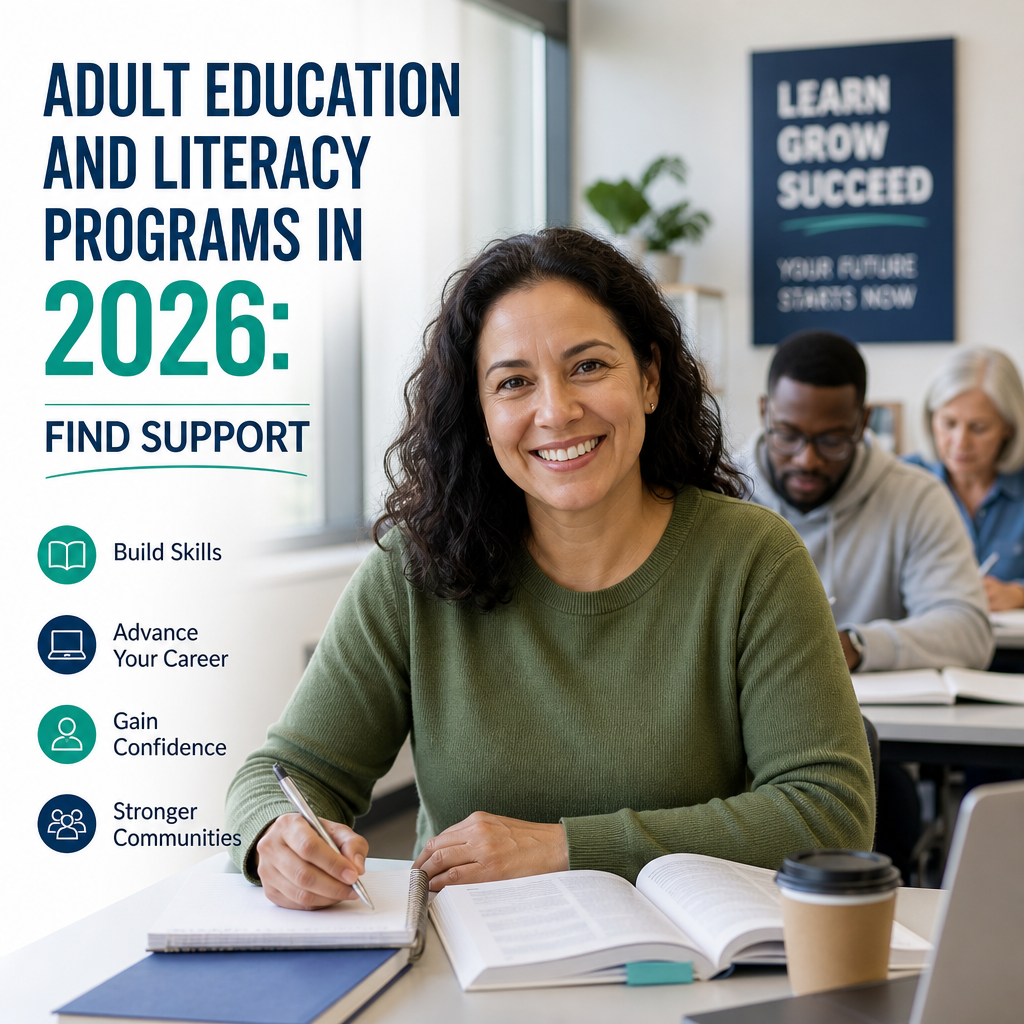
Adult Education and Literacy Programs in 2026: Find Support
Adult education and literacy programs open the door to new opportunities, whether you want to earn a diploma, strengthen your English, or build everyday digital skills. In 2026, finding the right support is easier than ever thanks to community colleges, libraries, nonprofits, and online options designed for busy adult learners.
By: Jennifer Collins - Education on July 28, 2026
Adult education and literacy programs play a vital role in helping adults build the reading, writing, math, digital, and career skills they need to move forward. In 2026, these programs remain an essential resource for people who want to earn a diploma, improve English language skills, prepare for a job, or gain confidence using everyday technology. Whether you are returning to school after years away or helping a family member find the right path, knowing where to look for adult education and literacy programs can make the process much easier.
The good news is that support is available in many forms. Community colleges, public libraries, workforce centers, nonprofits, and online learning platforms all offer options. Some programs focus on basic literacy, while others provide GED preparation, English as a Second Language (ESL), digital skills, or career readiness training. The challenge is not whether help exists, but finding the right fit for your goals, schedule, and learning style.
What Adult Education and Literacy Programs Offer
Adult education and literacy programs are designed for learners who need practical, accessible instruction outside the traditional K–12 system. They often serve adults with different starting points and goals, including those who:
Want to improve reading and writing skills
Need math support for work or daily life
Are preparing for the GED or HiSET exam
Are learning English
Need digital literacy and computer skills
Want job training or career advancement support
Are re-entering education after a long break
These programs usually focus on real-world learning. Instead of only teaching academic content, they help adults use reading, writing, and numeracy in everyday situations, such as filling out forms, reading workplace instructions, understanding schedules, or managing household budgets.
Common program formats
Adult education and literacy programs can be offered in several ways:
In-person classes at schools, libraries, community centers, or workforce agencies
Hybrid programs that combine classroom instruction with online learning
Fully online programs for students who need flexibility
One-on-one tutoring or small-group instruction
Self-paced learning modules with instructor support
The best format depends on your comfort level, time availability, and access to transportation or technology.
Why These Programs Matter in 2026
The need for adult education and literacy programs remains strong in 2026 because everyday life increasingly requires a mix of academic and digital skills. Job applications, online scheduling systems, telehealth portals, banking apps, and school communication tools all assume a level of reading and technology confidence.
For adults who missed opportunities earlier in life, these programs can open doors in meaningful ways:
Better job prospects
Higher confidence at work
Stronger support for helping children with schoolwork
Improved ability to navigate healthcare, housing, and government systems
A pathway to college, certification, or vocational training
Adult learning also respects the reality that adults bring life experience to the classroom. Programs often build on what learners already know and help them apply it more effectively.
Where to Find Adult Education and Literacy Programs
Finding the right support often starts with local and state resources. In 2026, adults have more options than ever, but the most reliable programs are usually connected to public institutions or recognized community organizations.
1. Local public school districts and adult learning centers
Many school districts operate adult education centers that offer GED prep, high school completion, basic literacy classes, and ESL instruction. These programs are often low-cost or free for eligible learners.
Search your local school district website for terms like:
Adult education
Continuing education
GED preparation
ESL classes
Literacy center
These centers are a strong starting point because they often provide in-person support, placement guidance, and referrals to other services.
2. Community colleges
Community colleges frequently offer adult education and literacy programs alongside workforce training and credit courses. They may have:
Academic skills classes
English language learning
GED preparation
Career pathway programs
Bridge programs for adults returning to college
Community colleges are especially helpful if you want a program that can lead to further education or job certification.
3. Public libraries
Public libraries have become important access points for adult education. Many offer:
Free tutoring
Literacy support
Computer classes
Online learning databases
Help with job search tools and resumes
Libraries are often welcoming, easy to access, and connected to other local services. If you are not ready to enroll in a formal class, a library can be a low-pressure place to begin.
4. Workforce development centers
Workforce centers and American Job Centers often connect adults to literacy and job readiness programs. These centers may help with:
Resume writing
Interview practice
Basic computer skills
GED or high school equivalency prep
Job training referrals
If your main goal is employment, this is one of the most practical places to start. Staff can often match you with training that fits local hiring needs.
5. Nonprofit organizations and faith-based community programs
Many nonprofits provide adult literacy services, especially in communities with limited formal education access. These organizations may offer:
Volunteer tutoring
Small group classes
Family literacy programs
English language support
Digital literacy workshops
Because these programs are often rooted in the community, they may offer flexible schedules and a supportive environment for adults who feel nervous about returning to school.
6. Online adult education platforms
Online learning has expanded access for adults who need more flexibility. In 2026, many learners use online platforms to study:
Reading and writing
Math and test preparation
English language skills
Computer basics
Career-related communication
Online programs are useful for adults balancing work, parenting, or caregiving. However, it is important to choose reputable platforms with clear lessons, instructor support, and accessible technology requirements.
How to Choose the Right Program
Not every adult education and literacy program will be the right fit. Before enrolling, consider what you need most.
Ask these questions
Do I want in-person, online, or hybrid learning?
Do I need GED prep, ESL, literacy support, or job skills?
Is the program free or low-cost?
What are the class times and attendance expectations?
Does the program offer tutoring or individualized support?
Is transportation or internet access a barrier?
Can the program connect me to next steps after completion?
If possible, contact the program directly and ask for a short orientation or assessment. Many programs use placement tools to match learners with the right level of instruction.
Signs of a quality program
Look for programs that:
Explain goals clearly
Offer experienced instructors or tutors
Provide supportive, respectful communication
Have flexible scheduling
Connect learning to real-life goals
Include progress checks and feedback
Help learners move toward diplomas, jobs, or training
A strong program should make you feel capable, not intimidated.
Adult Literacy Support for Different Goals
Adult education and literacy programs are not one-size-fits-all. The right support depends on your goal.
If you want a high school equivalency credential
Look for programs that specifically offer GED or HiSET preparation. These usually cover:
Math
Reading
Writing
Science
Social studies
Many also provide practice tests and study plans. If testing anxiety is a concern, ask whether the program offers test-taking strategies or small-group instruction.
If you are learning English
Search for ESL or English language learner classes. These programs often focus on:
Speaking and listening
Reading and writing
Vocabulary building
Pronunciation
Everyday communication
Some also help with workplace English, citizenship preparation, or parent engagement in school settings.
If you need job-related skills
If your immediate priority is employment, choose a program that includes workplace literacy and digital literacy. You may learn how to:
Complete online applications
Write a resume
Understand workplace documents
Use email professionally
Follow safety instructions
Communicate in team settings
If you want more confidence with technology
Digital literacy is now a core part of adult education. Programs may cover:
Using a keyboard and mouse
Navigating a browser
Creating and managing email
Filling out forms online
Recognizing scams and misinformation
Using phones, tablets, and basic software
This type of support is especially useful for adults who feel left behind by rapidly changing technology.
Practical Tips for Getting Started
Starting can feel overwhelming, especially if school was difficult in the past. The key is to take a few small steps.
1. Define your goal
Write down one clear goal, such as:
“I want to earn my GED.”
“I want to improve my reading.”
“I want to speak English more confidently at work.”
“I want to learn how to use a computer.”
A clear goal helps you choose the right program and stay motivated.
2. Gather basic information
Before enrolling, make a list of:
Your schedule
Your transportation options
Your internet access
Your preferred learning format
Any documents the program may require
3. Start with a short-term commitment
If you are unsure, begin with one class, orientation session, or tutoring appointment. You do not need to commit to everything at once.
4. Ask for support
Adult education programs are built for learners with real-life responsibilities. If you need childcare, language support, or flexible scheduling, ask early. Some programs can connect you with community resources.
5. Celebrate progress
Progress may look small at first, but it matters. Finishing a worksheet, reading a bus schedule, or sending an email without help is real growth.
Common Barriers and How to Overcome Them
Many adults hesitate to enroll because they worry about time, money, embarrassment, or past school experiences. Those concerns are understandable.
Time
If you work or care for family members, look for evening, weekend, or self-paced options. Hybrid and online programs can also help.
Confidence
Many adults return to learning after years away. Choose a program with a supportive environment and ask whether tutoring is available.
Technology
If online learning is new to you, begin with a program that includes digital skills instruction or in-person onboarding.
Cost
Many public adult education and literacy programs are free or low-cost. Always ask about fees, materials, testing costs, and scholarship support.
Transportation
If travel is difficult, ask about virtual classes, satellite locations, or local partners such as libraries and community centers.
How Families and Employers Can Help
Adult education is not just an individual issue. Families and employers can play a big role in supporting learners.
For families
Offer encouragement without pressure
Help with transportation or child care when possible
Celebrate milestones
Respect study time
Avoid framing learning as a weakness
For employers
Share information about workplace literacy or GED support
Offer flexible scheduling for classes
Provide access to basic computer tools
Connect employees with local education partners
When adults feel supported, they are more likely to stay engaged and succeed.
Frequently Asked Questions
What are adult education and literacy programs?
Adult education and literacy programs help adults improve basic reading, writing, math, English language, digital, and job-related skills. Many also prepare learners for high school equivalency exams like the GED or HiSET.
Are adult education and literacy programs free?
Many public programs are free or low-cost, especially those offered through school districts, libraries, workforce centers, and community colleges. Some private or specialized programs may charge fees, so it is best to ask before enrolling.
Can I take adult education classes online?
Yes. In 2026, many adult education and literacy programs offer online or hybrid options. These can be helpful if you work full time, care for children, or cannot travel easily. Be sure to choose a reputable program with support from instructors or tutors.
What if I have not been in school for many years?
That is common. Adult education programs are designed for learners at different starting points. Instructors usually focus on practical, step-by-step learning and try to create a supportive environment for adults returning to education.
How do I know which program is right for me?
Start by identifying your main goal: finishing high school, learning English, improving reading, or gaining job skills. Then compare local programs based on schedule, format, cost, support services, and next-step opportunities. A short orientation or assessment can also help you decide.
Adult education and literacy programs remain one of the most practical ways for adults to build confidence, gain independence, and reach meaningful personal and professional goals. In 2026, support is available through school districts, community colleges, libraries, workforce centers, nonprofits, and trusted online platforms. The best option depends on your needs, whether that means GED preparation, English language learning, digital literacy, or job-focused skills.
If you are unsure where to begin, start small. Identify one goal, look for a local or online program that matches it, and ask questions about schedule, cost, and support services. You do not need to have everything figured out before taking the first step. The most important thing is to begin with a program that feels accessible and realistic for your life.
Adult learning is not about starting over. It is about moving forward with the right support, at the right pace, in a way that fits your future.
Jennifer, M.Ed., holds a degree in Higher Education Administration, with
a focus on U.S. college financial aid, admissions policy, and student
support systems. She researches and writes about scholarships, federal
aid programs, and the college planning process to help students and
families make informed, well-supported decisions.