High Seas Treaty Enters Into Force to Protect Marine Biodiversity
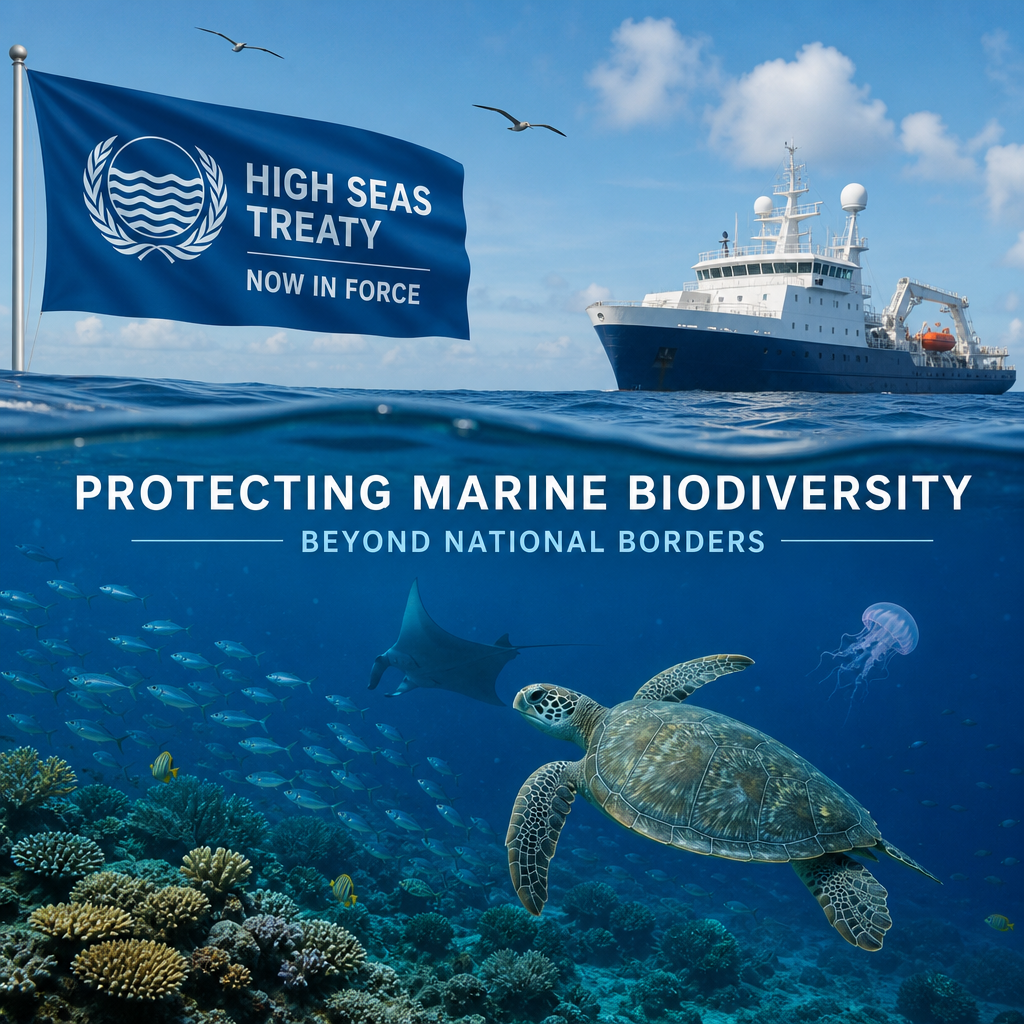
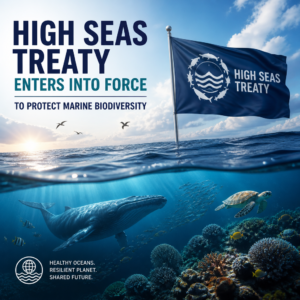
The High Seas Treaty has officially entered into force, giving the world its first global legal framework to protect marine biodiversity beyond national borders. This landmark agreement could help create marine protected areas, curb harmful activities, and safeguard the ocean’s most vulnerable ecosystems for generations to come.
By: pedropadm2025@gmail.com on July 28, 2026
The High Seas Treaty has officially entered into force, marking a major milestone for ocean conservation and international environmental cooperation. For the first time, countries have a global legal framework designed to protect marine biodiversity in areas beyond national jurisdiction—the vast stretches of ocean that belong to no single nation.
This matters because the high seas cover nearly half the planet’s surface and support an extraordinary range of life, from microscopic plankton to migratory whales, deep-sea corals, and tuna. They also help regulate climate, absorb carbon, and support fisheries that feed millions of people. Yet these waters have long faced pressure from overfishing, pollution, climate change, shipping, and unregulated resource extraction.
With the High Seas Treaty, governments now have a path to create marine protected areas, review activities that may harm ecosystems, and share benefits from marine genetic resources more fairly. In practical terms, this treaty could reshape how the world manages the ocean’s most remote and least protected regions.
What Is the High Seas Treaty?
The High Seas Treaty, formally known as the Agreement on Biodiversity Beyond National Jurisdiction (BBNJ), is an international agreement under the United Nations Convention on the Law of the Sea. Its main goal is to protect and sustainably use marine biodiversity in ocean areas outside national borders.
These areas include the high seas and the deep seabed, where no single country has sovereign control. Before the treaty, conservation efforts in these waters were fragmented, with different organizations handling shipping, fishing, mining, and conservation in separate ways. The treaty creates a more coordinated approach.
Why the treaty was needed
The ocean is interconnected, but ocean governance has often been piecemeal. A fishing regulation in one place may not protect a whale migration route crossing multiple jurisdictions. A deep-sea mining project can affect ecosystems that scientists barely understand.
The treaty helps close these gaps by establishing common rules for:
Marine protected areas
Environmental impact assessments
Marine genetic resources
Capacity building and technology transfer
Why the High Seas Treaty Matters for Marine Biodiversity
The phrase marine biodiversity refers to the variety of life in the ocean—from genes and species to ecosystems. On the high seas, biodiversity is especially vulnerable because these ecosystems are difficult to monitor and often slow to recover from damage.
The treaty matters because it gives the international community new tools to address some of the biggest threats facing ocean life.
1. It supports marine protected areas
One of the most important features of the treaty is the ability to designate marine protected areas (MPAs) in international waters. These can help safeguard:
Fish spawning grounds
Whale migration routes
Coral and sponge habitats
Feeding areas for seabirds and turtles
MPAs are not a cure-all, but they can reduce pressure on fragile ecosystems and give species a better chance to recover.
2. It strengthens environmental review
The treaty requires countries to assess the environmental effects of activities planned in the high seas. That includes projects that could affect ecosystems before serious damage occurs.
This is especially important for activities such as:
Deep-sea mining exploration
Large-scale fishing operations
Offshore infrastructure
Scientific or commercial marine projects
A strong environmental impact assessment process helps decision-makers ask the right questions early, rather than trying to fix harm after it happens.
3. It addresses fairness in marine genetic resources
Marine organisms contain unique compounds that may be used in medicine, biotechnology, and research. The treaty creates rules for sharing benefits from marine genetic resources more fairly, especially when discoveries are made in international waters.
This is a significant step because ocean-based innovation often depends on resources and knowledge from ecosystems that many countries did not previously have equal access to.
4. It builds global cooperation
No single nation can protect the high seas alone. Migratory species cross boundaries, ocean currents connect ecosystems, and pollution travels far from its source. The treaty encourages countries to work together through a shared system rather than act in isolation.
How the High Seas Treaty Will Work
Now that the High Seas Treaty has entered into force, countries that join the agreement can begin implementing its rules through international cooperation and domestic action.
Decision-making through a Conference of the Parties
Like many major environmental agreements, the treaty will operate through a Conference of the Parties (COP). This body will meet to make decisions, adopt procedures, and guide how the treaty functions over time.
The COP can help set the framework for:
Identifying new protected areas
Establishing scientific and technical standards
Developing reporting and compliance mechanisms
Supporting countries with fewer resources
Environmental impact assessments
Before carrying out certain activities in the high seas, countries may need to evaluate whether the project could cause significant harm to marine biodiversity. These assessments are meant to encourage more responsible decision-making and better transparency.
A strong review process typically includes:
Identifying potential environmental effects
Comparing possible alternatives
Considering mitigation measures
Sharing findings with relevant stakeholders
Monitoring outcomes over time
Capacity building and technology transfer
Not all countries have the same ability to study, monitor, or protect the ocean. The treaty includes provisions for capacity building and technology transfer, which can help build a more equitable system.
This may involve:
Training scientists and regulators
Sharing monitoring tools and research methods
Improving access to ocean data
Supporting participation in treaty meetings and decision-making
These measures matter because effective conservation depends on inclusion, not just policy language.
What This Means for Ocean Conservation
The entry into force of the High Seas Treaty is a turning point, but it is also a starting point. The treaty does not automatically solve every ocean problem. Its success will depend on how governments implement it, how seriously they enforce it, and whether they support long-term scientific and diplomatic cooperation.
Better protection for vulnerable ecosystems
Some of the most biologically rich ocean areas are in places that have historically lacked protection. The treaty gives the world a mechanism to safeguard ecosystems that are difficult to police but essential to ocean health.
A stronger foundation for climate resilience
Healthy marine ecosystems help stabilize the climate by storing carbon, supporting nutrient cycles, and maintaining food webs. While the treaty is not a climate agreement, protecting marine biodiversity can strengthen the ocean’s ability to absorb environmental stress.
More informed ocean planning
The treaty encourages a more strategic view of ocean use. Instead of treating the high seas as open space for unlimited activity, it recognizes them as living ecosystems that need management.
That shift is especially important as pressures on the ocean continue to grow.
Challenges Ahead
The treaty’s success will depend on more than good intentions. Several challenges remain.
Getting widespread ratification and participation
For the treaty to have the strongest possible impact, many countries need to join and actively participate. Broad participation increases the likelihood of meaningful protection across ocean regions.
Turning rules into action
International agreements can be ambitious on paper but difficult to implement in practice. Countries will need to build domestic systems that align with treaty obligations, including monitoring, reporting, and environmental review.
Balancing conservation and economic interests
The high seas are also important for fishing, shipping, and potential resource extraction. Governments will need to balance economic activity with biodiversity protection in a way that is scientifically grounded and transparent.
Ensuring compliance
Rules are only effective if they are followed. The treaty will need practical tools for accountability, including information-sharing, oversight, and cooperative enforcement.
How Businesses, Scientists, and the Public May Be Affected
Although the treaty is an international agreement among governments, its impact can reach many other groups.
For scientists
Researchers may see new opportunities for collaborative ocean mapping, biodiversity surveys, and long-term monitoring. The treaty may also improve data sharing and scientific coordination.
For seafood and shipping sectors
Companies operating on the ocean may face new expectations related to environmental review, route planning, and sustainability. In the long run, clearer rules can reduce uncertainty and help businesses plan responsibly.
For conservation groups
Environmental organizations can use the treaty as a tool to advocate for protected areas, stronger oversight, and greater transparency in ocean governance.
For the public
Most people may never visit the high seas, but they still depend on them. The ocean affects food supplies, weather patterns, biodiversity, and climate stability. Protecting marine biodiversity is not a distant issue—it is tied to everyday life.
Why This Treaty Is a Historic Step
The High Seas Treaty is historic because it recognizes a simple but powerful idea: the ocean beyond national boundaries still belongs in global stewardship. For decades, conservation in international waters lagged behind the scale of the challenge. Now, countries have a framework that can support real protection for marine life in some of the planet’s most remote environments.
It is also historic because it moves ocean governance toward fairness. Countries with fewer resources now have a more formal role in shaping how shared ocean spaces are managed and how benefits from ocean science are distributed.
That said, the treaty’s real impact will depend on implementation. Strong commitments, scientific guidance, and public attention will be essential.
Frequently Asked Questions
1. What is the High Seas Treaty?
The High Seas Treaty is an international agreement that aims to protect marine biodiversity in ocean areas beyond national jurisdiction. It creates rules for marine protected areas, environmental impact assessments, and more equitable sharing of benefits from marine genetic resources.
2. Why are the high seas important for biodiversity?
The high seas contain diverse ecosystems that support migratory species, deep-sea habitats, and important food webs. These waters also play a role in climate regulation and global ocean health, making their protection important for both nature and people.
3. What does “entered into force” mean?
When a treaty enters into force, it becomes legally active for the countries that have ratified it. This means the agreement can begin operating formally, including the creation of decision-making processes and implementation steps.
4. Will the treaty stop all harmful activities in the ocean?
No treaty can eliminate every threat. However, the High Seas Treaty provides tools to reduce damage, improve planning, and create protected areas. Its effectiveness will depend on strong participation and enforcement by countries.
5. How can marine protected areas help?
Marine protected areas can reduce pressure on ecosystems by limiting harmful activities in sensitive regions. They can protect breeding grounds, migration routes, and habitats that need time to recover from human impacts.
The High Seas Treaty entering into force is a major moment for ocean governance and marine biodiversity protection. For the first time, the international community has a dedicated legal framework to safeguard life in areas beyond national borders—places that are essential to the planet’s health but have long been difficult to manage effectively.
Its value lies not only in the promise of marine protected areas and environmental impact assessments, but also in the broader shift it represents: from fragmented oversight to shared responsibility. That shift could help protect vulnerable ecosystems, improve scientific cooperation, and support fairer access to the benefits of ocean discovery.
The treaty’s long-term success will depend on how countries implement it, how transparently they make decisions, and how seriously they commit to protecting the ocean as a living system. For anyone interested in conservation, climate resilience, or international policy, this is a development worth following closely. The high seas are no longer beyond the reach of global action—and that may be the treaty’s most important contribution of all.
Peter B holds a degree in Journalism and has 5 years of experience covering U.S. economic policy, labor markets, and financial news. He writes data-driven news content on topics like inflation, interest rates, and employment trends.