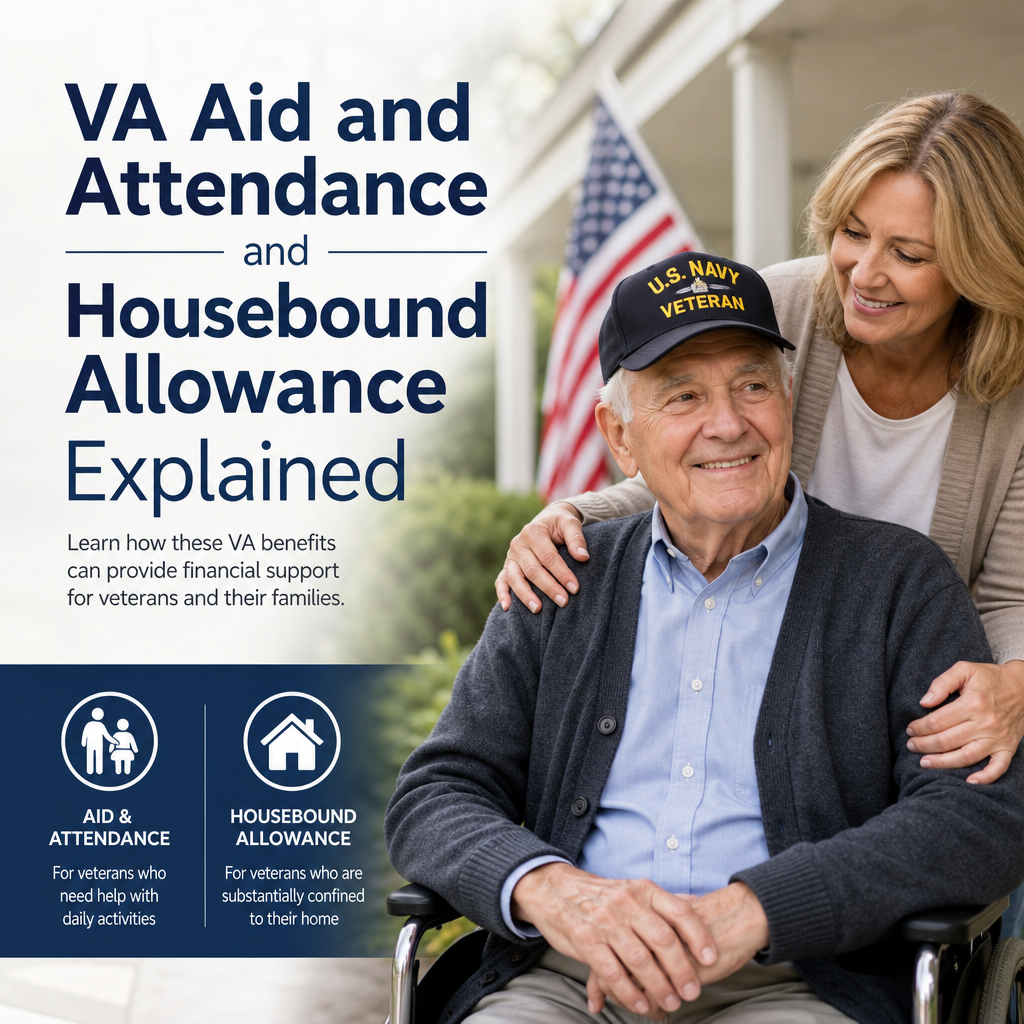
VA Aid and Attendance and Housebound Allowance Explained
VA Aid and Attendance can provide vital extra monthly support for veterans and surviving spouses who need help with daily care or supervision. This guide explains how it compares to the Housebound Allowance, who may qualify, and what the VA looks for during the application process.
By: Emily Adams on July 29, 2026
For many veterans and surviving spouses, VA Aid and Attendance benefits and the Housebound Allowance can make a real difference in paying for long-term care and daily support. These two added pension benefits are designed to help eligible veterans who need assistance with everyday activities or who are largely confined to their homes because of disability.
If you’re trying to understand whether you qualify, how these benefits work, and what the VA looks for during the application process, this guide breaks it down in plain English. You’ll learn the key differences between VA Aid and Attendance benefits and the Housebound Allowance, how eligibility is determined, and what steps can strengthen a claim.
What Are VA Aid and Attendance Benefits?
VA Aid and Attendance benefits are an increase to a qualifying veteran’s or surviving spouse’s pension. They are intended for people who need help with personal care or supervision because of physical or cognitive limitations.
These benefits can help cover the cost of:
In-home caregivers
Assisted living support
Nursing home expenses
Help with bathing, dressing, eating, or mobility
Supervision for memory-related conditions
Aid and Attendance is not a separate pension program. It is an added monthly amount that may be paid on top of the VA pension if the applicant meets specific medical and financial requirements.
Who Typically Uses Aid and Attendance?
This benefit is often relevant for:
Veterans who need help with activities of daily living
Surviving spouses who need assistance at home or in a care facility
Veterans with dementia, Parkinson’s disease, stroke-related limitations, or severe mobility issues
Individuals recovering from serious injury or illness who need regular support
The key question is not simply whether a person has a diagnosis, but whether that condition creates a real need for assistance.
What Is the VA Housebound Allowance?
The Housebound Allowance is another added pension benefit for veterans or surviving spouses who are substantially confined to their home because of permanent disability.
Unlike Aid and Attendance benefits, the Housebound Allowance does not require the applicant to need personal care assistance with daily activities. Instead, it focuses on whether the person is largely unable to leave home without significant difficulty.
How Housebound Status Is Different
A person may qualify for Housebound if they:
Are mostly confined to their home due to disability
Can leave home only for medical appointments or similar necessities
Have a permanent disability rated at 100% by the VA, or qualify under VA pension rules for housebound status
In practical terms, Housebound applies when someone can still manage many daily tasks but cannot regularly go out, travel freely, or participate in normal community life because of disability.
VA Aid and Attendance Benefits vs. Housebound Allowance
These two benefits are often confused, but they serve different needs. Understanding the difference can help you identify the right path.
Aid and Attendance
This benefit applies when a veteran or spouse needs help with:
Bathing
Dressing
Eating
Toileting
Walking safely
Taking medication
Protection from hazards caused by cognitive impairment
Housebound Allowance
This benefit applies when a veteran or spouse:
Is mostly homebound
Has a severe, permanent disability
Does not necessarily need hands-on help with personal care
Can You Receive Both?
Generally, a claimant cannot receive both Aid and Attendance and Housebound benefits at the same time. If someone qualifies for both, the VA typically pays the higher benefit amount rather than stacking them.
That is why it’s important to document the full scope of the person’s needs before applying. The right medical evidence can make a meaningful difference in which benefit is awarded.
Basic Eligibility Requirements
Eligibility for VA Aid and Attendance benefits and Housebound Allowance depends on two major areas:
Military service and benefit eligibility
Medical and functional need
Financial eligibility
Because these benefits are tied to the VA pension program, not every veteran qualifies. The rules can vary based on service history, marital status, and income.
Service Requirements
In general, the applicant must be a veteran who meets the service requirements for VA pension, or a qualifying surviving spouse.
Common service-related factors include:
At least 90 days of active duty
At least one day during a wartime period
An honorable or other qualifying discharge
Service requirements are important, but they are only the first step. Even if service criteria are met, the applicant must still show financial and medical need.
Medical Requirements
For Aid and Attendance, the VA looks for evidence that the applicant needs help with daily personal care or supervision. This may include:
Needing assistance to get out of bed
Requiring help dressing or bathing
Needing reminders or supervision due to dementia
Being unable to safely manage medications
Requiring a caregiver to prevent falls or accidents
For Housebound, the VA focuses on confinement to the home due to disability.
Financial Requirements
VA pension-based benefits are needs-based. That means the applicant’s income and assets matter. The VA evaluates whether countable income falls below the applicable limit and whether assets are reasonable for support.
This area can be confusing because the VA does not treat every asset the same way. The rules may consider:
Social Security income
Retirement income
Interest and dividends
Certain unreimbursed medical expenses
Savings and investments
Because of the complexity, applicants often benefit from reviewing the current VA pension rules carefully before filing.
How the VA Evaluates Daily Living Needs
One of the most important parts of a successful claim is showing how disability affects daily life. A diagnosis alone is not enough. The VA wants to understand what the person can and cannot do safely and consistently.
Activities of Daily Living
The VA often considers whether the applicant needs help with:
Bathing
Dressing
Eating
Toileting
Transferring from bed to chair
Walking or moving around safely
Protective Supervision
Some veterans qualify because they need protection from hazards in their environment. This is especially common with dementia, Alzheimer’s disease, and other cognitive conditions.
Examples include:
Forgetting to turn off appliances
Wandering outside unsafely
Taking medication incorrectly
Becomes disoriented and cannot be left alone
Even if the person can technically perform some tasks, the need for supervision can still support an Aid and Attendance claim.
Common Medical Conditions That May Support a Claim
Certain conditions often lead to Aid and Attendance benefits or Housebound Allowance, but the condition itself is not what matters most. The functional impact is what counts.
Examples include:
Advanced arthritis
Stroke-related weakness
Parkinson’s disease
COPD or severe respiratory disease
Heart failure
Dementia or Alzheimer’s disease
Vision loss
Balance disorders
Severe mobility limitations
Neuropathy or paralysis
If the condition limits mobility, safety, or the ability to handle daily care independently, it may support the claim.
What Evidence Helps Support the Application?
A strong application usually includes both medical and personal evidence. The more clearly you show daily limitations, the easier it is for the VA to evaluate the claim.
Helpful Documentation
Consider gathering:
Medical records
Physician statements
Caregiver notes
Assisted living records
Home health agency invoices
Hospital discharge summaries
Medication lists
Physical therapy notes
Statements from family members or caregivers
VA Forms and Medical Statements
The VA often relies on specific forms and supporting medical evidence to confirm eligibility. A doctor’s statement that explains the person’s limitations in detail can be especially helpful.
The best medical evidence usually explains:
What condition the applicant has
How the condition affects everyday activities
Whether the condition is expected to continue
Whether supervision or personal care is required
Practical Example
A veteran with moderate dementia may still dress and eat independently on some days. However, if they forget to take medication, leave the stove on, or wander outside at night, the need for supervision may support Aid and Attendance benefits.
On the other hand, a veteran with severe arthritis who rarely leaves home but does not need hands-on help with bathing or dressing may be better suited for Housebound status.
How the Application Process Works
Applying for VA Aid and Attendance benefits or the Housebound Allowance usually involves several steps. While the process can feel paperwork-heavy, being organized helps.
Step 1: Confirm Basic Eligibility
Before filing, verify:
Wartime service
Discharge status
Pension eligibility
Income and asset picture
Medical need for assistance or confinement
Step 2: Collect Documentation
Gather all relevant records, including doctor notes, financial information, and caregiver details.
Step 3: Complete the Required VA Forms
The application may include pension forms and medical documentation showing the need for Aid and Attendance or Housebound benefits.
Step 4: Submit the Claim
Make sure the claim is complete and clear. Missing records can delay processing.
Step 5: Respond to VA Requests
The VA may ask for additional information, clarification, or updated medical documentation.
Common Mistakes That Can Delay a Claim
Many claims are delayed because applicants overlook details that matter.
Avoid These Errors
Submitting incomplete medical evidence
Failing to explain daily care needs
Assuming a diagnosis automatically qualifies the applicant
Forgetting to include unreimbursed medical expenses
Using outdated financial information
Not checking whether the claim should be Aid and Attendance or Housebound
A well-prepared application should focus on real-life limitations, not just medical labels.
When to Consider Professional Help
Some applicants can handle the process on their own, but others may find it easier to work with an accredited representative, veterans service officer, or elder law professional.
Professional help may be useful if:
The person has complex medical needs
There are questions about countable income or assets
The application was denied and needs appeal support
The family is unsure whether Aid and Attendance or Housebound is the better fit
A knowledgeable professional can help present the facts clearly and avoid common filing errors.
Why These Benefits Matter
Long-term care is expensive, and even modest monthly assistance can ease the financial pressure on families. VA Aid and Attendance benefits and the Housebound Allowance exist to help eligible veterans and spouses remain safe, supported, and as independent as possible.
For some, these benefits help pay a caregiver who makes it possible to stay at home. For others, they provide added support when leaving the house is no longer realistic. Either way, they can reduce stress and improve quality of life.
Frequently Asked Questions
1. Is Aid and Attendance the same as a VA disability benefit?
No. VA Aid and Attendance benefits are part of the VA pension program, not the disability compensation program. Disability compensation is based on service-connected conditions, while Aid and Attendance is needs-based and depends on service, income, assets, and care requirements.
2. Can a veteran with no service-connected disability qualify?
Yes, potentially. A veteran does not need a service-connected disability to qualify for Aid and Attendance or Housebound if they meet the VA pension service requirements and the medical and financial eligibility rules. The benefit is based on need, not just service connection.
3. What is the main difference between Aid and Attendance and Housebound?
Aid and Attendance is for people who need help with personal care or supervision. Housebound is for people who are substantially confined to their home because of disability. Aid and Attendance generally provides the higher benefit amount.
4. Does living in assisted living automatically qualify someone?
Not automatically. Assisted living may support a claim, but the VA still looks at the person’s actual care needs, service eligibility, and financial situation. The facility setting alone does not guarantee approval.
5. What if the VA denies the application?
A denial does not always mean the claim is over. The applicant may be able to provide additional medical evidence, correct missing information, or pursue an appeal depending on the reason for denial. Reviewing the decision carefully is the first step.
VA Aid and Attendance benefits and the Housebound Allowance can provide meaningful financial relief for veterans and surviving spouses who need extra support. The best way to approach these benefits is to focus on the real-world impact of a condition: does the person need help with daily personal care, or are they largely confined to home because of disability? That distinction matters, and it helps determine which benefit may be appropriate.
A strong claim usually includes clear medical evidence, a complete financial picture, and detailed examples of how the disability affects everyday life. If you are helping a loved one, documenting caregiver support, safety concerns, and changes in independence can make the application stronger.
Understanding these benefits is an important first step toward getting the support you may be entitled to. If you think a veteran or surviving spouse may qualify, reviewing the VA’s current rules and gathering documentation early can help move the process forward with less stress and fewer delays.
Emily A, holds a Master's degree in Public Administration (MPA) and has over 7 years of experience researching federal and state assistance programs. She writes educational content focused on government benefits, public policy, and community resources, using information from official agencies to help readers understand available programs and eligibility requirements.