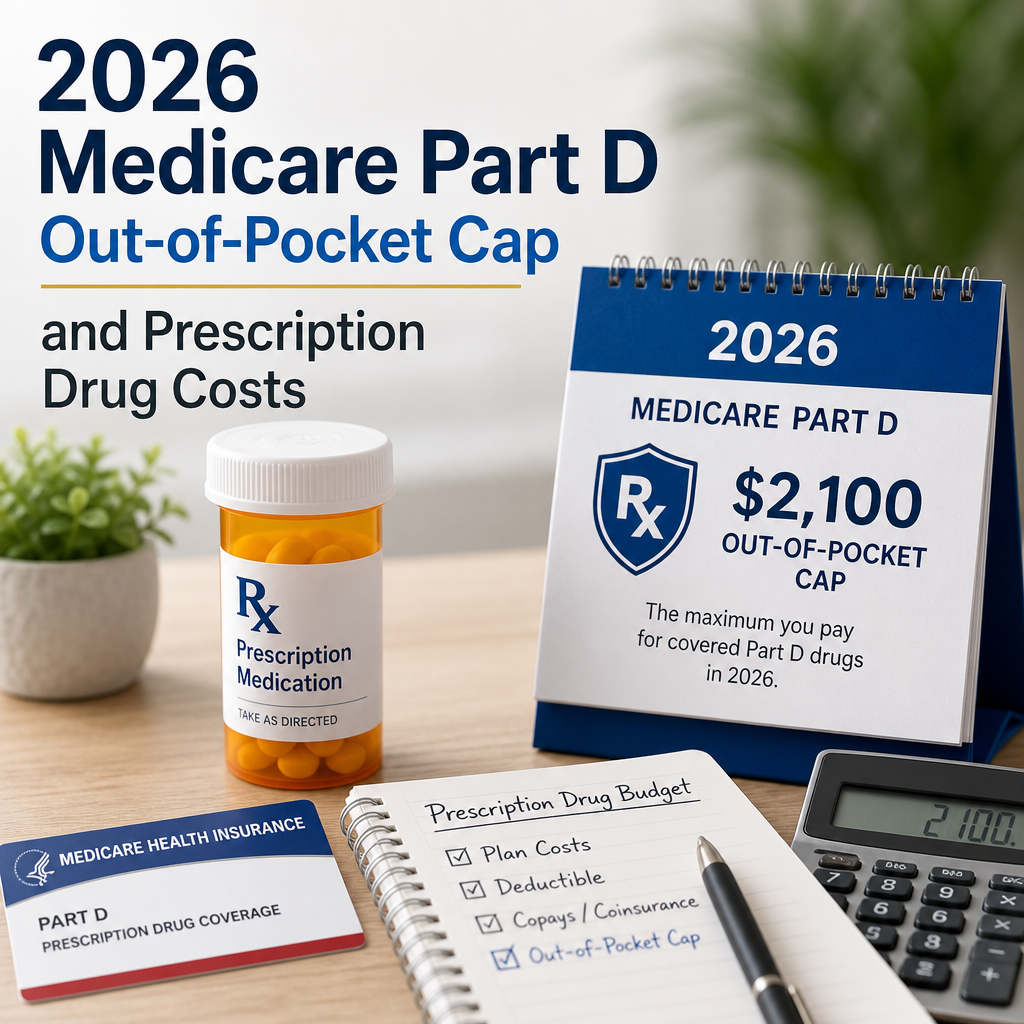
2026 Medicare Part D Out-of-Pocket Cap and Prescription Drug Costs
In 2026, the Medicare Part D out-of-pocket cap can offer major relief for people who rely on expensive prescriptions, helping turn unpredictable drug bills into more manageable yearly costs. Here’s what the cap means, how it works, and how it may affect what you pay at the pharmacy.
By: Emily Adams on July 29, 2026
Prescription drug spending is one of the biggest concerns for people on Medicare, especially those who rely on expensive medications throughout the year. The good news is that the 2026 Medicare Part D out-of-pocket cap and prescription drug costs will continue to be shaped by recent changes that aim to make coverage more predictable and easier to manage. For many beneficiaries, that means less financial strain and fewer surprises at the pharmacy counter.
If you take multiple prescriptions or use high-cost specialty drugs, understanding how the Part D drug benefit works in 2026 can help you plan ahead. This guide explains the out-of-pocket cap, how Medicare Part D costs are calculated, and what steps you can take to reduce what you pay.
What the 2026 Medicare Part D Out-of-Pocket Cap Means
The Medicare Part D out-of-pocket cap is a limit on how much you have to pay for covered prescription drugs in a plan year. Once you reach that limit, your out-of-pocket costs for covered Part D drugs drop dramatically for the rest of the year.
This cap matters because it protects people who use costly medications from having to keep paying unlimited amounts. Before this change, some beneficiaries faced very high annual drug costs even after hitting earlier phases of coverage.
How the cap works in simple terms
Your total prescription drug spending may involve several stages:
Deductible phase – You pay the full cost of covered drugs until you meet the plan deductible, if your plan has one.
Initial coverage phase – You and the plan share costs through copays or coinsurance.
Catastrophic protection or capped-cost phase – Once your true out-of-pocket spending reaches the annual limit, your costs for covered Part D drugs become much lower or stop entirely, depending on the year’s rules.
The exact dollar amount for 2026 depends on federal Medicare guidance and annual plan design updates. Because Part D rules can change, it is important to check the current year’s official Medicare information before enrolling or making coverage decisions.
Why the 2026 Medicare Part D Out-of-Pocket Cap Matters
For people with chronic conditions such as diabetes, cancer, rheumatoid arthritis, multiple sclerosis, or heart disease, prescription drug costs can add up quickly. Even with insurance, a single specialty medication can be expensive enough to affect monthly budgets.
The cap helps in several practical ways:
It reduces the risk of catastrophic drug spending.
It makes annual prescription costs easier to forecast.
It can improve medication adherence by lowering cost barriers.
It gives beneficiaries more protection when drug prices rise.
This is especially important for retirees living on fixed incomes. Without some form of annual cap, a person might skip medications, split doses, or delay refills just to save money. The Part D cap is designed to reduce those harmful choices.
Understanding Medicare Part D Costs in 2026
To get a handle on the 2026 Medicare Part D out-of-pocket cap and prescription drug costs, it helps to understand where the money goes.
Common Part D cost components
Your prescription costs may include:
Monthly premium for your Part D plan
Annual deductible, if applicable
Copayments for certain drugs
Coinsurance, which is a percentage of the drug price
Non-covered drug costs, which are not counted the same way as covered drugs
Drugs purchased outside the plan network, which may cost more
Not every plan uses the same cost-sharing structure. Some plans have low premiums but higher drug costs, while others charge more each month and offer better coverage for prescriptions.
What counts toward the out-of-pocket cap
Usually, only certain costs for covered Part D drugs count toward your out-of-pocket total. These are commonly called true out-of-pocket costs or TrOOP costs.
Costs that may count include:
Deductibles
Copays
Coinsurance
Some payments made on your behalf by others, depending on the source and Medicare rules
Costs that generally do not count include:
Premiums
Drugs not covered by your plan
Drugs purchased outside the Part D benefit rules
Some costs paid by third parties that do not qualify under Medicare rules
Because the rules can be technical, it helps to review your plan’s Evidence of Coverage or speak with Medicare or your plan provider if you are unsure.
How the 2026 Cap Could Affect Different Beneficiaries
The impact of the 2026 Medicare Part D out-of-pocket cap and prescription drug costs will vary based on your medication use.
If you take a few low-cost medications
You may never come close to the cap. In that case, the biggest benefit may be the peace of mind that comes with knowing your coverage has a built-in limit if your prescriptions change later.
If you take expensive brand-name or specialty drugs
You are more likely to benefit directly from the cap. Once your covered out-of-pocket costs reach the annual limit, your spending for covered drugs should drop significantly for the remainder of the year.
If you receive Extra Help
People who qualify for the Extra Help program may already have lower prescription costs through Medicare. Extra Help works alongside Part D and can reduce premiums, deductibles, and copays.
If you use insulin or chronic-condition medications
Many Medicare enrollees use drugs that are needed continuously. For these beneficiaries, even modest savings every month can make a big difference across a year. A cap can help smooth out the cost of staying on treatment.
Practical Ways to Lower Medicare Prescription Drug Costs in 2026
The cap is helpful, but it is only one part of a smart drug-cost strategy. You can take several steps to reduce your overall spending.
1. Compare Part D plans during open enrollment
Plans differ in:
Premiums
Formularies
Pharmacy networks
Preferred drug tiers
Cost-sharing rules
A plan that looks cheaper on paper may cost more overall if it does not cover your medications well. Use the Medicare Plan Finder to compare plans based on the specific drugs you take.
2. Review your drug list every year
A medication that was affordable in 2025 may move to a different tier in 2026. Your plan can also change:
Which drugs it covers
Prior authorization requirements
Quantity limits
Mail-order pricing
Always check your Annual Notice of Change and make sure your prescriptions are still covered in a cost-effective way.
3. Ask your doctor about generics or biosimilars
Generic drugs often cost less than brand-name drugs and may work just as well. In some cases, a biosimilar may also offer savings on certain specialty medications.
A simple question like “Is there a lower-cost option that works for me?” can lead to meaningful savings.
4. Use preferred pharmacies when possible
Many Part D plans have preferred pharmacy networks that offer lower copays or coinsurance. Mail-order pharmacy options can also save money for maintenance medications.
5. Check for manufacturer assistance and other savings programs
Depending on the medication, you may be able to access:
Manufacturer copay assistance
Patient assistance programs
State pharmaceutical assistance programs
Nonprofit support resources
Be careful to confirm whether any assistance counts toward your Part D out-of-pocket totals under Medicare’s current rules.
Planning for Prescription Drug Costs Before 2026 Begins
Good planning can help you avoid financial stress later in the year. Here’s a simple approach.
Create a medication cost checklist
Write down:
Every prescription you take
The dosage and frequency
Whether each drug is brand-name or generic
Which pharmacy you use
How much you paid last year
Whether your plan required prior authorization or step therapy
This checklist makes it easier to compare plans and estimate your annual costs.
Estimate your yearly spending
Consider the following:
Monthly premiums
Deductible
Copays and coinsurance
Expected pharmacy changes
Possible new prescriptions
Even if you cannot predict every medical need, a rough estimate helps you budget realistically.
Watch for medication changes during the year
A new diagnosis, surgery, or specialist recommendation can change your drug spending. If that happens, revisit your coverage before costs build up.
Common Mistakes to Avoid
Even with a strong benefit design, some beneficiaries still overpay because they miss important details.
Ignoring the formulary
A drug being “covered” does not always mean it is covered at the lowest cost. Check the formulary tier and any utilization rules.
Assuming all pharmacies cost the same
Two pharmacies can charge very different amounts under the same plan. Compare preferred and standard network pharmacies before refilling.
Not reviewing plan changes
Plans update annually. If you keep the same plan without reviewing it, you may miss a cheaper or better option.
Forgetting about non-covered drugs
The Part D cap applies to covered drugs under the plan rules. If a medication is not covered, you may be responsible for the full cost.
What to Ask Before Choosing a Part D Plan
If you are comparing plans for 2026, ask these questions:
Are my current prescriptions on the formulary?
What tier is each drug on?
Is there a deductible?
Which pharmacies are preferred?
Do I need prior authorization or step therapy?
What will I pay before I reach the out-of-pocket cap?
Is mail-order available for maintenance medications?
How does the plan handle specialty drugs?
These questions can save time, money, and frustration later.
How Caregivers and Family Members Can Help
Many Medicare beneficiaries rely on family or caregivers to manage appointments, medications, and billing. If you help someone with Medicare, you can make a real difference by:
Tracking refill dates
Comparing plan notices
Organizing explanation-of-benefits statements
Keeping a list of current medications
Calling the plan with coverage questions
A little preparation can prevent missed doses and unexpected pharmacy bills.
Frequently Asked Questions
What is the 2026 Medicare Part D out-of-pocket cap?
The 2026 Medicare Part D out-of-pocket cap is the annual limit on what you pay for covered Part D prescription drugs. Once you reach that limit, your out-of-pocket responsibility for covered drugs drops significantly for the rest of the plan year. The exact dollar amount is set by Medicare rules and should be confirmed with official 2026 guidance.
Do premiums count toward the Part D out-of-pocket cap?
No. Monthly premiums generally do not count toward the Part D out-of-pocket cap. The cap usually applies to certain out-of-pocket costs for covered drugs, such as deductibles, copays, and coinsurance. Premiums are separate from those drug-payment rules.
Does the cap apply to all prescription drugs?
No. The cap generally applies only to covered Part D drugs under your plan. Drugs that are not covered by your plan, or that fall outside Part D benefit rules, usually do not count toward the cap. Always check your plan formulary and coverage rules.
How can I tell when I have reached the cap?
Your Part D plan should track your covered out-of-pocket spending and send notices explaining your progress. You can also review your pharmacy receipts, plan statements, or online account information. If you are unsure, call your plan and ask for an updated out-of-pocket total.
What can I do if my prescription costs are still too high?
You can compare Part D plans, ask your doctor about lower-cost alternatives, use preferred pharmacies, check for Extra Help eligibility, and review manufacturer or nonprofit assistance options. If your medications are especially expensive, a careful plan comparison may reduce your annual cost more than staying in a plan by default.
The 2026 Medicare Part D out-of-pocket cap and prescription drug costs are an important part of protecting beneficiaries from overwhelming pharmacy bills. While the exact numbers and plan details can change, the bigger picture is clear: Medicare continues to move toward more predictable prescription drug coverage and stronger financial protection for people who rely on ongoing medications.
The smartest approach is to stay informed, review your plan before enrollment, and compare your prescription needs against each plan’s formulary, pharmacy network, and cost-sharing rules. If you take expensive medications, this can make a major difference in what you spend over the course of the year. And if your prescriptions are relatively modest now, understanding the cap still helps you prepare for future changes in health or coverage.
Taking a little time now to review your options can help you avoid costly surprises later. Use official Medicare resources, talk with your pharmacist or doctor when needed, and make sure your Part D coverage works for your real-life medication needs.
Emily A, holds a Master's degree in Public Administration (MPA) and has over 7 years of experience researching federal and state assistance programs. She writes educational content focused on government benefits, public policy, and community resources, using information from official agencies to help readers understand available programs and eligibility requirements.