How Rural and Low-Income School Programs Improve Student Achievement
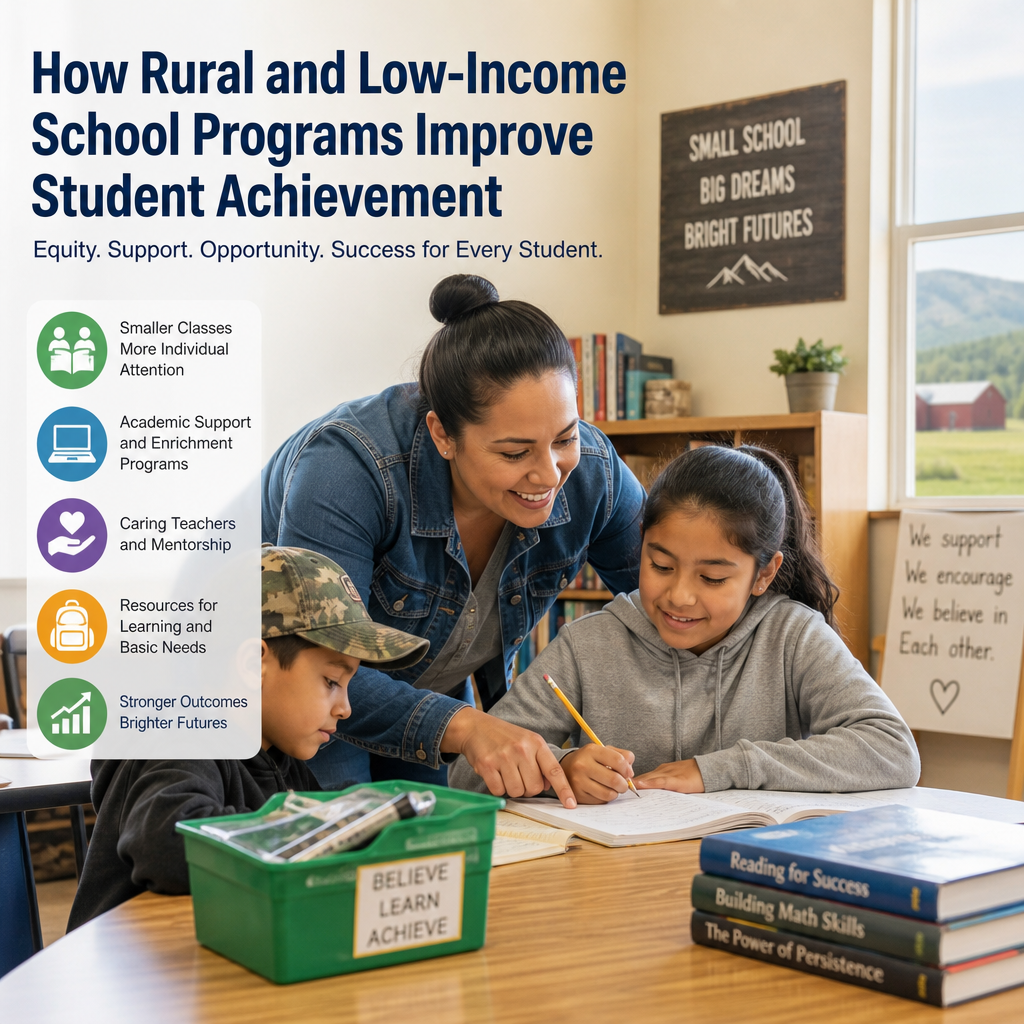
Rural school programs can make a powerful difference by giving students the support they need to overcome barriers outside the classroom. From tutoring and meals to mentoring and family outreach, these programs help build the stability, confidence, and opportunity students need to achieve more.
By: Jennifer Collins - Education on July 28, 2026
Rural and low-income school programs play a major role in helping students succeed academically, socially, and emotionally. In communities where families may face transportation barriers, limited internet access, fewer enrichment opportunities, or economic hardship, schools often become much more than places for instruction. They serve as hubs for meals, counseling, tutoring, mentoring, and family engagement. When designed well, these programs can close gaps in opportunity and help students build the foundation they need for long-term achievement.
Understanding how rural and low-income school programs support student achievement matters for educators, parents, policymakers, and community leaders alike. These programs do not solve every challenge overnight, but they often provide the consistent support students need to stay engaged, attend school regularly, and perform better over time.
Why Rural and Low-Income School Programs Matter
Students in rural and low-income communities can face barriers that affect learning long before they enter the classroom. Some schools serve families dealing with food insecurity, unstable housing, limited access to healthcare, or long commutes. Others operate in remote areas where staffing shortages, reduced funding, and fewer community resources make it harder to offer a full range of services.
That is where rural and low-income school programs make a difference. These programs are often designed to address barriers that interfere with learning, such as:
Lack of access to after-school care
Limited access to tutoring or advanced coursework
Transportation challenges
Health and nutrition needs
Gaps in digital access
Fewer extracurricular and enrichment opportunities
By reducing these obstacles, schools can help students focus more fully on learning. The result is not only stronger academic performance, but also better attendance, higher engagement, and improved confidence.
How Rural and Low-Income School Programs Support Student Achievement
The best rural and low-income school programs do more than add extra services. They create systems that help students show up ready to learn and stay connected throughout the school year. Here are some of the most effective ways they work.
1. They Improve Access to Academic Support
Tutoring, remediation, and targeted intervention are among the most direct ways these programs support student achievement. Many students need extra help in reading, math, or science, especially when learning gaps widen over time. Rural and low-income school programs often provide:
Small-group instruction
One-on-one tutoring
Extended learning time
Summer learning programs
Credit recovery options
These supports can help students catch up before small struggles turn into long-term setbacks. For example, a middle school student who receives weekly reading intervention may become more confident in class and more prepared for high school coursework.
2. They Address Attendance Barriers
Attendance is closely linked to academic success, but many students miss school for reasons beyond their control. In rural areas, transportation can be a major issue. In low-income communities, families may face work schedule conflicts, childcare responsibilities, or unstable living situations.
School-based solutions can include:
Bus route adjustments
Attendance outreach teams
Family communication programs
Flexible scheduling for make-up work
Home visits or community check-ins
When schools respond early to attendance problems, they help students stay connected to instruction and reduce the chance of falling behind.
3. They Support Nutrition and Health
A student who is hungry, tired, or dealing with untreated health issues has a harder time concentrating and retaining information. Many rural and low-income school programs improve achievement by meeting basic needs first. Common examples include:
Breakfast and lunch programs
Weekend meal backpacks
School-based health clinics
Vision and hearing screenings
Mental health counseling
These supports are especially important because physical and emotional well-being affect learning. A child with access to breakfast, for instance, is more likely to arrive focused and ready to participate. Likewise, a student receiving counseling for anxiety or trauma may be better able to manage classroom demands.
4. They Expand Access to Technology and Digital Learning
In many rural communities, internet access remains inconsistent. In low-income households, families may share a single device or lack reliable broadband altogether. This creates a serious challenge when homework, communication, and even routine assignments depend on technology.
To help close the digital divide, schools may provide:
Laptop or tablet loan programs
Wi-Fi hotspots
Computer labs open before or after school
Digital literacy training
Online learning platforms with offline access
These tools help students complete assignments, build digital skills, and access educational content beyond the school day. They also support family engagement, especially when parents need online portals to check grades or communicate with teachers.
5. They Create Safe and Supportive Learning Environments
Students learn best when they feel safe, respected, and supported. Many rural and low-income school programs invest in positive school climate through mentoring, restorative practices, and social-emotional learning. These approaches help students develop self-regulation, communication, and problem-solving skills.
Examples include:
Advisory periods
Mentoring from staff or community volunteers
Conflict resolution programs
Counseling services
Anti-bullying efforts
When schools build trust and belonging, students are more likely to participate, ask for help, and remain engaged. That sense of connection can be especially meaningful for students who may face stress outside school.
Types of Programs That Make a Difference
Not every school needs the same mix of services. The most effective rural and low-income school programs reflect local needs, student demographics, and available community partnerships.
Early Childhood and Pre-K Support
Early learning is one of the strongest predictors of later school success. In rural and low-income communities, pre-K programs can help children build vocabulary, early literacy, and social skills before kindergarten.
These programs may also give families access to developmental screenings, parenting support, and referrals to community services.
After-School and Summer Programs
Learning does not stop when the school bell rings. After-school and summer programs can reduce learning loss and give students more time to practice skills in a structured environment. They often include:
Homework help
Enrichment activities
Arts and music
STEM projects
Physical activity and recreation
For working families, these programs also provide a safe place for children to stay until parents or guardians are available.
Career and College Readiness Initiatives
Older students benefit from programs that connect classroom learning to future opportunities. Rural and low-income school programs may offer:
Career exploration
Dual enrollment
College counseling
Apprenticeship partnerships
FAFSA and financial aid guidance
These experiences help students see a path forward after graduation and build motivation to stay in school.
Family Engagement Programs
Families play a central role in student success. However, schools must often work around language differences, scheduling conflicts, or limited access to transportation. Effective family engagement programs include:
Parent workshops
Home-school communication tools
Community events
Translation services
Flexible meeting times
When schools build strong relationships with families, students usually benefit from more consistent support at home and at school.
What Makes These Programs Effective?
Not every program leads to better outcomes. Successful rural and low-income school programs share a few important traits.
They Are Based on Real Needs
Good programs start with local data and community input. Schools need to understand which barriers students face most often before choosing services. A district with high absenteeism may prioritize transportation and outreach, while another may focus on literacy intervention or broadband access.
They Are Easy to Access
Students and families cannot benefit from programs they do not know about or cannot reach. Strong programs are visible, simple to use, and available at times that work for families.
They Are Consistent
Short-term efforts can help, but sustained support matters more. Students benefit when tutoring, counseling, and family outreach continue over time rather than appearing only during crises.
They Are Connected to the Classroom
The best supports reinforce instruction rather than operate separately from it. Teachers, counselors, and support staff should coordinate so students receive aligned help across the school day.
They Include Community Partnerships
Schools do not have to do everything alone. Partnerships with libraries, health providers, nonprofits, colleges, businesses, and faith-based organizations can expand what students receive without overburdening staff.
Practical Examples of Support in Action
Here are a few realistic examples of how rural and low-income school programs can improve student achievement:
A small rural elementary school starts a breakfast program and sees more students arrive on time and ready to learn.
A low-income middle school opens a homework center after school, helping students complete assignments before they go home to crowded households.
A high school in a remote district partners with a community college to offer dual enrollment courses, giving students a stronger transition to postsecondary education.
A district with limited internet access distributes hotspots and devices, enabling students to complete digital assignments and stay connected with teachers.
A school serving families under economic stress adds a counselor and social worker, helping students manage anxiety and stay focused in class.
These examples show that student achievement is not shaped by academics alone. It depends on whether students have the tools, support, and stability to learn.
Challenges Schools Must Overcome
Even effective programs face real challenges. Funding can be limited, staffing can be difficult, and transportation or broadband issues may persist. Rural schools often struggle to recruit specialized teachers, counselors, or interventionists. Low-income schools may also face high student needs alongside tight budgets.
To overcome these barriers, schools can:
Prioritize the most urgent needs first
Use data to evaluate what is working
Apply for grants and community support
Share resources across schools or districts
Involve families in planning and feedback
A practical, community-based approach often works better than trying to launch too many programs at once.
How Communities Can Help
Schools are strongest when communities invest in them. Parents, local leaders, businesses, and nonprofit organizations can all support rural and low-income school programs in meaningful ways.
Ways to help include:
Volunteering as a tutor or mentor
Donating books, technology, or school supplies
Supporting food drives or weekend meal programs
Offering internships or job-shadowing opportunities
Helping with transportation or event coordination
Advocating for funding and policy support
Even small contributions can make a real difference when they are coordinated around student needs.
Frequently Asked Questions
What are rural and low-income school programs?
Rural and low-income school programs are services and initiatives designed to help students in communities with limited resources or geographic barriers. They may include tutoring, meals, counseling, after-school care, technology access, and family engagement efforts. The goal is to reduce obstacles that interfere with learning and improve student achievement.
How do these programs improve academic performance?
They improve academic performance by helping students meet basic needs, stay in school, and receive targeted academic support. When students have access to tutoring, nutrition, health services, and reliable technology, they are better prepared to participate in class and complete assignments successfully.
Why is attendance such a big issue in rural and low-income schools?
Attendance can be affected by transportation problems, family work schedules, childcare needs, health concerns, and unstable housing. Rural and low-income school programs often address these barriers through outreach, bus services, flexible support, and family communication. Better attendance usually leads to stronger learning outcomes.
Do after-school programs really help students?
Yes, after-school programs can help students reinforce what they learn during the day, complete homework, and build social and academic skills. They are especially helpful for students who may not have quiet study space or adult academic support at home. Summer programs can also reduce learning loss.
How can parents support these programs?
Parents can support these programs by staying informed, attending school events, sharing feedback, and encouraging their children to participate. Families can also advocate for services their children need, such as tutoring, meals, transportation, or counseling. Strong parent-school partnerships make programs more effective.
Rural and low-income school programs support student achievement by removing barriers that can make learning harder than it should be. They help students access tutoring, nutrition, health care, technology, transportation, and emotional support. Just as important, they build stronger connections among schools, families, and communities.
When these programs are tailored to real needs and delivered consistently, they can improve attendance, boost confidence, and create more pathways to success. They also remind us that student achievement is not just about classroom instruction. It depends on whether schools provide the practical support students need to thrive.
For educators and community leaders, the next step is clear: identify the biggest barriers, invest in the most effective supports, and keep students at the center of every decision. When schools and communities work together, rural and low-income students can reach their full potential and build a stronger future.
Jennifer, M.Ed., holds a degree in Higher Education Administration, with
a focus on U.S. college financial aid, admissions policy, and student
support systems. She researches and writes about scholarships, federal
aid programs, and the college planning process to help students and
families make informed, well-supported decisions.