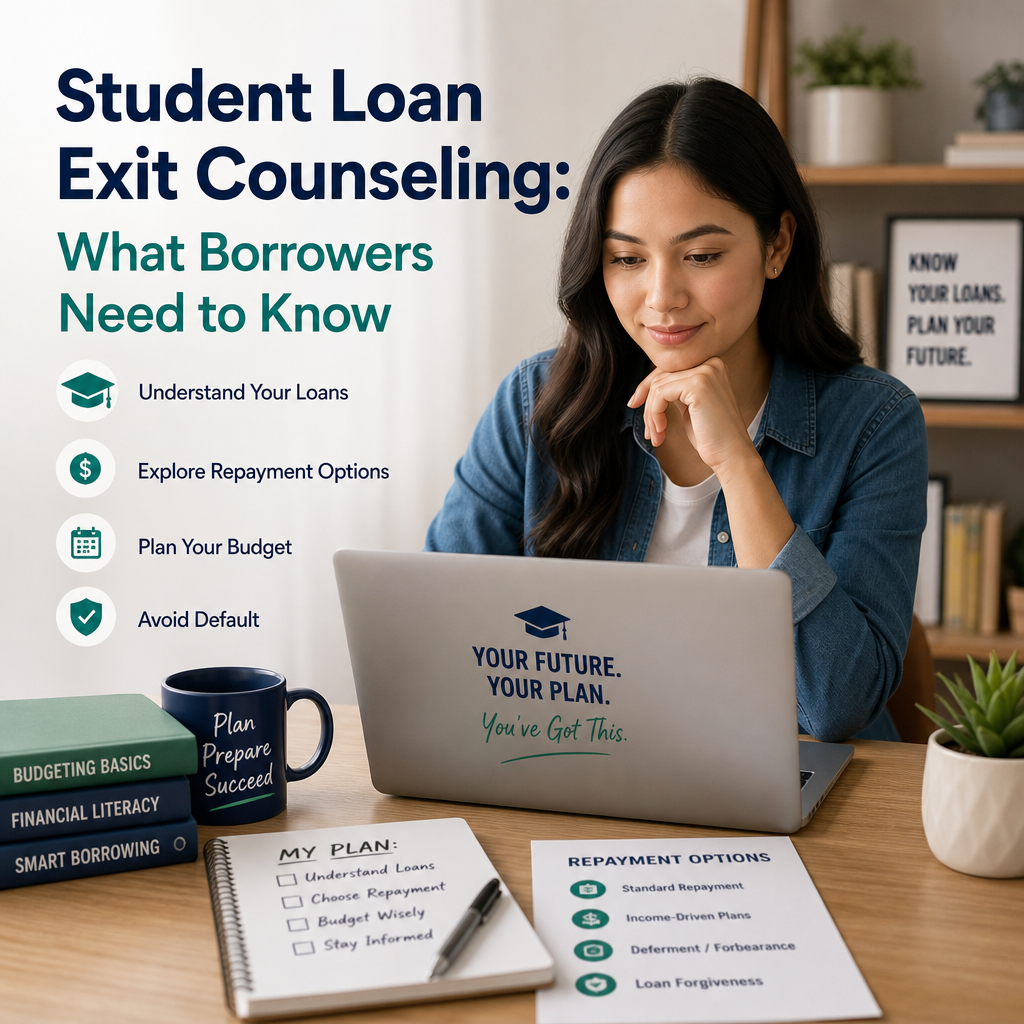
Student Loan Exit Counseling: What Borrowers Need to Know
Student loan exit counseling helps you prepare for repayment by explaining your loan details, payment timeline, and options if you need help later. Taking it seriously now can make the transition out of school much smoother and help you avoid costly mistakes.
By: Jennifer Collins - Education on July 28, 2026
Leaving school is exciting, but it also brings a new set of responsibilities—especially if you borrowed money for college. Student loan exit counseling is one of the most important steps borrowers can take before repayment begins. It helps you understand your loan details, your repayment options, and the actions you need to take to stay on track.
For many people, student loan repayment feels confusing at first. Interest starts to matter more, due dates begin to loom, and it becomes easy to miss an important notice. Exit counseling is designed to reduce that stress by giving you a clear roadmap. Whether you’re graduating, leaving school early, or dropping below half-time enrollment, knowing how student loan exit counseling works can help you avoid costly mistakes.
What Is Student Loan Exit Counseling?
Student loan exit counseling is a required educational session for borrowers who are leaving school and have federal student loans. It explains what happens next, how repayment works, and what options are available if you run into trouble.
Unlike entrance counseling, which prepares students before borrowing, exit counseling focuses on the transition into repayment. It is meant to make sure you understand:
Your loan balance and servicer information
When repayment begins
Your grace period, if you have one
Repayment plans and monthly payment expectations
What happens if you miss payments
Deferment, forbearance, and forgiveness options
How to avoid default
For federal student loans, this counseling is typically completed online through the federal student aid portal or through your school’s financial aid office. Private student loans may have their own exit requirements, but they are not the same as federal student loan exit counseling.
Why Exit Counseling Matters
It is tempting to treat exit counseling as just another form to complete before graduation. In reality, it can be one of the most valuable parts of the repayment transition.
It helps you avoid surprises
Many borrowers do not realize how quickly repayment can start. Exit counseling tells you exactly when your first bill is due and who will send it.
It helps you choose the right repayment plan
Federal loans offer several repayment plans, including standard and income-driven options. Exit counseling explains the differences so you can choose a plan that fits your budget.
It helps you protect your credit
Missing payments can lead to late fees, damaged credit, and default. Understanding your obligations early gives you a better chance of staying current.
It helps you prepare for changing circumstances
Life after school is unpredictable. You may need a lower payment, a deferment, or another form of relief. Exit counseling gives you the basics so you know where to start if financial trouble arises.
When You Must Complete Student Loan Exit Counseling
You are generally required to complete student loan exit counseling when one of the following happens:
You graduate
You drop below half-time enrollment
You leave school for any reason
You transfer to another school and are no longer enrolled at least half-time
You withdraw from your program
If you have received federal student loans while attending school, your school will usually notify you when exit counseling is required. Still, you should not wait for the reminder. If you know you are leaving school, complete the process as soon as possible.
What Student Loan Exit Counseling Covers
Exit counseling gives you practical information you can use right away. While the format may vary, most sessions cover the same core topics.
Loan details and balances
You will usually review the types of federal loans you borrowed, the total amount owed, and the interest rates attached to each loan. This is useful because different loans may have different repayment terms.
Your loan servicer
A loan servicer is the company that manages billing and repayment for your federal student loans. Exit counseling helps you identify your servicer, how to contact them, and where to create an online account.
Your repayment timeline
Most federal loans have a grace period after you leave school. For example, many Direct Loans include a six-month grace period, though not all loans do. Exit counseling helps you confirm when repayment begins.
Repayment plan options
You may learn about:
Standard Repayment Plan
Graduated Repayment Plan
Extended Repayment Plan
Income-Driven Repayment Plans
Each option affects your monthly payment and how long you will take to repay the loan.
What happens if you cannot pay
Exit counseling explains the consequences of missed payments and introduces possible relief options like deferment or forbearance. It also discusses borrower rights and responsibilities.
Loan forgiveness and cancellation possibilities
Some borrowers may qualify for programs such as Public Service Loan Forgiveness or other cancellation options depending on their work, service, or loan type. Exit counseling is not a full guide to every program, but it will point you in the right direction.
How to Complete Student Loan Exit Counseling
The process is usually straightforward, but you should set aside enough time to finish it carefully. Rushing through can cause you to miss important information.
Step 1: Log in to the official student aid website
For federal loans, exit counseling is typically completed through the U.S. Department of Education’s student aid site. You will need your FSA ID.
Step 2: Review your loan information
Make sure the information listed matches your records. Check the balance, servicer, and contact details.
Step 3: Read the counseling content carefully
The session includes key repayment information. Do not click through too quickly. The material is there to help you make informed decisions.
Step 4: Complete the confirmation quiz or acknowledgments
Many online counseling sessions include questions or confirmation steps to ensure you understand the material.
Step 5: Save your records
Take screenshots or download confirmation pages if available. Keep copies of any notices or emails in case you need them later.
Important Documents and Information to Have Ready
Before you start student loan exit counseling, gather the following:
Your FSA ID
Your current contact information
Your personal email address
Your school email, if still active
Details for each federal loan, if you have them
Any questions you want to ask your loan servicer
It also helps to create a simple repayment folder—digital or paper—where you keep loan statements, servicer notices, and confirmation of completed counseling.
Common Mistakes Borrowers Make After Leaving School
Even responsible borrowers can make errors when repayment begins. Knowing these mistakes ahead of time can save you money and stress.
Ignoring servicer mail and email
Your loan servicer will send billing information, due dates, and notices about your account. If you ignore those messages, you may miss important deadlines.
Assuming all loans work the same way
Federal loans, private loans, and parent loans can have different rules. Exit counseling helps with federal loans, but you should separately review private loan terms.
Missing the first payment
Some borrowers think payment will automatically pause after graduation. That is not always true. Understand your grace period and mark the first due date on your calendar.
Waiting until there is a problem to ask for help
If your income changes, contact your servicer early. Waiting too long can limit your options.
Not updating contact information
If your address, phone number, or email changes, update your servicer right away. You do not want to miss billing notices because they went to the wrong place.
How to Make Repayment More Manageable
After completing student loan exit counseling, the next step is planning how you will repay your loans without overwhelming your budget.
Build a simple monthly budget
List your take-home income and fixed expenses, then estimate how much room you have for loan payments. Even a basic budget can reveal whether you need a different repayment plan.
Set up autopay if possible
Many loan servicers offer automatic payments. This can help you avoid late payments and may even provide a small interest rate reduction for some loans.
Pay attention to interest
Interest can increase your total repayment cost over time. If you can pay a little extra each month, it may reduce the total amount you owe.
Contact your servicer early if money gets tight
If you lose income or face a hardship, your servicer may be able to explain options such as changing repayment plans, requesting deferment, or applying for forbearance.
Keep using financial aid resources
Your school’s financial aid office, nonprofit credit counselors, and official federal resources can help you stay informed after graduation.
Student Loan Exit Counseling for Private Loans
If you have private student loans, the exit process may be different. Private lenders are not required to follow the same federal counseling rules, but they may still offer repayment information or account guidance.
For private loans, review:
Your promissory note
The lender’s repayment terms
Interest rate type and capitalization rules
Whether there is a grace period
Payment deferment or hardship options
Contact information for the lender or servicer
If you have both federal and private loans, treat them separately. Federal student loan exit counseling will not replace the guidance you need for private debt.
Questions to Ask During or After Exit Counseling
Exit counseling is more useful when you treat it as a starting point rather than a one-time task. Ask questions if anything is unclear.
Here are a few smart questions to consider:
When does my repayment period begin?
Which repayment plan is best for my current income?
Who is my loan servicer and how do I contact them?
What happens if I miss a payment?
Can I change repayment plans later?
Am I eligible for any forgiveness or cancellation programs?
How do I enroll in autopay?
If you are unsure where to start, focus first on your servicer, due date, and repayment plan. Those three items matter most at the beginning.
Who Should Pay Extra Attention to Exit Counseling?
All borrowers should take student loan exit counseling seriously, but some groups need to pay especially close attention.
First-generation college graduates
If you are the first in your family to borrow for college, you may not have anyone nearby who has gone through repayment before. Exit counseling can fill that knowledge gap.
Borrowers with multiple loan types
If you have several federal loans or a mix of federal and private debt, tracking repayment becomes more complicated. Keep a list of each loan, lender, and due date.
Borrowers entering lower-paying fields
Graduates entering public service, education, nonprofit work, or other lower-paying roles may benefit from learning about income-driven repayment and forgiveness programs.
Borrowers who left school early
You do not need to graduate for exit counseling to matter. If you withdraw or reduce your enrollment, repayment may still begin soon.
Staying Organized After Exit Counseling
A little organization goes a long way. After completing counseling, use these habits to stay on track:
Put your first payment date on your calendar
Create an online account with your servicer
Save copies of all loan communications
Check your account monthly
Review your repayment plan at least once a year
Update your contact information whenever it changes
These steps may sound simple, but they can prevent missed bills and unnecessary stress.
Frequently Asked Questions
1. Is student loan exit counseling required?
For most federal student loan borrowers, yes. Exit counseling is typically required when you graduate, leave school, or drop below half-time enrollment. It helps ensure you understand your repayment obligations before your loans enter repayment.
2. How long does exit counseling take?
The online session usually takes less time than many borrowers expect, but it is still worth completing carefully. The exact time depends on how much of the material you read and whether you review your loan details and repayment options thoroughly.
3. Does exit counseling lower my payments?
No, student loan exit counseling does not reduce your loan balance or monthly payment by itself. However, it can help you understand repayment plans that may lead to a more affordable payment based on your income and financial situation.
4. What if I already know my loans and servicer?
Even if you think you already understand your loans, exit counseling is still worth completing. Loan information can change, servicers can update, and repayment options may be more flexible than you realize. The session may also remind you of important deadlines.
5. What should I do after finishing exit counseling?
After completion, review your first payment date, set up your loan servicer account, and save your confirmation records. Then build a repayment plan, update your contact information, and keep an eye out for billing notices from your servicer.
Student loan exit counseling is more than a graduation requirement—it is a practical tool that can help you start repayment with confidence. By understanding your loan balance, servicer, grace period, and repayment options, you reduce the chances of missed payments and unnecessary stress. That knowledge matters whether you are entering the workforce, continuing school, or adjusting to a new financial reality after leaving campus.
The best time to prepare is before your first bill arrives. Take the counseling seriously, save your records, and set up a simple repayment system as soon as possible. If your circumstances change later, contact your loan servicer early and explore your options instead of waiting for problems to build.
The transition from student to borrower can feel overwhelming, but it becomes much easier when you know what to expect. Stay organized, keep learning, and use the resources available to you. A few careful steps now can make your repayment journey far more manageable in the months and years ahead.
Jennifer, M.Ed., holds a degree in Higher Education Administration, with
a focus on U.S. college financial aid, admissions policy, and student
support systems. She researches and writes about scholarships, federal
aid programs, and the college planning process to help students and
families make informed, well-supported decisions.