Free and Low-Cost English Classes for Adults in the United States
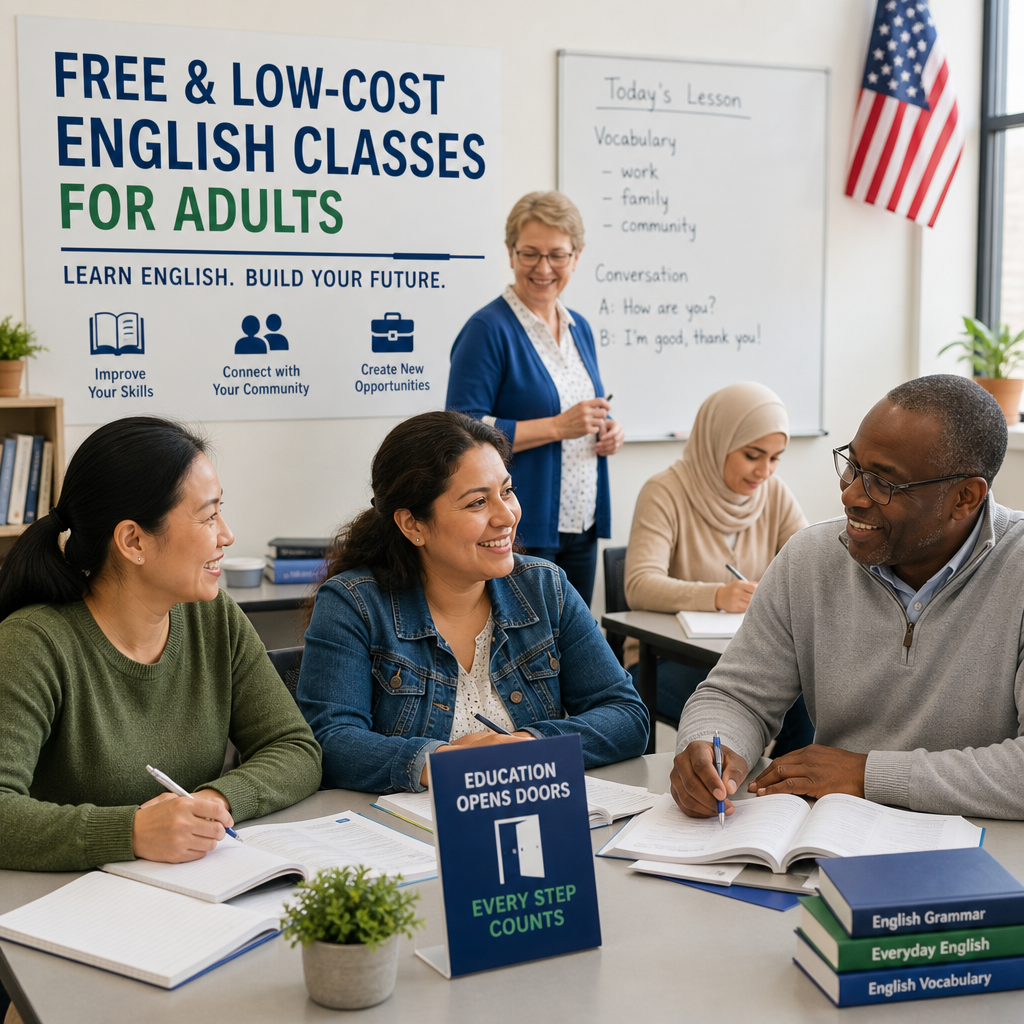
Free and low-cost English classes for adults in the United States can help you build practical skills for work, daily life, and greater confidence. From libraries to community colleges, there are many free English classes designed to fit different goals, schedules, and budgets.
By: Jennifer Collins - Education on July 28, 2026
Learning English can open doors to better jobs, more confident daily conversations, and stronger connections in your community. The good news is that free and low-cost English classes for adults in the United States are widely available through schools, libraries, nonprofits, community colleges, and workforce centers. Whether you are a beginner or want to improve speaking, reading, writing, or workplace communication, there are practical options that fit many schedules and budgets.
This guide explains where to find English classes, what to expect, how to choose the right program, and how to keep improving outside the classroom. If you are searching for English language learning opportunities that are affordable and accessible, you are in the right place.
Why English classes matter for adults
For many adults, English is more than a subject—it is a tool for everyday life. A strong foundation in English can help you:
Talk with teachers, neighbors, coworkers, and healthcare providers
Read job postings, forms, and workplace instructions
Prepare for citizenship tests and interviews
Help children with schoolwork
Build confidence in public settings
Navigate transportation, housing, and government services more easily
The best programs focus on practical language skills. Many adult English classes, also called ESL classes or English as a Second Language classes, combine speaking, listening, reading, and writing with real-world topics like shopping, employment, banking, and appointments.
Where to find free and low-cost English classes for adults in the United States
There is no single national classroom for everyone, but there are many trusted places to begin your search. Here are the most common options.
1. Public libraries
Public libraries are often one of the easiest places to find free English classes for adults. Many libraries offer:
Conversation groups
Basic reading and writing classes
Tutoring programs
Conversation partner programs
Computer-based language learning tools
Some libraries also host volunteer-led English practice sessions. These are especially helpful if you want a relaxed environment and flexible scheduling.
2. Community colleges and adult education programs
Community colleges frequently run adult education and continuing education programs. These classes are usually low-cost, and some are free depending on funding, residency, or income eligibility.
Programs may include:
Beginning, intermediate, and advanced ESL
Workplace English
GED preparation
Citizenship preparation
Pronunciation and grammar support
Community colleges often have experienced instructors and structured lessons, which can be a strong choice if you want steady progress and clear skill-building.
3. Local school districts and adult schools
Many school districts offer adult education classes in the evening or on weekends. These programs are designed for adults who work during the day or have family responsibilities.
You may find:
English conversation classes
Reading and writing support
Career-focused English
Citizenship classes
Computer and digital literacy training
These programs are often low-cost or free for eligible learners, especially in states with strong adult education systems.
4. Nonprofit organizations and community centers
Nonprofits and community-based organizations often serve immigrants, refugees, and other adult learners with limited access to formal education. They may offer free or low-cost English instruction, sometimes with childcare, transportation help, or bilingual support.
These programs often focus on practical goals such as:
Job readiness
Parent-school communication
Health literacy
Everyday conversation
Immigration and civic life
If you need a welcoming setting with support services, a nonprofit program can be a great fit.
5. Workforce development centers
Some workforce centers offer English classes tied to job training. These are ideal if you want to improve English while also building career skills. You may hear these programs called:
Integrated education and training
Career ESL
Work-based English
English for employment
These classes often focus on vocabulary, workplace communication, and professional writing. They may also help you prepare resumes, complete applications, or practice interview questions.
6. Faith-based and community-led programs
Churches, mosques, synagogues, and other faith-based groups sometimes run volunteer English classes or conversation clubs. These can be welcoming and informal, especially for beginners.
While quality varies, many of these programs provide a supportive environment for practicing spoken English and building confidence.
7. Online adult English classes
If transportation, childcare, or work schedules make in-person classes difficult, online English classes can be a smart choice. Many providers offer free or low-cost lessons through:
Live virtual classes
Self-paced lessons
Video practice
Language apps
Hybrid programs that combine online and in-person learning
Online learning can be especially useful for adults who need flexibility. Still, it works best when you stay consistent and practice speaking as often as possible.
How to choose the right English class
Not every English class is the same. A program that works well for one adult may not be the best fit for another. When comparing options, think about your goals, schedule, and learning style.
Start with your main goal
Ask yourself what you want to improve most:
Everyday conversation
Reading and writing
Pronunciation
Job communication
Citizenship preparation
Grammar
Confidence in speaking
If you want to speak more comfortably, look for conversation-based classes. If you need help at work, choose career-focused English. If you plan to apply for citizenship, look for classes that include civic education.
Check the class level
Many programs place students by level so beginners and advanced learners are not mixed together. A good program should help you start where you are, not where someone else thinks you should be.
Levels may include:
Beginning
Low intermediate
Intermediate
Advanced
If possible, ask for a placement test or orientation before enrolling.
Consider the schedule and format
The best class is one you can attend regularly. Look for options that fit your life:
Morning, afternoon, or evening classes
Weekend classes
In-person or online
Self-paced or instructor-led
Short sessions or longer semester-based programs
Consistency matters more than speed. Even one or two classes a week can make a difference if you also practice at home.
Ask about extra support
Some adult learners need more than instruction. Ask whether the program offers:
Childcare
Transportation assistance
Tutoring
Conversation partners
Digital learning support
Materials at low or no cost
These services can make it much easier to stick with the class.
What free and low-cost English classes usually teach
Most adult English programs build practical communication skills rather than only focusing on textbook grammar. A well-designed class may include:
Speaking and listening
You may practice:
Introducing yourself
Asking and answering questions
Understanding directions
Participating in group discussions
Talking on the phone or in virtual meetings
Reading and writing
You may work on:
Simple notes and messages
Forms and applications
Emails
Workplace instructions
Short reading passages
Vocabulary for daily life
Lessons often use topics such as:
Shopping
Health and medical visits
Jobs and interviews
Public transportation
Housing
School and family communication
Pronunciation and fluency
Many classes help learners reduce hesitation and improve clarity. This does not mean removing your accent. It means speaking in a way that others can understand more easily.
Digital skills
Because so much of life is online, some programs also teach:
Email basics
Using websites
Filling out online forms
Video calls
Learning apps and digital tools
Practical ways to improve English outside class
Classes help, but daily practice matters just as much. You can build skills at home and in your community without spending much money.
Use English in small daily moments
Try to make English part of your routine:
Read labels at the grocery store
Say the names of objects around your home
Practice short conversations with a friend
Write a simple to-do list in English
Listen to English radio or podcasts during errands
Join a conversation group
Conversation groups are often free at libraries, schools, and community centers. They give you a chance to speak in a low-pressure setting and hear different accents and speaking styles.
Watch and listen actively
TV, videos, and podcasts can support listening practice. To get the most out of them:
Choose content at your level
Turn on English subtitles
Pause and repeat short phrases
Write down useful expressions
Practice with apps and online tools
Many free apps and websites can help you review vocabulary, grammar, and pronunciation. These tools work best as practice between classes, not as a replacement for real conversation.
Find a language partner
If possible, practice with someone who wants to learn from you as well. You can exchange languages or simply meet to talk in English. Short, regular practice sessions are often more effective than long, occasional ones.
Tips for adult learners searching for the right program
Choosing an English program can feel overwhelming, especially if you are new to adult education in the United States. These steps can help:
Write down your goals. Decide whether you need speaking, reading, work English, or citizenship support.
Search local resources. Check libraries, school districts, community colleges, and nonprofits near you.
Call or visit before enrolling. Ask about cost, schedule, level, and materials.
Ask about placement. Make sure the class matches your current English level.
Start with one manageable commitment. It is better to attend one class consistently than to sign up for too many programs at once.
Keep practicing between classes. Small daily habits make a big difference.
How to find programs near you
If you are ready to search, start locally. Many adults find the best programs through simple community resources.
Search by ZIP code or city
Use search terms like:
Adult ESL classes near me
Free English classes for adults
Low-cost English classes in [your city]
English conversation classes at library
Adult education English classes
Contact public institutions directly
Call or visit:
Your local library
Your school district’s adult education office
A nearby community college
Workforce development or job center
Immigrant support nonprofit
Ask your community
Friends, neighbors, coworkers, and faith communities may know about programs that are not heavily advertised. Some of the best classes are small and local.
Common barriers and how to handle them
Adults often face real challenges when returning to school. Good programs understand that learning English is part of a busy life.
Time
If your schedule is tight, look for evening, weekend, or online classes. Even short sessions can work if they are consistent.
Cost
Ask about free placement, scholarships, waivers, or sliding-scale fees. Some programs are fully funded and do not charge tuition.
Childcare
Some centers offer childcare or family-friendly schedules. If not, ask whether children can wait nearby or whether online options are available.
Confidence
Many adults worry about making mistakes. That is normal. A supportive class should encourage speaking practice without embarrassment. Progress comes from practice, not perfection.
Frequently Asked Questions
Are free English classes for adults really available in the United States?
Yes. Many public libraries, adult education centers, community colleges, and nonprofits offer free English classes for adults or classes with very low fees. Availability depends on your location, funding, and class size, so it helps to contact several local programs.
What is the difference between ESL and English conversation classes?
ESL classes usually cover a broader set of skills, including speaking, listening, reading, writing, grammar, and vocabulary. English conversation classes focus more on speaking and listening practice. If you are a beginner, ESL may be a better starting point. If you already know basic English and want more fluency, conversation classes can help.
Do I need documents to enroll in adult English classes?
It depends on the program. Some classes ask for identification, proof of residence, or placement information. Others are open to all adults. If you are unsure, call the program and ask what documents are required before you visit.
Can I take English classes if I work full time?
Yes. Many adult English programs offer evening, weekend, or online schedules. Some also provide self-paced learning. If you work during the day, look specifically for flexible adult education or workplace English programs.
How long does it take to improve my English?
Progress varies based on your starting level, how often you attend class, and how much you practice outside of class. Most adults improve faster when they combine regular instruction with daily speaking, listening, reading, and writing practice. Small, steady effort usually works better than occasional intensive study.
Finding free and low-cost English classes for adults in the United States does not have to be difficult. Public libraries, community colleges, adult schools, nonprofits, workforce centers, and online programs all provide pathways for learners at different levels and with different schedules. The best choice depends on your goals, whether you want to improve everyday conversation, prepare for work, strengthen reading and writing, or build confidence for citizenship and community life.
The most important step is to start. Look for a class that fits your current level and your daily routine, then commit to regular attendance and practice. Even small improvements in English can make a meaningful difference in work, family communication, and independence. If one program is full or not the right fit, keep searching—many communities offer more than one option.
With the right support and steady effort, learning English becomes less intimidating and far more achievable. Take the next step today by contacting a local library, adult education office, or community college and asking what English classes are available near you.
Jennifer, M.Ed., holds a degree in Higher Education Administration, with
a focus on U.S. college financial aid, admissions policy, and student
support systems. She researches and writes about scholarships, federal
aid programs, and the college planning process to help students and
families make informed, well-supported decisions.