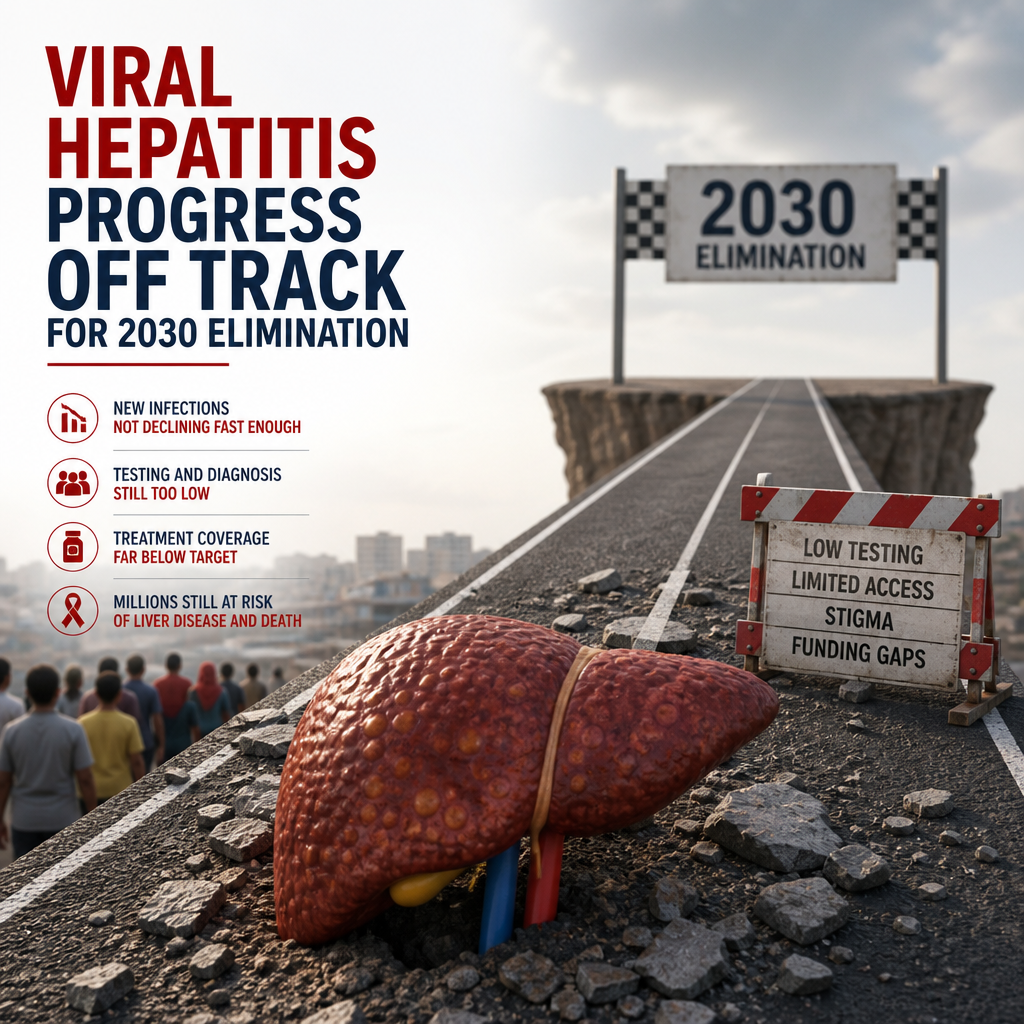
Viral Hepatitis Progress Off Track for 2030 Elimination
Viral hepatitis elimination is still within reach, but only if countries close the gaps in vaccination, testing, treatment, and prevention. This article looks at why progress is lagging—and what needs to change to meet the 2030 goal.
By: pedropadm2025@gmail.com on July 28, 2026
Viral hepatitis remains one of the world’s most persistent public health challenges, and viral hepatitis progress remains off track for 2030 elimination in many countries. Despite decades of scientific advances, effective vaccines for hepatitis A and B, and curative treatment for hepatitis C, the disease burden is still far too high. In plain terms, the tools exist, but access, screening, diagnosis, treatment, and prevention are not yet reaching enough people.
That gap matters because hepatitis often progresses silently. Many people live for years without symptoms while liver damage builds in the background. By the time liver disease, cirrhosis, or liver cancer appears, treatment becomes more difficult and costly. The 2030 elimination goal is still achievable in theory, but current progress shows that health systems must move faster and more strategically.
What “Elimination” Means in Viral Hepatitis
Elimination does not mean every infection disappears overnight. In public health, it means reducing new infections, deaths, and long-term transmission to a level where hepatitis is no longer a major threat to society.
For viral hepatitis, elimination efforts focus on:
Preventing new infections through vaccination, safer healthcare, and harm reduction
Increasing testing so people know their status
Treating infected individuals early
Reducing liver-related deaths and complications
Improving access to care for populations at higher risk
The main hepatitis types
The term viral hepatitis refers to several different viruses, but the most common global elimination targets are:
Hepatitis A: usually spread through contaminated food, water, or close contact
Hepatitis B: spread through blood, sexual contact, and from mother to baby during birth
Hepatitis C: primarily spread through blood exposure, including unsafe injections and some forms of drug use equipment sharing
Hepatitis D: occurs only in people already infected with hepatitis B
Hepatitis B and hepatitis C cause the most chronic illness, liver failure, and liver cancer. That is why global elimination strategies largely focus on these two infections.
Why Viral Hepatitis Progress Remains Off Track for 2030 Elimination
The phrase viral hepatitis progress remains off track for 2030 elimination reflects a hard truth: the world has not yet scaled up interventions quickly enough. A mix of healthcare gaps, policy issues, and social barriers continues to slow progress.
1. Many people still are not diagnosed
Hepatitis B and C can remain hidden for years. People often feel healthy until the infection has already damaged the liver. Without routine screening, millions never get tested.
Common barriers include:
Limited public awareness
Low screening rates in primary care
Missed testing opportunities in emergency rooms and specialty clinics
Stigma around hepatitis, drug use, and sexual health
2. Treatment access is uneven
Hepatitis C can often be cured with direct-acting antiviral medications, and hepatitis B can be managed effectively with long-term care. But treatment access is still inconsistent across regions and populations.
Barriers include:
High costs in some settings
Insurance restrictions
Shortages of trained healthcare providers
Delayed referrals after diagnosis
Limited access in rural or underserved communities
3. Prevention programs are not reaching everyone
Hepatitis B vaccination is one of the strongest tools for prevention, especially when given at birth. Yet vaccine coverage and timely birth-dose administration still vary widely.
Harm reduction programs, safe injection practices, and blood screening have also improved, but not enough people can access them consistently.
4. Stigma keeps people away from care
Stigma can be one of the most damaging barriers to hepatitis elimination. People may avoid testing or treatment because they fear judgment related to:
Injection drug use
Immigration status
Sexual health
Past incarceration
Poverty or homelessness
When care feels unsafe or shameful, people delay action, and infections continue spreading.
The Public Health Tools Already Exist
One reason the situation is frustrating is that the core tools for progress are not mysterious. Public health leaders already know what works.
Vaccination
Hepatitis B vaccination is a cornerstone of prevention. Universal infant immunization, especially the birth dose, can prevent lifelong infection and reduce mother-to-child transmission.
Testing and linkage to care
Testing is the gateway to elimination. Without diagnosis, a person cannot receive treatment or counseling. Effective hepatitis programs connect testing directly to treatment, not weeks or months later.
Curative hepatitis C treatment
Hepatitis C is now curable for most patients with a short course of antiviral medication. This is one of the biggest breakthroughs in modern infectious disease care. The challenge is no longer scientific; it is operational.
Harm reduction
For people who inject drugs, harm reduction measures can significantly lower transmission. These include:
Sterile syringe services
Medication for opioid use disorder
Education about safer injection practices
Access to naloxone and supportive services
Safe healthcare and infection control
Hospitals, clinics, dental offices, and outpatient settings must maintain high standards for sterilization, injection safety, and blood handling. These measures help prevent avoidable spread.
Where Progress Is Still Lagging
Although some countries have made meaningful gains, global progress is uneven. Several areas still need urgent attention.
Birth-dose hepatitis B vaccination
One of the most effective interventions is also one of the most difficult to deliver everywhere: giving the hepatitis B vaccine within 24 hours of birth. This can be challenging in places with:
Home births
Limited maternity services
Cold-chain logistics problems
Gaps in newborn follow-up care
Adult screening
Many adults at risk for hepatitis B or C have never been tested. Screening remains inconsistent in routine care, even though clear clinical guidelines support testing for many groups.
Maternal and child health services
Preventing mother-to-child transmission requires coordinated care during pregnancy, birth, and infancy. That includes testing pregnant people, managing high viral loads when needed, and ensuring newborn vaccination.
Health equity gaps
Elimination cannot succeed if services only reach people with the easiest access to care. Communities affected by poverty, unstable housing, rural isolation, and systemic discrimination often face the highest burden and the fewest resources.
Viral hepatitis is not only a liver problem. It affects health systems, families, economies, and long-term quality of life.
Complications can be severe
Chronic hepatitis can lead to:
Cirrhosis
Liver failure
Liver cancer
Need for transplant
Premature death
Diagnosis can change lives
A timely diagnosis gives people the chance to protect their liver, reduce transmission, and avoid advanced disease. For hepatitis C, diagnosis can lead to cure. For hepatitis B, it can mean long-term monitoring and treatment that prevents major complications.
Elimination supports broader health goals
Improving hepatitis services can also strengthen:
Primary care
Maternal health
Sexual health services
Vaccination systems
Blood safety programs
Substance use treatment and harm reduction
In that sense, hepatitis elimination is both a disease-specific goal and a way to improve public health infrastructure overall.
What Needs to Happen Next
If viral hepatitis progress remains off track for 2030 elimination, then countries need to focus on practical next steps rather than broad promises.
1. Expand routine testing
Testing should become a normal part of care for people with risk factors and for adults in settings where prevalence is meaningful. Screening works best when it is simple, affordable, and paired with immediate follow-up.
2. Close treatment gaps
Healthcare systems should remove unnecessary barriers that delay therapy. That means simplifying referral pathways, reducing administrative hurdles, and increasing the number of providers who can manage hepatitis B and C.
3. Strengthen vaccination programs
Countries should prioritize:
Timely hepatitis B birth dose
Childhood completion of the vaccine series
Catch-up vaccination for unvaccinated adults at risk
4. Support harm reduction and addiction treatment
Hepatitis prevention must include people who use drugs. Programs that reduce blood exposure and support recovery save lives and lower transmission.
5. Improve surveillance and data use
Public health leaders need accurate data to identify where infections are occurring, who is not being reached, and which interventions are working. Good data supports smarter investment.
6. Reduce stigma through education
Education campaigns can normalize testing and treatment. When communities understand that hepatitis is preventable and treatable, more people seek care sooner.
Practical Examples of What Progress Looks Like
Here are a few real-world examples of how hepatitis elimination strategies can work in practice:
A primary care clinic adds hepatitis B and C screening to routine adult visits, catching infections earlier.
A maternity program ensures newborns receive the hepatitis B birth dose before hospital discharge.
A community health center offers hepatitis C testing alongside substance use services, improving follow-up.
A rural health network uses telehealth to connect patients with liver specialists and treatment support.
A public health department integrates hepatitis education into immigration, correctional health, and harm reduction outreach.
These are not theoretical ideas. They are practical, proven approaches that can be scaled with the right commitment.
How Individuals Can Help
Elimination is a system-level goal, but individuals still play an important role.
You can:
Ask your healthcare provider whether you need hepatitis B or C testing
Make sure your hepatitis B vaccination is up to date
Encourage family members to get vaccinated
Learn about safer practices that reduce blood exposure
Support local public health and harm reduction programs
Share accurate information to reduce stigma
Even small actions help create a culture where testing and prevention become normal.
Frequently Asked Questions
What does it mean that viral hepatitis progress remains off track for 2030 elimination?
It means current prevention, testing, and treatment efforts are not moving quickly enough to meet the World Health Organization’s 2030 hepatitis elimination targets. While the necessary tools exist, many people still lack access to vaccination, screening, and treatment.
Which hepatitis infections are the biggest concern for elimination efforts?
Hepatitis B and hepatitis C are the main focus because they can become chronic and lead to cirrhosis, liver failure, and liver cancer. Hepatitis B can be prevented with vaccination, and hepatitis C can often be cured with antiviral treatment.
Why are so many hepatitis infections still undiagnosed?
Hepatitis B and C often cause few or no symptoms early on. Many people do not get tested unless a clinician specifically recommends it. Stigma, limited screening programs, and access barriers also keep diagnosis rates low.
Is hepatitis C really curable?
Yes. Most people with hepatitis C can be cured with direct-acting antiviral medications, usually taken for a short period. Cure does not happen instantly, but these treatments are highly effective when people can access them.
What is the single most important step to reduce hepatitis B in newborns?
The most important step is giving the hepatitis B vaccine birth dose as soon as possible after delivery, ideally within 24 hours. This greatly reduces the risk of lifelong infection passed from mother to baby.
The fact that viral hepatitis progress remains off track for 2030 elimination is a warning, but it is not a dead end. The world already has the core tools needed to prevent infection, diagnose disease earlier, and treat people before serious liver damage develops. What is missing in many places is not medical knowledge, but better reach, stronger systems, and a more urgent commitment to equity.
To get back on track, health leaders must expand testing, improve vaccine coverage, simplify access to treatment, and invest in services that meet people where they are. Communities can help by reducing stigma, encouraging vaccination, and normalizing hepatitis screening as part of routine care. If those efforts grow together, elimination becomes far more realistic.
The next step is clear: turn proven tools into consistent action. That is how hepatitis progress can shift from lagging behind to moving forward.
Peter B holds a degree in Journalism and has 5 years of experience covering U.S. economic policy, labor markets, and financial news. He writes data-driven news content on topics like inflation, interest rates, and employment trends.