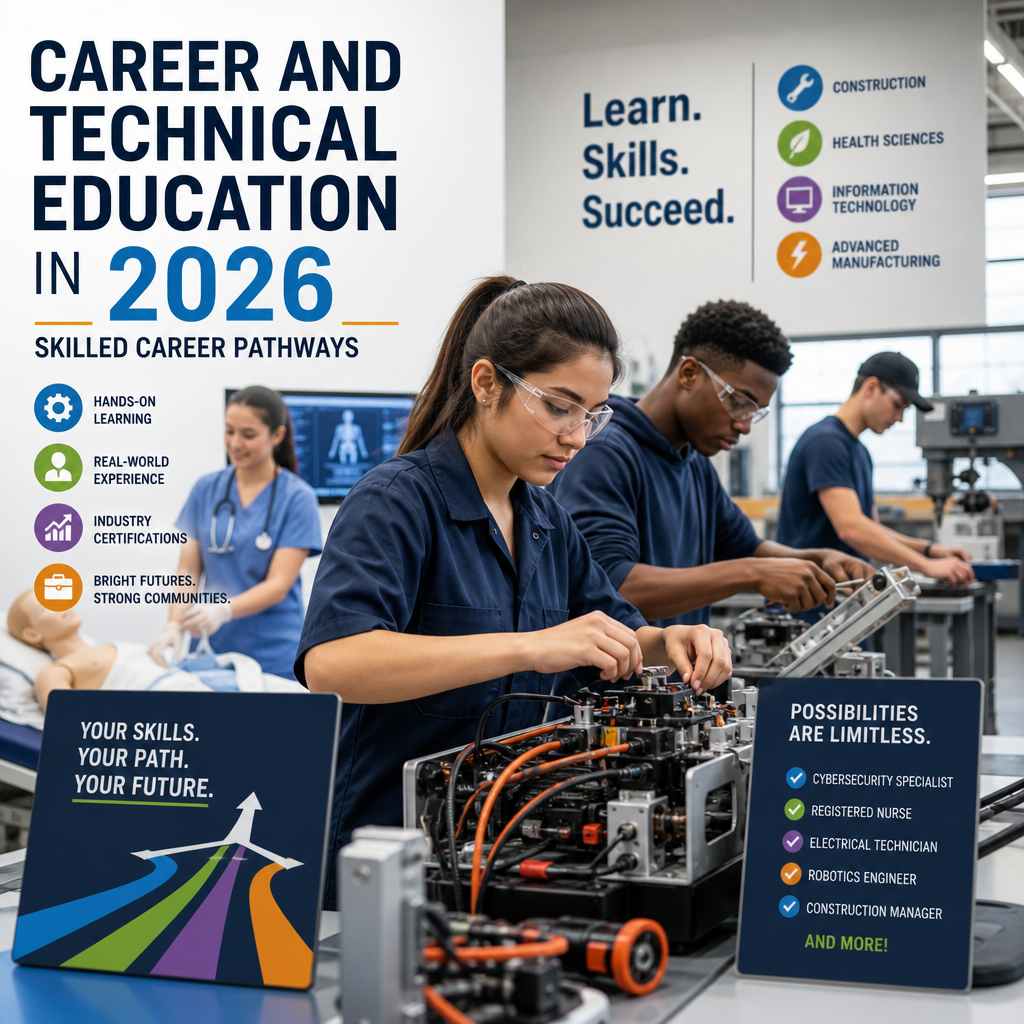
Career and Technical Education in 2026: Skilled Career Pathways
Career and technical education in 2026 gives learners a practical, flexible way to build in-demand skills and move quickly into skilled careers. With hands-on training, industry credentials, and real-world experience, CTE helps students and adults turn career goals into job-ready opportunities.
By: Jennifer Collins - Education on July 28, 2026
Career and technical education in 2026 is more relevant than ever for students, job seekers, and working adults who want practical training that leads to real opportunities. As industries evolve and employers continue to look for skilled talent, CTE is helping learners build job-ready abilities in fields like health care, manufacturing, information technology, construction, advanced transportation, and culinary arts. For many people, it offers a faster, more affordable path into a skilled career without sacrificing long-term growth.
Today’s CTE programs go far beyond old stereotypes. They combine classroom learning, hands-on practice, industry-recognized credentials, and real-world experience so learners can move confidently from education into employment. Whether someone plans to enter the workforce right after high school, earn an apprenticeship, or continue to college later, career and technical education in 2026 can open doors.
What Career and Technical Education in 2026 Looks Like
Career and technical education in 2026 reflects the changing demands of the labor market. Employers want workers who can solve problems, use modern tools, communicate clearly, and adapt to new technologies. CTE programs are designed to build those skills in practical, career-focused ways.
A more flexible learning model
Many CTE programs now blend:
Classroom instruction
Lab-based learning
Work-based learning
Internships and apprenticeships
Dual enrollment opportunities
Industry certifications
This flexibility makes CTE useful for traditional students, adult learners, and career changers. A student might take automotive technology classes in high school, earn a certification after graduation, and then enter an apprenticeship with a local employer. Another learner might use a community college program in cybersecurity to pivot into a new field after years in retail or customer service.
Stronger alignment with employer needs
One of the biggest strengths of CTE is its direct connection to the labor market. Programs are often developed with input from employers, industry groups, and local workforce boards. That means students learn skills that match what companies actually use on the job.
In 2026, this alignment matters more than ever because many skilled occupations require technical knowledge that changes quickly. CTE helps students stay current with:
Digital tools and software
Safety standards
Automation and robotics
Health technology
Green energy systems
Emerging workplace communication tools
Why CTE Matters for Skilled Careers
A skilled career is not just a job with technical tasks. It is a career path with advancement potential, earnings growth, and long-term value. Career and technical education supports that path by helping learners build competence early and continue developing it over time.
It creates a direct path to employment
Many CTE pathways lead to occupations with clear entry requirements and strong hiring demand. Examples include:
Welders
Electricians
Medical assistants
IT support specialists
HVAC technicians
Plumbers
Dental assistants
Diesel mechanics
CNC machine operators
These roles often value demonstrated skills, certifications, and hands-on experience more than a four-year degree alone. That makes CTE especially useful for students who want a clearer return on their education investment.
It supports career mobility
CTE is not only for first jobs. It can also help workers move up. Someone who starts as a nursing assistant may later train as a licensed practical nurse. A help desk technician may build toward network administration. A construction laborer may grow into a specialized trade role or site supervisor.
This laddering effect is one reason career and technical education in 2026 remains important. It gives people a way to enter a field, strengthen their skills, and keep advancing.
It can reduce the gap between school and work
Many students graduate with academic knowledge but little understanding of workplace expectations. CTE closes that gap by teaching skills employers notice immediately:
Reliability
Teamwork
Time management
Customer service
Safety awareness
Technical problem-solving
Professional communication
These are the kinds of abilities that help someone perform well from day one.
High-Demand Career Pathways in 2026
Different regions have different workforce needs, but several career pathways continue to stand out across the country. CTE programs often prepare students for these sectors because they offer stable demand and multiple entry points.
Health sciences
Health care remains one of the strongest areas for career and technical education. Programs may prepare learners for roles such as:
Medical assistant
Pharmacy technician
Certified nursing assistant
Dental assistant
Health information specialist
These jobs can serve as a foundation for continued education and licensure. They also connect directly to one of the country’s most essential industries.
Information technology
CTE in IT can cover:
Computer support
Networking
Cybersecurity basics
Cloud technologies
Coding fundamentals
Digital media production
As organizations rely more on connected systems, the need for trained technical workers continues to grow. CTE helps students build the problem-solving mindset needed in tech roles.
Skilled trades
Skilled trades remain central to infrastructure, housing, transportation, and facility maintenance. CTE pathways in this area often include:
Carpentry
Electrical systems
Plumbing
HVAC
Welding
Manufacturing technology
Automotive repair
These careers often combine classroom learning with apprenticeships or on-the-job training, giving students a practical path into a trade.
Advanced manufacturing
Modern manufacturing uses robotics, quality control systems, digital design tools, and precision equipment. CTE programs in this area may teach learners how to:
Read technical drawings
Operate computer numerical control machines
Inspect products for quality
Work with automation systems
Follow strict safety protocols
This is a field where technical competence and attention to detail pay off.
Education, public service, and human services
Not all CTE pathways are in technical trades. Many programs also prepare students for careers in:
Early childhood education
Criminal justice
Public safety
Culinary arts
Hospitality
Human services
These fields still rely on applied skills, professional standards, and hands-on learning.
The Skills Employers Value Most
Career and technical education in 2026 works because it teaches more than job-specific tasks. It also helps learners develop transferable skills that matter in nearly every profession.
Technical skills
These are the core abilities tied to a career field. Examples include:
Operating equipment
Using specialized software
Interpreting blueprints or schematics
Applying clinical procedures
Troubleshooting systems
Following industry regulations
Soft skills
Employers consistently value interpersonal and workplace skills such as:
Communication
Problem-solving
Collaboration
Adaptability
Professionalism
Critical thinking
CTE programs build these skills through group projects, lab assignments, role-play, internships, and workplace simulations.
Credentials and certifications
Many CTE pathways allow learners to earn industry-recognized credentials. These may include certifications in areas like:
CPR and first aid
Microsoft or Google productivity tools
CompTIA IT fundamentals
OSHA safety training
ServSafe food protection
Automotive service basics
These credentials help learners demonstrate readiness to employers and can make resumes stand out.
How Schools and Colleges Are Improving CTE
Schools, career centers, and colleges are investing in CTE because it offers a practical bridge between education and employment. In 2026, many programs look more innovative and accessible than they did in the past.
Better equipment and updated labs
Modern CTE classrooms often include current technology, industry-grade equipment, and simulation tools. Students may practice on the same kinds of machines or software they will use in the workplace.
Stronger partnerships with employers
Many programs now collaborate with local businesses, unions, hospitals, manufacturers, and public agencies. These partnerships can lead to:
Guest speakers
Job shadowing
Mentorships
Internships
Apprenticeship pipelines
Hiring opportunities
Expanded access for adult learners
CTE is increasingly designed for people who are already working or returning to school. Evening classes, hybrid formats, short-term credentials, and stackable certificates make it easier to fit training into a busy life.
Clearer pathways from high school to college and work
Students do not always have to choose between career training and higher education. Many programs now allow learners to earn college credit while completing CTE coursework. That gives them more options after graduation.
How to Choose the Right CTE Pathway
Choosing a career and technical education program should be based on interests, strengths, and long-term goals. A good program can set someone on a career path that fits both their personality and their future plans.
Ask the right questions
Before enrolling, consider:
What kind of work do I enjoy?
Do I prefer hands-on, technical tasks or people-focused roles?
What jobs are in demand in my area?
Does the program offer certifications or job placement support?
Are there internship or apprenticeship opportunities?
Can I continue my education later if I want to?
Match the program to your goals
For example:
A student interested in health care may choose medical assisting or nursing support.
Someone who likes technology may look at networking or cybersecurity.
A learner who enjoys building and fixing things may pursue electrical, HVAC, or welding training.
The best CTE pathway is one that matches both interest and labor market opportunity.
Look for real-world experience
Programs with internships, practicums, or apprenticeships often provide a stronger transition into work. These experiences let learners apply their knowledge, ask questions, and build confidence in a professional setting.
Career and Technical Education and the Future of Work
The future of work is shaped by automation, digital systems, green technology, and changing consumer needs. Career and technical education in 2026 helps prepare learners for that future by teaching adaptability along with technical expertise.
Growing need for adaptable workers
Employers increasingly need workers who can learn new systems quickly. A technician today may need to use digital diagnostics, remote communication tools, and updated compliance systems tomorrow. CTE helps build that adaptability.
Focus on sustainable and emerging industries
Many programs are expanding into fields tied to energy efficiency, electric vehicles, environmental systems, and smart building technology. These areas may offer new opportunities for students who want careers with long-term relevance.
Lifelong learning becomes essential
A successful career no longer depends on one degree earned at age 18. Workers may need to add certifications, update licenses, or reskill later in life. CTE supports this reality by offering pathways that can continue throughout a career.
How Students and Families Can Make the Most of CTE
Families often play an important role in helping students evaluate career options. A thoughtful approach can make CTE even more effective.
Visit programs and ask questions
Touring labs, talking to instructors, and meeting current students can reveal whether a program is a good fit. Ask about:
Graduation outcomes
Credential options
Equipment and facilities
Employer partnerships
Class size
College credit opportunities
Start exploring early
Middle school and early high school are good times to explore career interests. Shadowing professionals, joining career clubs, and taking introductory courses can help students make informed choices.
Think beyond the first job
A strong CTE pathway should support both immediate employment and future growth. Look for programs that lead to stackable credentials, associate degrees, apprenticeships, or advanced certifications.
Frequently Asked Questions
What is career and technical education in 2026?
Career and technical education in 2026 refers to training programs that prepare students and adults for skilled careers through hands-on learning, technical instruction, and work-based experience. These programs are often aligned with employer needs and may lead to certifications, apprenticeships, college credit, or direct employment.
Is CTE only for high school students?
No. While many students begin CTE in high school, it also serves community college students, adults changing careers, and workers seeking new credentials. Many programs are flexible enough to support part-time study, evening classes, and online or hybrid learning.
Does CTE replace college?
CTE does not replace college; it offers another pathway or a starting point. Some learners enter the workforce right away, while others use CTE as a bridge to an associate or bachelor’s degree. In many cases, CTE and college work together through dual enrollment or stackable credentials.
What careers can I get with CTE?
CTE can lead to careers in health care, information technology, construction, manufacturing, transportation, culinary arts, public safety, early childhood education, and more. The exact options depend on the program and local labor market demand.
How do I know if a CTE program is high quality?
A strong CTE program usually offers updated equipment, qualified instructors, clear career pathways, employer partnerships, and opportunities for internships or certifications. It should also have a track record of helping students move into jobs, apprenticeships, or further education.
Career and technical education in 2026 offers a practical, flexible, and forward-looking path to skilled careers. It helps learners build job-ready knowledge, earn valuable credentials, and gain real-world experience that employers trust. Just as important, it supports multiple outcomes: immediate employment, apprenticeships, college credit, and long-term career advancement.
For students, CTE can turn interest into a plan. For adults, it can create a fresh start or a promotion path. For employers, it helps develop a workforce with the technical and soft skills needed in a changing economy. That combination makes CTE one of the most useful education pathways available today.
If you are exploring your next step, look closely at programs in your area, compare their outcomes, and think about where you want to be in three, five, or ten years. The right CTE pathway can do more than teach a trade. It can help you build a career with purpose, stability, and room to grow.
Jennifer, M.Ed., holds a degree in Higher Education Administration, with
a focus on U.S. college financial aid, admissions policy, and student
support systems. She researches and writes about scholarships, federal
aid programs, and the college planning process to help students and
families make informed, well-supported decisions.