Global Immunization Efforts Face Gaps in Access and Public Trust
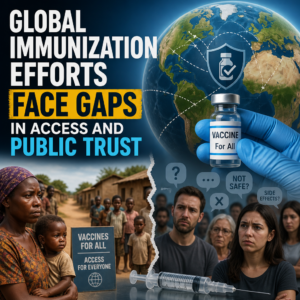
Global immunization efforts are being tested by uneven vaccine access and declining public trust, leaving too many people unprotected. Closing these gaps will take reliable delivery systems, clear communication, and community confidence working together.
By: pedropadm2025@gmail.com on July 28, 2026
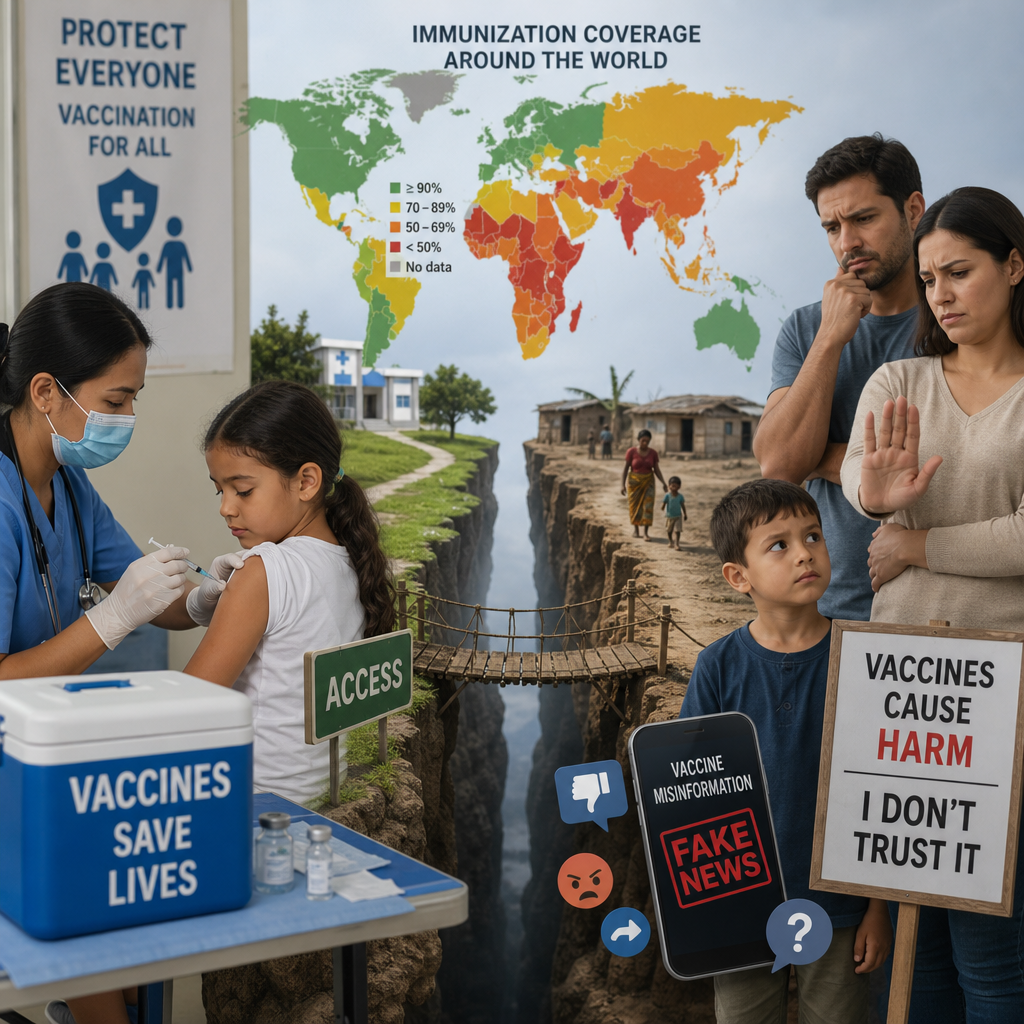
Global immunization efforts have saved millions of lives over the past several decades, but today they face a difficult reality: access is uneven, and public trust is under pressure in many places. The result is a widening gap between what vaccines can do and what communities are able—or willing—to receive.
This challenge is not limited to one country or one disease. It affects childhood vaccines, routine boosters, travel vaccines, and emergency responses alike. When immunization systems break down, preventable diseases find more opportunities to spread. That makes the current moment especially important for governments, health workers, community leaders, and families who want reliable protection.
Why Global Immunization Efforts Are at a Turning Point
Global immunization efforts depend on two things working together: strong access and strong confidence. A vaccine can only protect a population when people can actually get it and trust that it is safe, effective, and worth accepting.
Over the last few years, several pressures have made that harder:
Health systems are still recovering from pandemic disruptions.
Conflict and displacement are interrupting routine care.
Supply chains remain fragile in some regions.
Misinformation spreads faster than accurate health guidance.
Many families are facing barriers such as cost, travel distance, or clinic shortages.
These problems do not affect everyone equally. In some places, vaccines are available but uptake is low because of fear or uncertainty. In others, people want vaccination but face broken delivery systems. That combination creates a dangerous gap.
The hidden cost of missed vaccinations
Missed vaccinations do not always lead to immediate outbreaks, which is why the problem can be easy to overlook. But the effects build over time.
For example:
Children may miss routine shots and enter school underprotected.
Adults may fall behind on boosters that reduce severe disease.
Outbreaks can spread more quickly in communities with low coverage.
Health systems must spend more time and money responding to preventable illness.
The longer those gaps persist, the harder they are to close.
Access Barriers Still Block Vaccine Delivery
When people hear “vaccine access,” they often think only about whether a product exists. In reality, access includes a much broader set of conditions. A vaccine must be available, affordable, reachable, and supported by a functioning health system.
Geographic and logistical obstacles
Many communities live far from clinics or hospitals. In rural areas, people may need to travel long distances, miss work, arrange childcare, or pay transportation costs just to reach a vaccination site. For families living in remote or underserved areas, those barriers can become enough to delay or skip vaccination entirely.
Other logistical challenges include:
Limited clinic hours
Staff shortages
Cold-chain storage problems
Poor road infrastructure
Stock shortages or irregular supply
Even when a country has a national immunization program, these practical barriers can weaken coverage at the local level.
Conflict, migration, and instability
War, displacement, and political instability create some of the toughest conditions for immunization. Families who are fleeing violence or living in temporary shelters often lose access to medical records, regular appointments, and trusted providers.
In these settings, health workers may struggle to:
Reach children who missed early doses
Maintain vaccine storage safely
Track immunization schedules
Communicate in multiple languages
Deliver services consistently
This is one reason humanitarian vaccination campaigns are so important. But emergency response cannot fully replace routine care.
Financial pressure on families and health systems
Even where vaccines are offered at low or no direct cost, indirect expenses can still keep people away. Transportation, lost wages, and childcare all matter. On the system side, underfunded public health programs may struggle to staff clinics, maintain records, or conduct outreach.
In short, vaccine access is not just a product issue. It is a systems issue.
Public Trust Has Become a Critical Challenge
If access is the logistical side of immunization, trust is the social side. And trust has become one of the most important factors shaping vaccine uptake.
People are more likely to accept vaccines when they believe the system is honest, respectful, and responsive. They are less likely to engage when they feel ignored, pressured, or confused.
How misinformation undermines confidence
Misinformation about vaccines can spread through social media, word of mouth, or highly persuasive public figures. False claims often use emotional language, selective anecdotes, or outdated data to create fear.
Common misinformation patterns include:
Exaggerating side effects
Claiming vaccines cause unrelated health problems
Suggesting natural infection is always safer
Framing public health guidance as political control
Treating rare events as if they were common outcomes
The problem is not only that false information exists. It is that it often travels faster than careful explanation. Once a rumor takes hold, it can be hard to undo.
Why some communities distrust health systems
Public trust is shaped by history, not just by current messaging. In some communities, skepticism reflects past experiences of discrimination, unequal treatment, or poor communication from health authorities. That means a simple “follow the science” message may not be enough.
To rebuild confidence, public health leaders need to show:
Consistency in recommendations
Transparency about benefits and risks
Respect for local culture and language
Willingness to answer difficult questions
Accountability when systems fail
Trust grows when people feel heard, not dismissed.
What Strong Immunization Programs Look Like
Despite the challenges, many countries and communities have developed practical ways to strengthen vaccination coverage. The most effective programs tend to combine good logistics with strong community engagement.
Make vaccination convenient and predictable
When vaccination fits into daily life, uptake improves. That means offering:
Flexible clinic hours
Mobile vaccination units
School-based programs
Community health outreach
Clear appointment systems
Convenience matters because many people who delay vaccination are not fully opposed to it. They are busy, uncertain, or waiting for a better opportunity.
Use trusted messengers
Doctors are important, but they are not the only trusted voices. In many communities, people listen closely to:
Nurses and midwives
Local faith leaders
Teachers
Community health workers
Parents and caregivers with lived experience
The most persuasive messages often come from people who understand local concerns and speak in everyday language.
Improve communication, not just messaging
Good vaccine communication is a conversation, not a lecture. It should explain:
What the vaccine protects against
Who should receive it
What side effects are common
When to seek medical advice
Why timely vaccination matters
Clear communication helps people make informed choices and reduces room for rumors.
Why Global Immunization Efforts Need Local Solutions
Global immunization efforts often rely on international coordination, but vaccines are delivered locally. That means the best strategies must reflect local realities.
A one-size-fits-all approach rarely works. Urban neighborhoods, rural villages, refugee settlements, and island communities all face different barriers. Health leaders need to understand those differences before designing interventions.
Examples of local adaptation
A successful local immunization strategy might include:
Community mapping to identify underserved neighborhoods.
Outreach events scheduled around market days or school hours.
Language-specific education materials for migrant families.
Reminder systems using phone calls or text messages.
Partnerships with local organizations to build trust and awareness.
These practical steps may seem simple, but they can make a major difference when combined with reliable vaccine supply.
What Individuals Can Do to Support Immunization
The future of immunization is not shaped by institutions alone. Families and individuals also play an important role in keeping communities protected.
Practical actions that help
Keep vaccination records organized.
Ask a healthcare provider about missing or overdue vaccines.
Use trusted sources before sharing health information.
Encourage family members to stay current on recommended vaccines.
Support schools and community groups that promote accurate health education.
For parents, staying on schedule is especially important. If a child misses a dose, it is often possible to catch up safely. A healthcare provider can explain the right timing and sequence.
How to talk about vaccines with someone who is hesitant
It usually helps to start with respect. People who are hesitant often want to do what is best for themselves or their children. A calm, honest conversation can be more effective than confrontation.
Try to:
Ask what concerns they have.
Acknowledge uncertainty without judging.
Share trustworthy information from recognized sources.
Focus on the personal and community benefits of protection.
Offer to help them find a qualified clinician or local clinic.
Small conversations can matter more than public debates.
The Road Ahead for Immunization Programs
The next phase of global immunization efforts will likely depend on combining better access, better data, and better trust-building. That means investing not only in vaccine development, but also in the human systems that deliver vaccines successfully.
Important priorities include:
Strengthening primary care and routine immunization services
Expanding outreach in hard-to-reach communities
Training health workers in respectful communication
Monitoring gaps in coverage more carefully
Responding quickly to misinformation with clear, timely facts
When immunization systems are resilient, they can respond to both routine needs and sudden outbreaks. That resilience is essential for long-term public health.
Frequently Asked Questions
1. Why are global immunization efforts still facing gaps if vaccines are widely available?
Because availability alone does not guarantee access or uptake. Many people still face transportation barriers, clinic shortages, conflict, misinformation, or concerns about vaccine safety. A strong immunization program must address both delivery and trust.
2. How does public trust affect vaccination rates?
Public trust strongly influences whether people choose to vaccinate, follow schedules, and return for boosters. When people trust healthcare providers and public health systems, they are more likely to accept accurate guidance. When trust is low, misinformation can spread more easily and reduce uptake.
3. What are the biggest barriers to vaccine access?
Major barriers include geographic distance, supply chain problems, staff shortages, conflict, financial burden, limited clinic hours, and weak health infrastructure. In many areas, the problem is not refusal but simply the difficulty of getting to a vaccination site.
4. How can healthcare workers improve vaccine confidence?
Healthcare workers can improve confidence by listening carefully, answering questions clearly, acknowledging concerns honestly, and explaining both benefits and risks in simple language. Respectful communication often matters as much as the medical facts themselves.
5. What can communities do to close immunization gaps?
Communities can support mobile clinics, school-based vaccination, local outreach, reminder systems, and education led by trusted messengers. Partnerships between public health agencies, schools, faith groups, and local organizations are often the most effective way to improve coverage.
Global immunization efforts remain one of the most effective public health tools ever developed, but their success now depends on solving two interconnected problems: access and trust. A vaccine cannot protect a community if people cannot reach it, and it cannot deliver full benefit if fear, confusion, or misinformation keeps uptake low.
Closing these gaps requires more than policy statements. It calls for dependable health systems, better outreach, culturally respectful communication, and local partnerships that reflect real community needs. It also means recognizing that hesitation is often rooted in experience, not ignorance, and that practical barriers can be just as important as beliefs.
The path forward is clear: make vaccination easier to access, make information easier to trust, and keep building systems that meet people where they are. For readers, caregivers, and community leaders alike, the next step is to stay informed, ask questions, and support evidence-based immunization efforts that protect individuals and strengthen public health for everyone.
Peter B holds a degree in Journalism and has 5 years of experience covering U.S. economic policy, labor markets, and financial news. He writes data-driven news content on topics like inflation, interest rates, and employment trends.