Solar Power Is Set to Overtake Major Electricity Sources
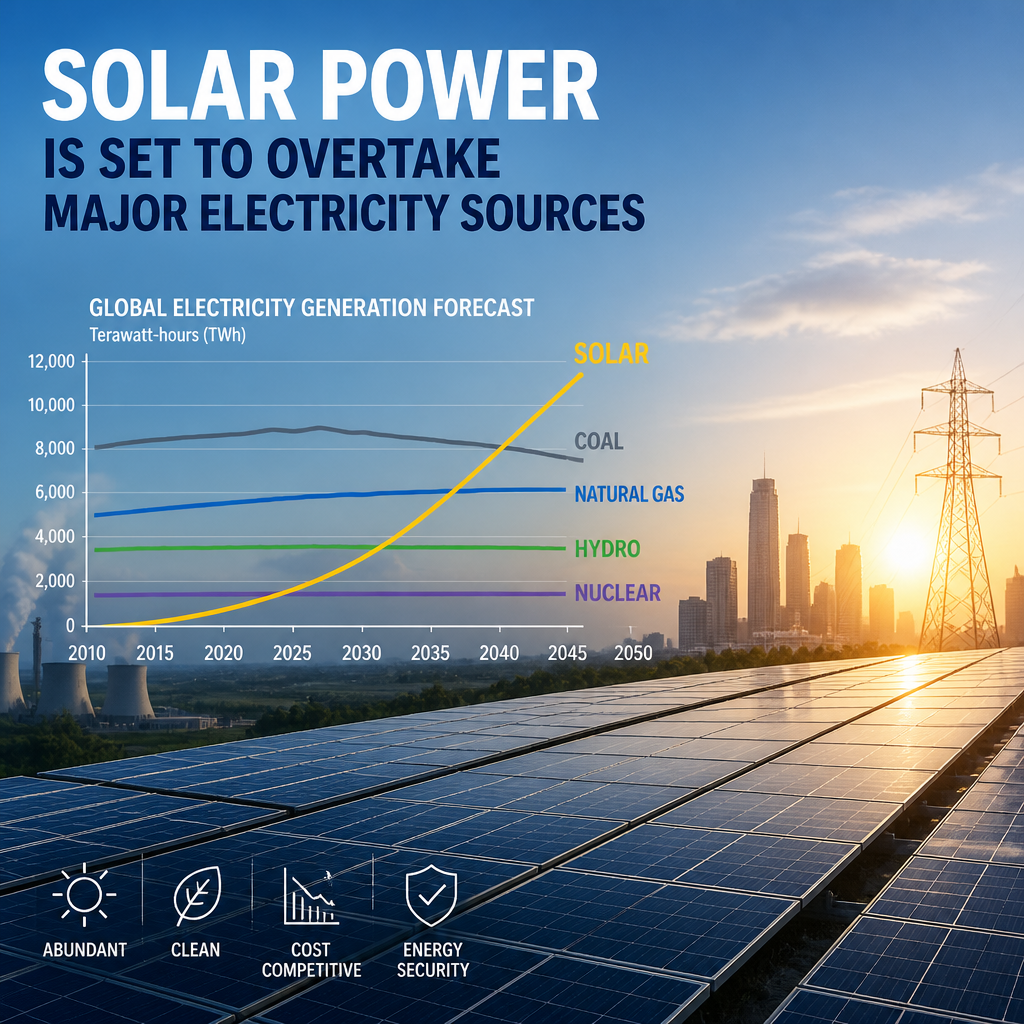
Solar power is set to overtake more major electricity sources as falling costs, faster deployment, and better storage make it one of the most competitive options in today’s energy mix. As demand rises and older power plants struggle to keep up, solar is becoming a practical solution for cleaner, more reliable electricity.
By: pedropadm2025@gmail.com on July 28, 2026
Solar power is set to overtake more major electricity sources, and that shift is already reshaping how homes, businesses, and utilities think about electricity. What was once viewed as an expensive niche technology is now one of the most competitive options in the global energy mix. Lower costs, better battery storage, and faster deployment have helped solar move from the margins into the mainstream.
This change matters because electricity demand keeps growing while older power plants face pressure from aging infrastructure, emissions rules, and fuel price volatility. As solar energy expands, it is no longer just a clean-energy story. It is also a reliability story, an economic story, and a planning challenge for utilities and policymakers.
Why Solar Power Is Set to Overtake More Major Electricity Sources
The rise of solar power is not happening by accident. Several long-term trends are working together to push solar generation ahead of more traditional electricity sources.
Costs have fallen dramatically
Solar panels, inverters, and installation methods have become much more efficient over time. At the same time, mass production has helped reduce equipment costs. While local pricing can vary, the broader trend is clear: solar has become far more affordable than it was a decade ago.
For many projects, solar now competes directly with:
New coal-fired power plants
New gas-fired generation
Expensive grid upgrades for remote areas
Small-scale diesel generation in off-grid locations
That cost advantage is one reason solar power is set to overtake more major electricity sources in the years ahead.
Solar can scale quickly
Unlike large thermal plants, solar farms can often be built and connected faster. A utility or developer can add capacity in stages instead of waiting years for a single massive project to come online.
That speed offers real advantages:
Faster response to rising electricity demand
Shorter development timelines
More flexible project sizing
Easier integration with storage
When energy planners need new capacity quickly, solar often becomes an attractive option.
Policy and market forces are supporting growth
Federal, state, and local policies have played a major role in solar expansion. Incentives, tax credits, renewable portfolio standards, and clean-energy procurement targets have all encouraged investment.
In addition, many companies are choosing renewable electricity to meet sustainability goals. That corporate demand has helped push utility-scale solar projects forward and increased interest in distributed solar on rooftops and commercial properties.
How Solar Compares with Other Electricity Sources
To understand why solar power is set to overtake more major electricity sources, it helps to compare it with the most common alternatives.
Solar vs. coal
Coal plants can provide steady power, but they come with major drawbacks:
High carbon emissions
Air pollution concerns
Rising maintenance costs for aging plants
Fuel transport and supply chain issues
Solar does not produce electricity around the clock, but when paired with storage and grid management tools, it can replace a growing share of coal generation. In many markets, solar is already more economical than building new coal capacity.
Solar vs. natural gas
Natural gas plants remain important because they can ramp output quickly and support grid reliability. However, gas prices can be volatile, and fuel costs influence long-term operating expenses.
Solar has a different profile:
No fuel cost
Lower operating emissions
Predictable generation costs after installation
Natural gas will likely continue to play a balancing role, but solar power is set to overtake more major electricity sources as utilities look for lower-cost, lower-risk generation options.
Solar vs. nuclear
Nuclear power provides large amounts of carbon-free electricity, but projects often face high capital costs, regulatory complexity, and long construction timelines.
Solar can’t match nuclear for continuous output on its own, yet it offers a much faster path to adding clean capacity. For many regions, that speed makes solar a practical complement to nuclear rather than a direct replacement.
The Role of Energy Storage
Solar generation peaks during the day, which means storage is crucial if solar is going to serve a larger share of overall electricity demand.
Batteries make solar more useful
Battery systems can store excess midday electricity and release it in the evening when demand often rises. That helps reduce the well-known “solar gap” between daytime production and nighttime usage.
Storage improves solar’s value by:
Smoothing output fluctuations
Supporting peak demand periods
Reducing curtailment
Improving grid stability
As battery prices continue to evolve and utility-scale storage becomes more common, solar power is set to overtake more major electricity sources in a much more practical way than solar alone could achieve.
Storage supports resilience
In homes and businesses, solar paired with batteries can provide backup power during outages. In utility systems, storage can help maintain frequency and supply reliability.
This added resilience is especially important in regions facing:
Extreme weather events
Wildfire-related outages
Congested transmission systems
Rapid load growth from electrification
What This Means for the Electric Grid
A grid with much more solar generation looks different from the old centralized model. It requires new tools, smarter planning, and more flexible operations.
Transmission and distribution need upgrades
Solar projects are often located where land is available, which may be far from population centers. That creates a need for stronger transmission infrastructure to move power where it is needed.
Utilities also need to modernize local distribution systems to handle:
Rooftop solar
Bidirectional power flows
Rapid load changes
Interconnection requests
Without those upgrades, solar growth can slow down even when demand for clean energy remains strong.
Grid operators need flexibility
As solar power grows, operators must balance supply and demand more carefully throughout the day. Flexible resources can help manage that challenge, including:
Battery storage
Demand response programs
Hydropower
Fast-ramping gas plants
Better forecasting tools
The more flexible the grid becomes, the easier it is for solar to overtake more major electricity sources without sacrificing reliability.
Economic Benefits of Solar Expansion
Solar’s rise is not only about emissions reduction. It also creates practical economic benefits for households, businesses, and communities.
Lower long-term electricity costs
Once installed, solar systems have relatively low operating costs. That makes future pricing more stable than generation sources that depend on fuel purchases.
For consumers and businesses, solar can help:
Hedge against rising utility rates
Reduce monthly electricity bills
Improve budget predictability
Increase energy independence
Even when upfront costs are significant, long-term ownership can make solar financially compelling.
Local job creation and investment
Solar projects often bring jobs in construction, engineering, sales, permitting, operations, and maintenance. While these jobs may differ from traditional power plant work, they still support local economies.
In many communities, solar development also leads to:
Lease income for landowners
Property tax revenue
Infrastructure investment
New business opportunities
Reduced fuel import dependence
Regions that rely on imported fuels can improve energy security by expanding solar. Because the sun is local and free, solar generation reduces exposure to international fuel markets and transportation disruptions.
Challenges Solar Still Faces
Even as solar power is set to overtake more major electricity sources, the transition is not automatic. Several challenges remain.
Intermittency
Solar production depends on sunlight, so output changes with weather, time of day, and season. That variability means solar must be integrated with other resources.
Common solutions include:
Battery storage
Diversified renewable portfolios
Demand-side management
Regional power sharing
Permitting and interconnection delays
Many solar projects get slowed by permitting backlogs, land-use disputes, or long waits to connect to the grid. These delays can add cost and uncertainty.
Supply chain and materials concerns
Solar manufacturing depends on global supply chains for panels, inverters, wiring, and other components. Disruptions can affect project timelines and pricing.
Land and environmental planning
Utility-scale solar requires space. Developers need to balance clean-energy goals with habitat protection, agricultural use, and community concerns. Thoughtful siting matters.
Practical Examples of Solar’s Growing Role
Solar growth looks different depending on the setting.
Homeowners adding rooftop solar
A family may install rooftop panels to offset daytime usage, lower bills, and pair the system with a battery for backup power. This setup is especially appealing where electricity prices are high or outages are frequent.
Businesses managing operating costs
Retail stores, warehouses, and manufacturing facilities may use solar to reduce overhead. Commercial systems can also help companies meet sustainability targets and stabilize energy expenses.
Utilities building large solar farms
A utility serving thousands of customers may add a large solar project to replace retiring fossil generation or meet growing demand. In many cases, that project is paired with storage to improve reliability.
Communities pursuing local resilience
Some towns and school districts invest in solar-plus-storage systems to keep essential services running during emergencies. These projects can support both public safety and long-term savings.
What to Watch Next
If you want to understand whether solar power is truly set to overtake more major electricity sources, keep an eye on a few important indicators:
Battery deployment growth
Storage will determine how much solar can be used beyond daylight hours.
Grid modernization efforts
Faster interconnection and upgraded transmission can unlock more solar capacity.
Policy stability
Incentives and market rules will continue shaping investment decisions.
Electricity demand growth
Data centers, electrified transportation, and building electrification are increasing demand in many regions.
Retirements of aging plants
As coal and older gas assets retire, solar is well positioned to fill part of the gap.
Frequently Asked Questions
1. Why is solar power growing so quickly?
Solar power is growing quickly because costs have fallen, installation is faster than many other generation types, and it works well with energy storage. Supportive policies and corporate clean-energy goals have also accelerated adoption.
2. Can solar really replace major electricity sources?
Solar can replace a growing share of major electricity sources, especially coal and some new fossil-fuel generation. However, it usually works best as part of a broader energy mix that includes storage, transmission upgrades, and flexible backup resources.
3. What happens when the sun isn’t shining?
When solar production drops, batteries, hydropower, demand response, and other generation sources can help fill the gap. Grid operators also use forecasting tools to plan for changes in solar output.
4. Is solar power affordable for homeowners?
In many cases, yes. Upfront costs can still be substantial, but homeowners may benefit from lower electric bills, tax incentives, and long-term price stability. The best option depends on roof condition, local utility rates, and available incentives.
5. Does solar power help the environment?
Yes. Solar power generates electricity without burning fuel, which means it avoids the direct air pollution and carbon emissions associated with fossil-fuel power plants. That makes it an important part of cleaner energy systems.
Solar power is set to overtake more major electricity sources because it offers a rare combination of lower costs, faster deployment, and long-term flexibility. It is not a perfect solution on its own, and the grid still needs storage, transmission upgrades, and balancing resources. But solar has moved far beyond an emerging technology. It is now a central part of the global electricity transition.
For homeowners, businesses, utilities, and policymakers, the takeaway is clear: solar is no longer just an environmental choice. It is an increasingly practical energy strategy. As battery storage improves and grid systems adapt, solar’s role will likely keep expanding across many markets and applications.
If you are evaluating solar for your home, business, or community, the best next step is to look closely at local incentives, utility rules, installation options, and long-term energy needs. The momentum behind solar power is strong, and understanding it now can help you make smarter decisions in the years ahead.
Peter B holds a degree in Journalism and has 5 years of experience covering U.S. economic policy, labor markets, and financial news. He writes data-driven news content on topics like inflation, interest rates, and employment trends.