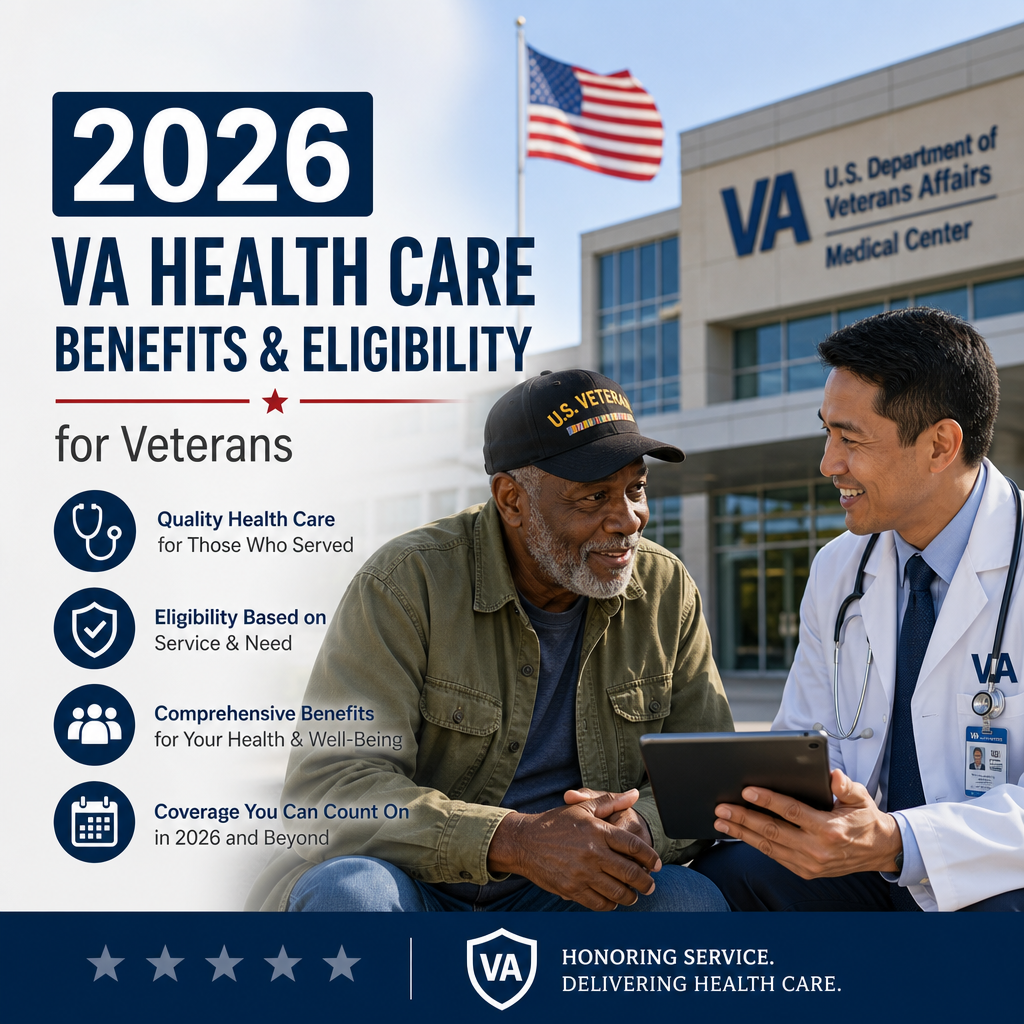
2026 VA Health Care Benefits and Eligibility for Veterans
VA health care benefits can provide veterans with access to primary care, mental health support, prescriptions, specialty treatment, and more in 2026. This guide explains who qualifies, what’s covered, and how to navigate enrollment with confidence.
By: Emily Adams on July 29, 2026
Understanding 2026 VA health care benefits and eligibility for veterans is an important step for anyone who has served in the U.S. military. VA health care can help veterans access primary care, preventive services, specialty treatment, mental health support, prescriptions, and more. In 2026, the system continues to be a vital source of medical care for millions of veterans, but eligibility rules, enrollment priorities, and available services can still feel confusing.
This guide breaks down who qualifies, what benefits are available, and how to get started. Whether you are newly separated from service or have been out for years, knowing how VA health care benefits and eligibility for veterans work can help you make informed decisions about your care.
What VA Health Care Covers in 2026
VA health care is not the same as a private health insurance plan, but it does provide a broad range of medically necessary services. Eligible veterans can receive care through VA medical centers, outpatient clinics, telehealth, and community care when authorized.
Common services include
Primary care and routine checkups
Preventive screenings and vaccinations
Mental health counseling and treatment
Prescriptions and medication management
Specialist referrals
Urgent and emergency care coordination
Lab work and imaging
Women’s health services
Rehabilitation and physical therapy
Chronic disease management
Many veterans also use VA for long-term treatment of service-connected conditions, such as hearing loss, musculoskeletal injuries, traumatic brain injury, PTSD, and other health concerns related to military service.
Community care and telehealth
In some cases, the VA may refer a veteran to a community provider if it can improve access or if a VA facility cannot provide the needed service in a timely way. Telehealth has also become a major part of care delivery, especially for mental health, follow-up visits, and chronic care management.
Who Is Eligible for VA Health Care?
Eligibility for 2026 VA health care benefits and eligibility for veterans depends on several factors, including service history, discharge status, income, and whether the veteran has a service-connected disability.
Basic eligibility requirements
In general, you may qualify if you:
Served in active military, naval, or air service
Were discharged under conditions other than dishonorable
Meet minimum service requirements, which can vary based on when and how you served
Veterans with certain discharge statuses may need to request a discharge upgrade before they can enroll. The VA reviews each case individually.
Service-related factors that matter
Your eligibility may be influenced by:
Length of active-duty service
Whether you served during wartime or peacetime
Whether you received a Purple Heart
Whether you have a disability rating from the VA
Whether you were exposed to toxic substances or served in qualifying locations
For example, veterans with service-connected disabilities often receive higher priority for enrollment and may have lower or no copayments for certain services.
How VA Priority Groups Work
The VA assigns eligible veterans to priority groups. These groups help determine access, cost-sharing, and enrollment status. The exact group depends on your disability rating, income, service history, and other factors.
Why priority groups matter
Priority groups can affect:
Whether you must pay copays
How quickly you can access care
Whether your enrollment is guaranteed
What services are covered at lower cost
Common examples of priority factors
You may receive higher priority if you:
Have a service-connected disability
Receive VA pension benefits
Have a lower income
Were exposed to combat or hazardous environments
Meet special eligibility criteria, such as being a former prisoner of war or Medal of Honor recipient
Even if you are placed in a lower priority group, you may still be able to enroll depending on current VA capacity and eligibility rules.
Income, Copays, and Financial Considerations
Many veterans assume VA care is always free, but costs can vary. Some veterans pay copays for visits, prescriptions, or inpatient care, while others qualify for reduced or no-cost services.
What affects costs
Your out-of-pocket costs may depend on:
Priority group
Service-connected disability rating
Income level
Type of care received
Whether the care is for a service-connected condition
Copays and financial hardship
If paying VA copays would create a hardship, you may be able to request a hardship determination. Veterans with low income or limited financial resources may qualify for reduced costs or exemptions.
It is also important to note that VA health care is separate from VA disability compensation. A veteran can receive compensation for a service-connected disability without using VA health care, though many veterans use both.
Special Eligibility Categories in 2026
Some veterans qualify under special rules that reflect specific service experiences or health needs. These categories are particularly relevant when discussing 2026 VA health care benefits and eligibility for veterans.
Veterans exposed to toxic substances
Veterans exposed to burn pits, Agent Orange, radiation, or other hazardous materials may qualify for expanded care and screening under current VA policies. Toxic exposure benefits can include health evaluations, monitoring, and treatment related to presumptive conditions.
Former prisoners of war
Former POWs may receive enhanced priority and access to care due to the hardships associated with captivity and related health risks.
Purple Heart recipients
Veterans awarded the Purple Heart often receive favorable enrollment priority and may have reduced cost-sharing for covered services.
Veterans with catastrophic disabilities
Some veterans with severe service-connected disabilities may qualify for expanded support, including specialized equipment, caregiver assistance, and more intensive treatment coordination.
Recent combat veterans
Combat veterans may have special eligibility windows for certain VA health services after separation from active duty, depending on current policy and timing since discharge.
How to Enroll in VA Health Care
If you believe you qualify, the next step is to apply. Enrollment is the gateway to receiving VA health care services.
Steps to apply
Gather your military service records and discharge paperwork.
Complete the VA health care application.
Submit your application online, by mail, in person, or with help from a VA representative.
Wait for the VA to review your eligibility and assign a priority group.
Once approved, schedule your first appointment.
Helpful documents to have ready
DD Form 214 or other separation documents
Social Security number
Insurance information, if any
Income information, if requested
Disability rating letters, if applicable
Evidence of toxic exposure or special service history, if applicable
Keeping these documents organized can make the enrollment process smoother.
VA Health Care vs. Other Veteran Benefits
Many veterans confuse VA health care with other benefits, but they serve different purposes.
VA health care
This covers medical treatment through the VA system.
VA disability compensation
This provides monthly payments for service-connected disabilities.
Tricare or private insurance
These are separate health coverage options. Some veterans use them alongside VA health care.
Why coordination matters
A veteran may use more than one benefit at the same time. For example, you could have private insurance but still use VA care for certain treatments. In many cases, the VA can bill third-party insurers for non-service-connected care, which can help support the system while reducing the veteran’s direct cost.
Common Mistakes Veterans Make
Applying for 2026 VA health care benefits and eligibility for veterans can be straightforward, but avoid these common mistakes:
1. Waiting too long to apply
Some veterans delay enrollment because they assume they are ineligible or do not need care right away. It is often better to apply early so you can establish access before a medical need becomes urgent.
2. Assuming discharge status does not matter
Your discharge type matters. If you have anything other than an honorable discharge, review your options carefully and ask about discharge upgrades or exceptions.
3. Ignoring special eligibility options
If you were exposed to toxins, served in combat, or have a disability rating, make sure the VA has that information. These details can affect your priority group and covered services.
4. Not updating income or insurance information
Changes in income, household size, or insurance can affect copays and enrollment status. Keeping your records current helps prevent billing issues.
5. Overlooking mental health care
VA mental health services are a major benefit, yet many veterans do not seek help when they need it. If you are struggling with stress, sleep, anxiety, depression, or PTSD, VA care can be an important resource.
Practical Example: How Eligibility Might Work
Consider a veteran who served four years on active duty, was honorably discharged, and now has a service-connected knee injury rated by the VA. That veteran may qualify for VA health care based on military service and likely receive higher priority because of the disability rating.
Now consider another veteran who served without a service-connected disability but has a lower household income. That veteran may still qualify for enrollment and could be placed in a priority group that helps reduce costs.
These examples show why 2026 VA health care benefits and eligibility for veterans must be reviewed individually. Two veterans with similar service backgrounds may still have different enrollment outcomes based on income, disability status, and other factors.
What to Do If You Are Denied
A denial does not always mean the door is closed.
Possible next steps
Review the denial letter carefully
Confirm your discharge status and service documentation
Check whether missing records caused the issue
Ask about appealing the decision
Seek help from a Veterans Service Organization, accredited representative, or VA office
In some cases, a simple records issue or incomplete application is the only thing standing in the way of approval.
Tips for Getting the Most From VA Health Care
Once enrolled, you can improve your experience by taking an active role in your care.
Smart steps to follow
Establish a primary care provider
Use My HealtheVet or other VA digital tools
Keep a list of medications and diagnoses
Schedule preventive screenings
Ask about mental health and wellness programs
Follow up on referrals and test results
Learn which services require approval in advance
Being proactive can help you get better results and avoid unnecessary delays.
Frequently Asked Questions
1. Who qualifies for VA health care in 2026?
Eligibility generally depends on active-duty military service, discharge status, and meeting VA service requirements. Veterans with service-connected disabilities, lower income, or special eligibility factors may receive higher priority. Some veterans with non-honorable discharges may still qualify after review or a discharge upgrade.
2. Is VA health care free for all veterans?
No. Some veterans receive care at no cost, while others may have copays for certain services or prescriptions. Costs depend on priority group, income, disability status, and whether the care is related to a service-connected condition.
3. Can I use VA health care and private insurance together?
Yes. Many veterans have both. VA health care is separate from private insurance, Medicare, or Tricare. In some situations, the VA may bill your private insurer for non-service-connected care, which can help offset costs.
4. Do I need a service-connected disability to use VA health care?
No. A service-connected disability can improve priority and reduce costs, but it is not always required for enrollment. Many veterans without a disability rating still qualify based on service history and other factors.
5. How do I know what priority group I am in?
The VA assigns priority groups after reviewing your application, service records, income, disability rating, and other eligibility factors. Your decision letter should explain your enrollment status and priority group, and you can contact the VA if you need clarification.
Navigating 2026 VA health care benefits and eligibility for veterans does not have to be overwhelming. The key is to start with the basics: confirm your service eligibility, understand how priority groups and income affect access, and gather the records you need before applying. From preventive care and prescriptions to mental health support and specialty treatment, VA health care offers a wide range of services that can make a meaningful difference in a veteran’s life.
If you have never enrolled, now is a good time to review your options. If you were previously denied, check whether new documentation, updated eligibility rules, or special categories such as toxic exposure could change the outcome. Most importantly, do not assume you are ineligible without checking. The VA system is designed to serve veterans, but benefits often depend on the details of your service and current situation. Taking the next step today can help you secure care, reduce costs, and better protect your long-term health.
Emily A, holds a Master's degree in Public Administration (MPA) and has over 7 years of experience researching federal and state assistance programs. She writes educational content focused on government benefits, public policy, and community resources, using information from official agencies to help readers understand available programs and eligibility requirements.