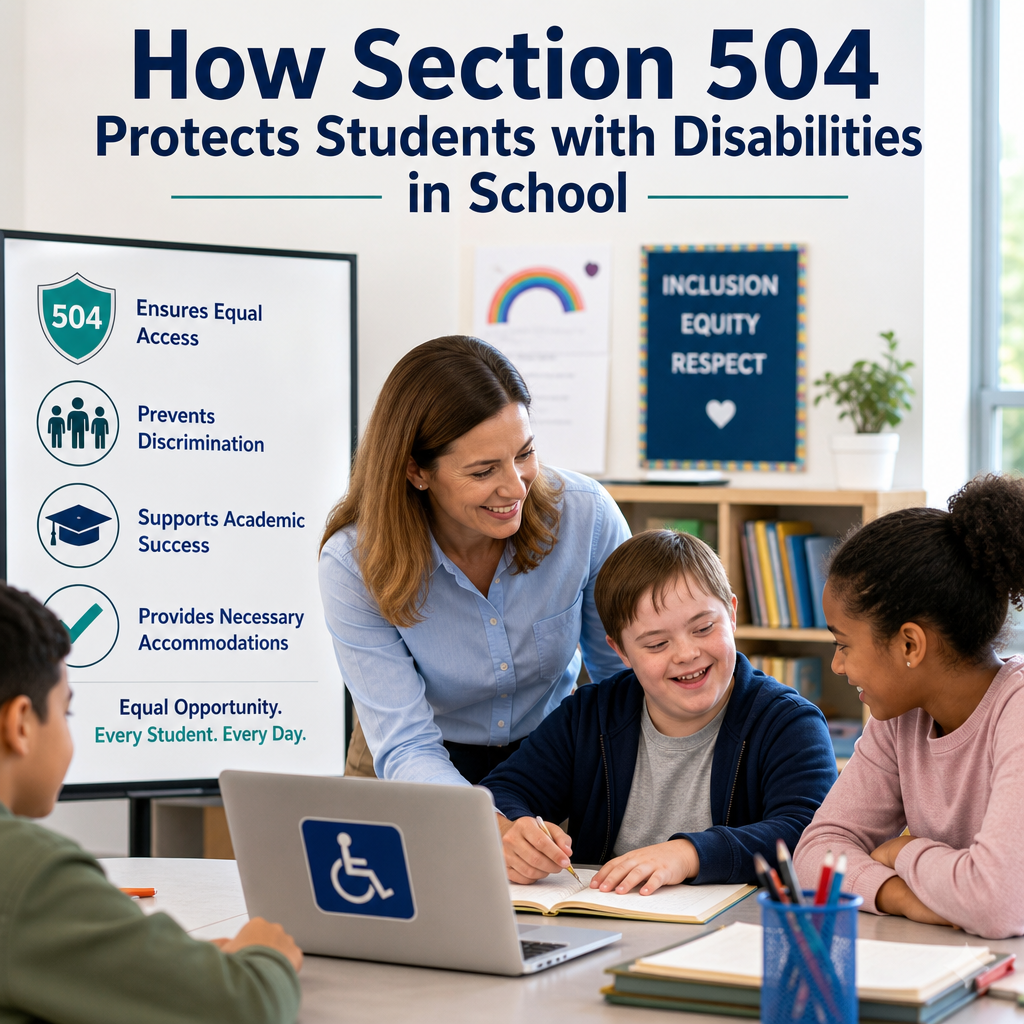
How Section 504 Protects Students with Disabilities in School
Section 504 protections help ensure students with disabilities get the access and support they need to learn, participate, and thrive at school. By requiring reasonable accommodations and removing barriers, this law gives families a powerful way to advocate for fair treatment and equal opportunity.
By: Jennifer Collins - Education on July 28, 2026
Section 504 is one of the most important civil rights protections for students with disabilities in the United States. For many families, it is the difference between a school environment that creates barriers and one that provides fair access, meaningful support, and real opportunity. If you are trying to understand how Section 504 protects students with disabilities in school, it helps to look beyond the legal language and focus on what it means in everyday life: equal access to education.
Unlike some programs that focus on special education instruction, Section 504 is about removing discrimination and making reasonable accommodations so students can participate in school activities on an equal basis. That can include classroom supports, testing accommodations, health-related plans, behavior supports, assistive technology, or changes to the school day.
In this article, we’ll break down what Section 504 is, who qualifies, what protections it provides, and how families can use it to advocate for their children.
What Is Section 504?
Section 504 refers to Section 504 of the Rehabilitation Act of 1973, a federal civil rights law that prohibits discrimination based on disability in programs and activities that receive federal funding, including public schools.
In simple terms, schools cannot exclude a student, deny access, or treat a student unfairly because of a disability. Instead, they must provide supports that give the student equal access to education.
Section 504 vs. IDEA
Parents often hear Section 504 mentioned alongside the Individuals with Disabilities Education Act (IDEA), but they are not the same law.
Here’s the basic difference:
IDEA provides special education services to students who qualify under specific disability categories and need specialized instruction.
Section 504 applies more broadly and requires schools to provide accommodations and services so students with disabilities can access school programs.
A student may qualify under one law, both laws, or neither, depending on the disability and educational needs.
How Section 504 Protects Students With Disabilities in School
Section 504 protects students with disabilities in school by requiring schools to remove barriers that prevent equal participation. This protection applies to academics, school activities, transportation, extracurriculars, and many day-to-day aspects of school life.
It prevents discrimination
Schools cannot deny enrollment, isolate students, or treat them differently because of a disability. That includes unfair discipline practices when a disability is connected to behavior, as well as barriers that limit access to classrooms, field trips, or school events.
It requires reasonable accommodations
A major part of how Section 504 protects students with disabilities in school is through accommodations. These are changes that help a student access the same learning environment as their peers.
Examples include:
Extra time on tests
Preferential seating
Frequent movement breaks
Large-print or digital materials
Permission to use assistive technology
Modified bathroom or health routines
Reduced homework load when appropriate
Extended deadlines during symptom flare-ups
It supports equal access to school programs
Protection under Section 504 does not stop at the classroom door. Schools must also consider access to:
Lunchrooms
Field trips
Sports and clubs
Transportation
Assembly programs
After-school activities
If a student can’t participate safely or meaningfully without support, the school must look for a practical solution.
Who Qualifies for Section 504?
A student qualifies for Section 504 if they have a physical or mental impairment that substantially limits one or more major life activities.
Major life activities can include:
Learning
Reading
Concentrating
Thinking
Walking
Breathing
Seeing
Hearing
Speaking
Sleeping
Caring for oneself
This list is broad because disability can affect students in many ways. A qualifying condition might be visible, invisible, temporary, chronic, or episodic.
Common examples of qualifying conditions
Students may qualify for Section 504 if they have:
ADHD
Anxiety disorders
Depression
Diabetes
Asthma
Epilepsy
Food allergies
Tourette syndrome
Arthritis
Chronic migraines
Autism, in some cases
Temporary recovery needs after surgery or injury
Qualification depends on how the condition affects the student, not just the diagnosis itself.
A diagnosis alone is not always enough
A medical diagnosis may help support a Section 504 evaluation, but schools must look at the student’s actual needs and limitations. Two students with the same condition may need very different supports.
For example:
One student with ADHD may need extended time and reduced distractions.
Another student with ADHD may need task chunking, movement breaks, and organizational supports.
A student with asthma may need a rescue inhaler plan and permission to leave class if symptoms worsen.
What a Section 504 Plan Can Include
A Section 504 plan is the written plan schools use to document accommodations and services. It should be individualized, practical, and based on the student’s specific needs.
Common accommodations in a 504 plan
Depending on the disability, a 504 plan may include:
Extended time on tests and assignments
Breaks during class or assessments
Modified seating arrangements
Access to elevator use
Scheduled visits to the nurse
Permission to carry medication
Alternate attendance expectations during treatment
Reduced exposure to known triggers
Sensory tools or quiet workspaces
Behavioral supports and check-ins
Flexible scheduling for medical appointments
Health-related supports
Some 504 plans are especially important for students with medical conditions. Schools may create plans for:
Asthma action steps
Diabetes management
Seizure response
Allergy prevention and emergency response
Medication administration
Emergency evacuation support
These plans help staff know what to do before, during, and after an emergency.
Classroom and testing accommodations
A 504 plan can also support learning in specific ways:
Breaks during long tests
Small-group testing
Oral directions in addition to written directions
Audio books or speech-to-text tools
Reduced copying from the board
Priority scheduling for difficult classes
Help with organization and planner use
The goal is not to lower expectations unfairly. It is to give the student a fair chance to show what they know and participate fully.
How the Section 504 Process Works
Every district has its own procedures, but the process usually follows a similar pattern.
1. A concern is raised
A parent, teacher, counselor, or school staff member may notice that a student’s disability is affecting school performance or access. This often starts the conversation.
2. The school evaluates the student
The school gathers information from multiple sources, which may include:
Teacher input
Parent concerns
Medical documentation
Grades and attendance
Behavior reports
Work samples
Observations
Standardized testing results
The school must consider the whole picture, not just one test score or one report.
3. The team decides eligibility
If the student’s disability substantially limits a major life activity, the team may determine that the student qualifies for Section 504.
4. The plan is written and implemented
If eligible, the school creates a 504 plan listing the accommodations and who is responsible for carrying them out. This step matters because accommodations only help if staff actually use them.
5. The plan is reviewed periodically
Students change over time. Symptoms may improve, worsen, or shift. Schools should review the plan regularly and update it when needed.
Why Section 504 Matters for Daily School Life
Many people think disability protections only matter in extreme cases, but Section 504 often affects small daily moments that add up to a major difference.
Real-world examples
A student with migraines may need:
A dimmer testing space
Permission to rest in the nurse’s office
Flexibility with missed work
A student with diabetes may need:
Snacks during class
Blood sugar checks at certain times
Access to water and restroom breaks
Immediate response in an emergency
A student with anxiety may need:
Advance notice of presentations
A quiet place to reset
Support during transitions or crowded settings
A student with ADHD may need:
Clear written directions
Frequent check-ins
Reduced distractions
Help organizing multi-step assignments
These supports can reduce stress, improve participation, and help students stay engaged in school.
Parent Rights Under Section 504
Parents play an important role in the Section 504 process. Federal law gives families important rights when schools evaluate and support students with disabilities.
Families can request an evaluation
If you believe your child has a disability that affects learning or school access, you can ask the school in writing for a Section 504 evaluation.
Families can review records
Parents generally have the right to inspect relevant school records and evaluation information.
Families can participate in decision-making
Schools should include parents in meetings about eligibility and accommodations. Your insight into your child’s medical history, daily struggles, and school experiences matters.
Families can disagree with decisions
If you disagree with the school’s decision, you may be able to request a reconsideration, file a complaint, or pursue other dispute resolution options.
Common Misunderstandings About Section 504
Section 504 is widely used, but it is also misunderstood. Clearing up these myths can help families advocate more confidently.
Myth 1: A student must be failing to qualify
Not true. A student does not need failing grades to qualify. Some students do well academically but still need accommodations to access school fairly.
Myth 2: Only visible disabilities count
Not true. Many qualifying disabilities are invisible, including ADHD, anxiety, asthma, epilepsy, and chronic pain conditions.
Myth 3: A 504 plan is only for academics
Not true. Section 504 covers the whole school environment, including extracurriculars, transportation, and health needs.
Myth 4: A doctor’s note guarantees a plan
Not exactly. Medical documentation can help, but the school still evaluates how the condition affects school life and whether the student meets eligibility criteria.
Myth 5: Once approved, the plan never changes
Not true. A good plan should evolve as the student’s needs change.
Tips for Parents Advocating for Section 504 Support
If you are seeking support for your child, a clear and organized approach can help.
Keep records
Save:
Medical notes
Emails with the school
Report cards
Behavior reports
Attendance records
Examples of homework struggles or health interruptions
Describe functional impact
Focus on how the disability affects school participation. Instead of only naming the diagnosis, explain the specific barriers your child faces.
For example:
“My child cannot complete long tests without breaks because of fatigue.”
“Crowded transitions cause sensory overload and missed class time.”
“Asthma symptoms are triggered during PE and outdoor recess.”
Ask for practical accommodations
The best accommodations are specific and workable. Vague requests can be harder to implement.
Instead of saying:
“My child needs help.”
Try:
“My child needs written directions, extended test time, and weekly organizational check-ins.”
Follow up in writing
After meetings or phone calls, send a brief email summarizing what was discussed. Written communication creates a helpful record and reduces misunderstandings.
Monitor whether the plan is working
If accommodations are not being followed, or if your child is still struggling, request a review. A Section 504 plan should help in practice, not just on paper.
When a Student May Need More Than a 504 Plan
A 504 plan can be very effective, but it is not always enough. Some students need specialized instruction, behavioral supports, or related services that go beyond accommodations.
A student may need to be evaluated for IDEA services if they require:
Specially designed instruction
Intensive speech or occupational therapy
Significant behavior intervention
More structured academic support
A more comprehensive individualized education program
Sometimes a student may have both a 504 plan and an IEP at different points in their school career, depending on changing needs.
Frequently Asked Questions
What is the main purpose of Section 504 in schools?
The main purpose of Section 504 is to prevent disability-based discrimination and ensure students with disabilities have equal access to education. Schools must provide reasonable accommodations so students can participate in classes, activities, and services on an equal basis with their peers.
Does a student need a medical diagnosis to get a 504 plan?
A diagnosis can help, but it does not automatically guarantee a plan. The school must determine whether the disability substantially limits a major life activity and whether accommodations are needed. The student’s functional impact matters more than the label alone.
Can a student have a 504 plan for ADHD or anxiety?
Yes. Many students qualify for Section 504 because of ADHD, anxiety, depression, or other mental health conditions if the condition substantially limits learning, concentrating, thinking, or another major life activity. The school will review how the condition affects the student at school.
What if the school does not follow the 504 plan?
If staff are not implementing the plan, contact the school in writing right away. Document what is not happening, how it is affecting your child, and what support is missing. You can request a meeting to update or enforce the plan and ask about your district’s complaint process.
Can Section 504 accommodations change over time?
Yes. A 504 plan should be reviewed and updated when the student’s needs change. If accommodations are no longer working, or if new issues arise, families can ask for a meeting and request adjustments based on current information.
Understanding how Section 504 protects students with disabilities in school gives families a powerful tool for advocacy. At its core, Section 504 is about fairness: students should not be excluded, overlooked, or forced to struggle through barriers that schools can reasonably address. When a student qualifies, the law can open the door to accommodations that support learning, health, participation, and confidence.
The most effective Section 504 plans are specific, individualized, and regularly reviewed. They reflect the student’s real needs, not just a diagnosis on paper. For parents, teachers, and students alike, that means staying informed, communicating clearly, and asking for support when barriers appear.
If you believe a student may qualify, the best next step is to document the challenges, request an evaluation, and work with the school team to build a practical plan. With the right supports in place, students with disabilities can participate more fully and succeed in school with greater independence and dignity.
Jennifer, M.Ed., holds a degree in Higher Education Administration, with
a focus on U.S. college financial aid, admissions policy, and student
support systems. She researches and writes about scholarships, federal
aid programs, and the college planning process to help students and
families make informed, well-supported decisions.