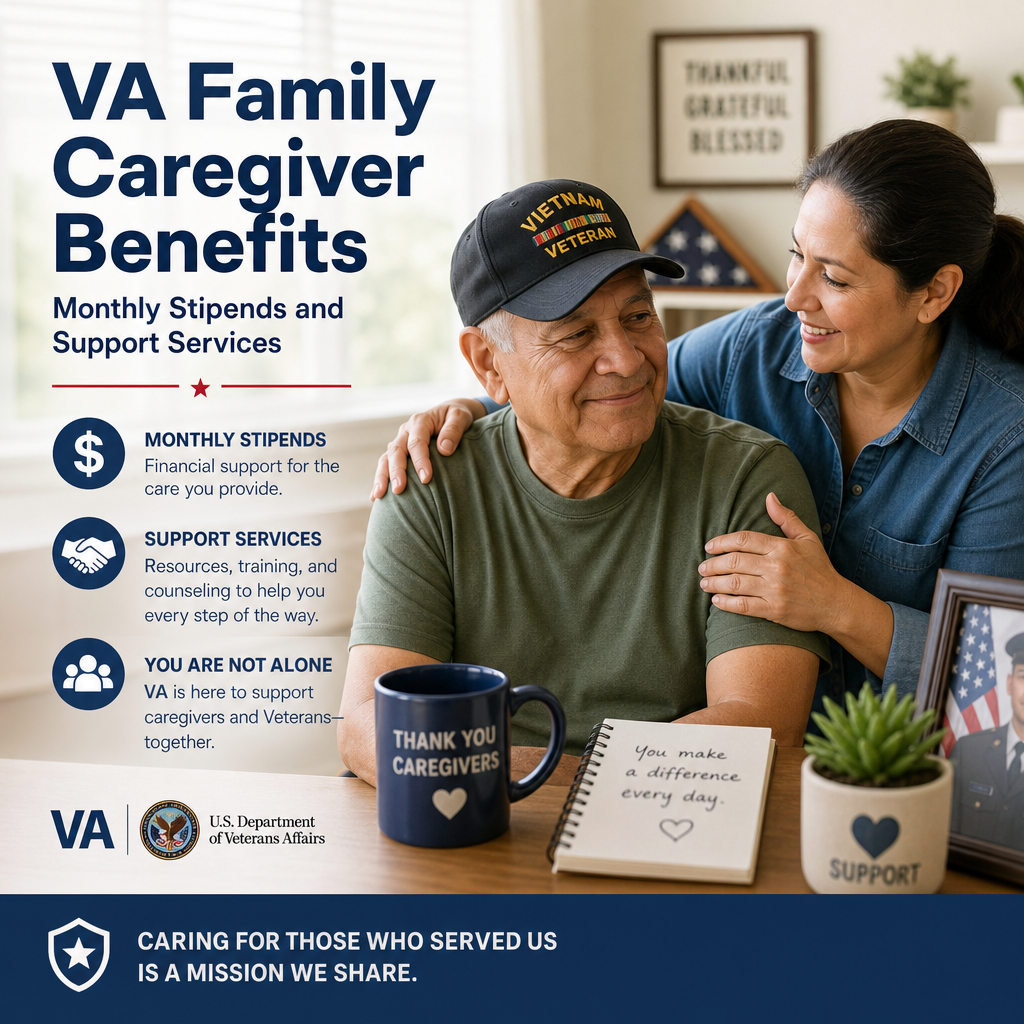
VA Family Caregiver Benefits, Monthly Stipends, and Support Services
VA family caregiver benefits can help ease the physical, emotional, and financial strain of caring for a veteran at home. From monthly stipends to training, counseling, and respite care, these supports are designed to help caregivers provide steady care while protecting their own well-being.
By: Emily Adams on July 29, 2026
Caring for a veteran at home can be deeply meaningful, but it can also be physically, emotionally, and financially demanding. That is where VA family caregiver benefits can make a real difference. The Department of Veterans Affairs offers a range of support services for eligible caregivers, including a monthly stipend in certain cases, training, counseling, respite care, and help navigating the VA system.
If you are helping a veteran with daily tasks, medical appointments, or recovery after a serious injury or illness, understanding these benefits can help you protect your own well-being while giving your loved one the care they need. This guide explains how VA family caregiver benefits work, who may qualify, what support is available, and how to apply.
What Are VA Family Caregiver Benefits?
VA family caregiver benefits are designed to support the people who provide everyday care to eligible veterans. The program recognizes that family members and other unpaid caregivers often take on essential responsibilities, from managing medications to helping with bathing, mobility, meals, and transportation.
These benefits are not a single program. Instead, they may include:
A monthly stipend for qualifying primary caregivers
Caregiver training and education
Mental health counseling
Respite care options
Access to caregiver support coordinators
Help with care planning and navigation of VA services
The exact benefits available depend on the veteran’s eligibility, the caregiver’s role, and the VA program involved.
Who May Qualify for VA Family Caregiver Benefits?
Eligibility depends on several factors, including the veteran’s service history, medical needs, and the level of assistance required. The VA caregiver program has changed over time, so it is important to confirm the current requirements before applying.
Common eligibility considerations
A veteran may need help due to:
A serious injury or illness related to military service
A need for ongoing assistance with daily living tasks
A requirement for supervision or protection due to cognitive or physical limitations
A caregiver may qualify if they are a spouse, family member, partner, friend, or another person who regularly provides care.
What the VA looks at
When reviewing eligibility, the VA may consider:
Whether the veteran needs help with activities of daily living
Whether the caregiver lives with or regularly assists the veteran
Whether the caregiver can provide the level of support required
Whether the veteran meets the program’s service-connected disability or injury criteria
Because VA rules can be specific, many families find it helpful to work with a VA caregiver support coordinator or a veterans service officer during the application process.
Monthly Stipends: How They Work
One of the most well-known parts of VA family caregiver benefits is the monthly stipend available in certain cases. This payment is meant to recognize the time and labor involved in caregiving and to help offset the costs caregivers often absorb.
What the stipend is for
The stipend is not a salary in the traditional sense. Instead, it is intended to support caregivers who are providing substantial daily assistance to an eligible veteran. It may help with:
Transportation costs
Household supplies
Lost work time
Care-related expenses
General financial strain associated with caregiving
How the amount is determined
The monthly stipend amount can vary based on program rules, the veteran’s assessed needs, and the caregiver’s assigned role. The VA typically evaluates the level of help required and may assign a tier or payment level accordingly.
Important things to know
The stipend is generally tied to the veteran’s care needs and program eligibility.
Caregivers may need to complete assessments or periodic reviews.
Receiving a stipend does not replace the need for quality care planning and support.
Payments may affect taxes or other benefits depending on individual circumstances, so it can be wise to seek professional guidance if needed.
Support Services Beyond the Monthly Stipend
Not every caregiver will qualify for a monthly stipend, but many can still access valuable support services through the VA. These services can make caregiving more sustainable and less isolating.
1. Caregiver training
Training helps caregivers understand how to safely assist with daily care. Topics may include:
Medication management
Mobility support and fall prevention
Wound care basics
Helping with bathing and dressing
Communicating with veterans who have PTSD, memory loss, or other conditions
This education can reduce stress and improve confidence at home.
2. Counseling and emotional support
Caregiving can be emotionally exhausting. The VA offers access to counseling and support groups in many situations. These services can help caregivers manage:
Anxiety
Burnout
Grief
Relationship strain
The pressure of long-term caregiving
Support groups can also connect caregivers with others facing similar challenges.
3. Respite care
Respite care gives caregivers a temporary break. It may be provided in the home, at a VA facility, or through approved community resources. A short break can be essential for rest, medical appointments, family obligations, or recovery from caregiver fatigue.
4. Caregiver support coordinators
Many VA medical centers have caregiver support coordinators who help families understand available resources. They can assist with:
Benefits questions
Referrals to services
Application support
Care planning
Problem-solving when care needs change
5. Peer support and community connections
Some caregivers benefit from peer mentoring or local support networks. These connections can reduce isolation and offer practical advice from people who understand the day-to-day realities of caring for a veteran.
How to Apply for VA Family Caregiver Benefits
Applying for VA family caregiver benefits usually involves several steps. While the process can feel complicated, it becomes more manageable when you break it down.
Step 1: Confirm the veteran’s eligibility
Before applying, check whether the veteran meets the program’s criteria. This may involve reviewing service-connected disability status, medical records, and care needs.
Step 2: Gather important information
Helpful documents may include:
The veteran’s VA identification and service details
Medical records or treatment summaries
Contact information for both the veteran and caregiver
Details about the types of care provided each day
Any prior assessments or care plans
Step 3: Contact the VA or a caregiver support coordinator
A caregiver support coordinator can explain the program and help determine the next best step. You can also work with a veterans service officer, who may assist with paperwork and advocacy.
Step 4: Complete the application and assessments
The VA may require forms, interviews, and assessments. These evaluations help determine whether the veteran qualifies and what level of support is appropriate.
Step 5: Follow up and keep records
Keep copies of forms, notes from phone calls, and names of people you speak with. If the VA requests additional information, respond promptly to avoid delays.
Practical Tips for Caregivers Navigating the VA System
The VA system can feel overwhelming at first, especially if you are already balancing a full caregiving load. A few practical habits can make the process easier.
Stay organized
Create a folder, either digital or paper, for:
Medical records
Benefits letters
Appointment notes
Contact information
Application copies
Ask for clarification
If a letter or phone call is confusing, ask for a plain-language explanation. It is reasonable to request that someone repeat the next steps or spell out what documentation is needed.
Track care tasks
A caregiving log can help show the amount and type of support provided. Record tasks such as:
Medication reminders
Meal preparation
Bathing assistance
Transportation
Nighttime supervision
This information may help during assessments or appeals.
Reassess needs regularly
A veteran’s condition can change over time. If care needs increase, ask whether a reevaluation is appropriate. New limitations may affect eligibility for support services or stipend levels.
Use available community resources
VA benefits may be one piece of the support puzzle. Local aging services, nonprofit organizations, and state veterans offices can also provide help with meals, transportation, equipment, and caregiver relief.
Common Challenges and How to Handle Them
Even with strong benefits, families often face practical hurdles. Knowing what to expect can reduce frustration.
Delays in the application process
Delays are common when documents are incomplete or assessments take time. To help avoid slowdowns:
Submit complete forms
Return calls and messages quickly
Keep copies of everything
Ask for next-step timelines
Confusion about eligibility
VA rules can be technical, especially when a veteran’s condition is complex. If you are unsure, ask for help from:
A VA caregiver support coordinator
A veterans service officer
A trusted accredited representative
Burnout
Caregivers often put their own needs last. Watch for signs of burnout, such as:
Irritability
Poor sleep
Constant fatigue
Feeling overwhelmed
Withdrawing from friends or activities
If these signs appear, use respite care, counseling, or family backup if possible.
Changing care needs
The care plan that worked six months ago may no longer fit. Revisit routines regularly and update the VA if the veteran’s condition has changed.
Why VA Family Caregiver Benefits Matter
These benefits are about more than money or forms. They acknowledge that caregiving is real work, and that family caregivers play a crucial role in helping veterans stay safe and supported at home.
For many households, VA family caregiver benefits can:
Reduce financial pressure
Improve confidence in daily care
Support caregiver mental health
Strengthen the veteran’s quality of life
Help families sustain care over the long term
When caregivers have training, support, and time to rest, the entire care arrangement becomes more stable.
Frequently Asked Questions
1. Who can receive VA family caregiver benefits?
Eligibility depends on both the veteran’s condition and the caregiver’s role. In many cases, a spouse, family member, partner, or another trusted person may qualify if they provide regular care and the veteran meets the VA’s program requirements. The VA will review the need for assistance and the type of care being provided.
2. Do all caregivers receive a monthly stipend?
No. A monthly stipend is available only in certain cases and usually depends on the veteran meeting specific eligibility criteria and the caregiver being approved as a primary caregiver. Many caregivers may still qualify for other support services, such as training, counseling, respite care, and support coordination.
3. What kind of help does the VA consider caregiving?
The VA may consider assistance with activities of daily living, including bathing, dressing, mobility, meal preparation, medication support, transportation, and supervision for safety. The exact services reviewed depend on the veteran’s condition and care assessment.
4. Can I apply if the veteran already receives other VA benefits?
Yes, in many situations a veteran can receive caregiver-related support while also receiving other VA benefits. However, each benefit has its own rules. It is important to review how different programs work together so you understand any impact on eligibility, payments, or support options.
5. What should I do if the VA denies caregiver benefits?
If the VA denies the application, ask for the reason in writing and review the decision carefully. You may be able to submit more documentation, request reconsideration, or work with a veterans service officer or accredited representative to explore appeal options. Denial does not always mean the case is over.
VA family caregiver benefits can provide meaningful relief for the people who step in every day to care for a veteran. Whether you are looking for a monthly stipend, caregiver training, respite care, or help understanding the VA system, these resources exist to make caregiving more sustainable and less overwhelming. Just as importantly, they recognize the value of the unpaid work caregivers do to support veterans at home.
If you are unsure whether your family qualifies, start by reviewing the veteran’s needs and contacting a VA caregiver support coordinator or accredited veterans representative. Even if a monthly stipend is not available, other support services may still be within reach. The key is to ask questions, keep records, and stay informed as care needs change.
The right support can make caregiving safer, steadier, and more manageable for everyone involved. Taking the time to understand your options now can help protect both the veteran’s well-being and your own.
Emily A, holds a Master's degree in Public Administration (MPA) and has over 7 years of experience researching federal and state assistance programs. She writes educational content focused on government benefits, public policy, and community resources, using information from official agencies to help readers understand available programs and eligibility requirements.