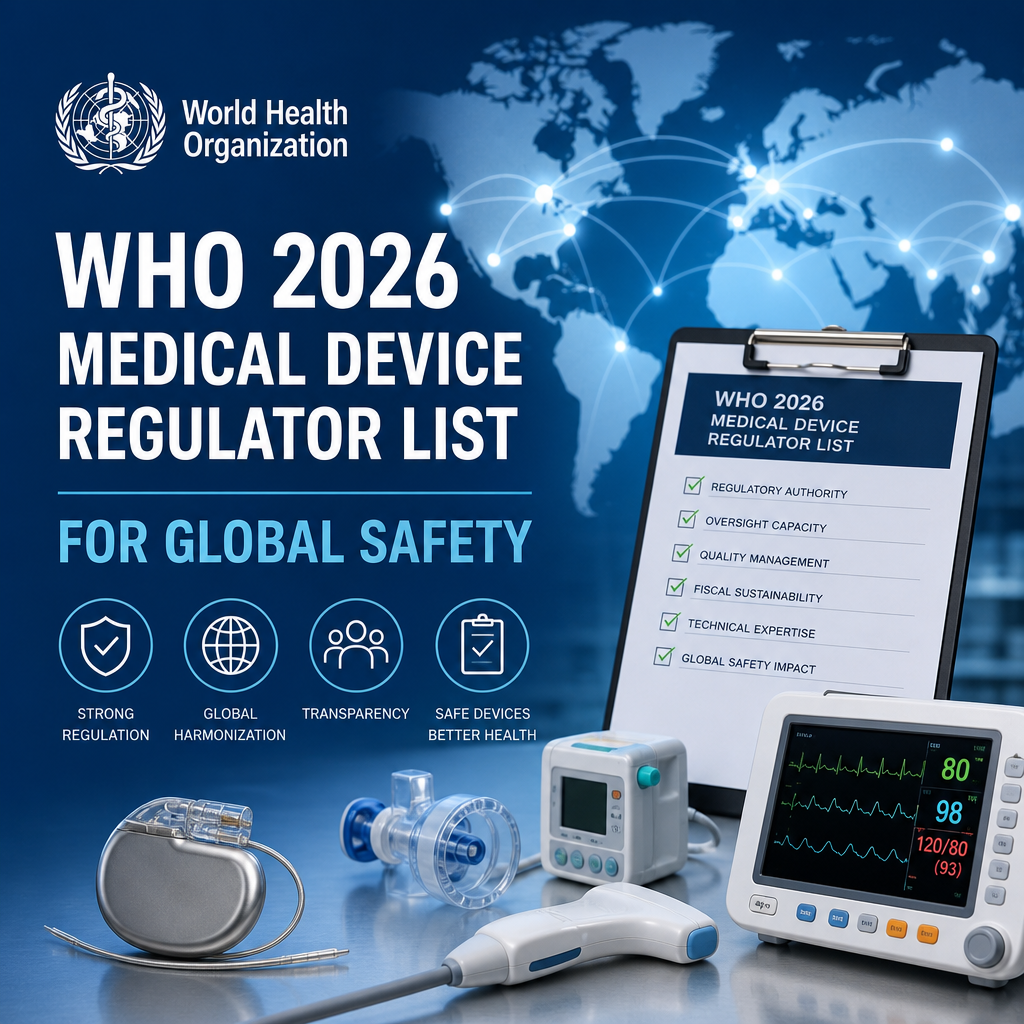
WHO 2026 Medical Device Regulator List for Global Safety
The WHO medical device regulator list is designed to make global oversight clearer and safer, helping countries, manufacturers, and healthcare providers identify regulators with strong systems in place. As devices become more connected and widely traded, this list could play a key role in improving trust and reducing safety gaps worldwide.
By: pedropadm2025@gmail.com on July 28, 2026
The world depends on medical devices more than ever—from insulin pumps and ventilators to diagnostic test kits and implantable devices. But as these products move across borders, safety oversight can become uneven. That is why the WHO’s 2026 Medical Device Regulator List is drawing attention. The list is designed to help improve global safety by identifying regulators with strong systems for oversight, helping countries, manufacturers, and healthcare providers make better decisions.
For patients, this matters because a device that works well in one market should meet dependable standards everywhere it is sold or used. For regulators, the list can support collaboration, benchmarking, and trust. For manufacturers, it can clarify where expectations are highest and where regulatory alignment may reduce delays and confusion.
In this article, we’ll explain what the WHO’s 2026 Medical Device Regulator List is, why it matters, how it could affect global device safety, and what stakeholders should watch next.
What Is the WHO’s 2026 Medical Device Regulator List?
The WHO’s 2026 Medical Device Regulator List is intended to identify medical device regulatory authorities that meet defined criteria for maturity, competence, and oversight capability. In simple terms, it acts as a reference point for countries and organizations looking for reliable regulators with established systems for medical device review, market surveillance, quality management, and post-market monitoring.
This kind of list is not about ranking countries as “good” or “bad.” Instead, it helps create transparency around regulatory readiness and strength. That can be especially useful in areas where devices are sold internationally, used in public health programs, or procured by healthcare systems with limited regulatory capacity.
Why the List Matters Now
Medical devices are becoming more connected, more software-driven, and more globally distributed. That creates both opportunities and risks:
Devices can be deployed faster across markets.
Supply chains are more complex.
Software updates and cybersecurity issues can affect safety.
Smaller regulators may struggle to assess novel technologies quickly.
By highlighting regulators with robust systems, WHO’s 2026 medical device regulator list aims to support safer decisions across the global health ecosystem.
How the WHO’s 2026 Medical Device Regulator List Could Improve Global Safety
The central goal of the WHO’s 2026 Medical Device Regulator List is straightforward: improve patient safety by encouraging stronger and more consistent regulatory oversight worldwide. That can happen in several ways.
1. It can strengthen confidence in regulatory decisions
When regulators recognize each other’s capabilities, they may be more willing to rely on trusted assessments, especially for low-risk or already well-studied devices. This can reduce unnecessary duplication while still protecting patients.
For example, if a regulator has a proven process for evaluating adverse event reports and device recalls, other health authorities may use that information to inform their own decisions.
2. It can support faster access to safe devices
In many health systems, delays in approving or procuring medical devices can slow patient care. A clearer picture of which regulators have mature oversight systems may help streamline cross-border cooperation and reduce bottlenecks.
That does not mean safety should be sacrificed for speed. Rather, it means trusted pathways can help good products reach patients more efficiently.
3. It may improve post-market surveillance
Medical device safety does not end when a product is approved. Real-world use reveals problems that premarket testing cannot always predict.
A strong regulator typically monitors:
adverse event reports
field safety corrective actions
device recalls
complaint trends
cybersecurity vulnerabilities
software and firmware updates
The WHO’s 2026 Medical Device Regulator List may encourage more attention to these post-market systems, which are essential for protecting patients after devices enter circulation.
4. It can promote international harmonization
Regulatory harmonization means aligning standards, language, and expectations across jurisdictions. That does not require identical laws, but it does require enough common ground to reduce confusion.
The list can support harmonization by:
encouraging shared evaluation frameworks
recognizing established regulatory best practices
improving communication among authorities
reducing inconsistent requirements for manufacturers
Over time, this can make global safety oversight more predictable and more effective.
Key Features Likely to Matter in the WHO’s Approach
Although every regulatory framework differs, a credible medical device regulator list usually focuses on core functions rather than labels alone. WHO’s 2026 effort is likely to emphasize whether a regulator can consistently perform essential safety tasks.
Regulatory Maturity and Governance
A strong regulator needs clear authority, transparent procedures, and accountable decision-making. That includes legal power to inspect, evaluate, enforce, and act when risks emerge.
Market Authorization Processes
Authorities should have systems to review device submissions based on risk level. Not every device requires the same level of scrutiny, but the process should be proportionate, documented, and science-based.
Quality Management Systems
Regulators themselves should follow internal quality practices. This helps ensure decisions are consistent, traceable, and defensible.
Inspection and Enforcement Capability
A good regulator does not simply approve products. It also monitors compliance, investigates violations, and can order corrective actions when needed.
Post-Market Oversight
As noted earlier, this is one of the most important areas for device safety. A regulator needs the ability to detect emerging problems and respond quickly.
Transparency and Communication
Public trust grows when regulators explain how they work, what they evaluate, and how they respond to risks. Clear communication also helps manufacturers and healthcare providers stay informed.
What This Means for Manufacturers
For manufacturers, the WHO’s 2026 Medical Device Regulator List may become a practical reference point, especially for companies selling across multiple regions.
Better planning for market entry
Manufacturers can use the list to understand which regulators have mature requirements and which may depend on external reliance pathways or collaborative review models.
More efficient regulatory strategy
If a company knows that a regulator has recognized processes and strong post-market expectations, it can prepare submissions and compliance plans more effectively.
Greater emphasis on quality and lifecycle support
Modern device regulation is not just about initial approval. Manufacturers must also support:
ongoing risk management
complaint handling
software maintenance
cybersecurity patching
recalls and corrective actions
vigilance reporting
The WHO’s 2026 Medical Device Regulator List may reinforce the expectation that device safety is a lifecycle responsibility.
What This Means for Healthcare Providers and Hospitals
Hospitals, clinics, and procurement teams also have a stake in the WHO’s 2026 Medical Device Regulator List. When a healthcare organization buys devices, it needs to know not only what the product does but also whether the oversight behind it is dependable.
Practical benefits for procurement teams
Procurement leaders may use the list as one input when evaluating suppliers, especially for high-risk devices or new technologies.
They may ask:
Which regulator authorized the device?
Does that authority have a strong track record?
Is there clear post-market monitoring?
Has the product been subject to recalls or safety alerts?
Better risk management
Clinical teams rely on devices every day. If oversight is weak, device failures can affect diagnosis, treatment, and patient outcomes. A reliable regulator list can help institutions reduce avoidable risk.
Challenges and Limitations to Keep in Mind
Even a strong list has limits. The WHO’s 2026 Medical Device Regulator List should be viewed as one tool, not a complete substitute for due diligence.
Regulatory strength is not the same as product safety
A well-regarded regulator can still authorize a device that later develops issues. That is why post-market monitoring and clinical vigilance matter.
Global differences will remain
Countries differ in resources, legal structures, and public health priorities. A regulator list can support consistency, but it cannot erase every national difference.
New technologies evolve quickly
Artificial intelligence, connected devices, and software-driven diagnostics can outpace traditional oversight methods. Regulators will need to keep updating their methods to stay effective.
Access and equity still matter
Safety oversight must not become a barrier that only wealthier markets can navigate. Global health improves when strong regulation and access work together.
How Stakeholders Can Prepare
Whether you are a policymaker, manufacturer, healthcare provider, or patient advocate, there are practical steps you can take now.
For regulators
Review current device oversight capacity
Strengthen adverse event reporting systems
Improve inspection and enforcement processes
Expand international collaboration
Invest in digital and cybersecurity expertise
For manufacturers
Map target markets against regulatory maturity
Strengthen quality management systems
Improve documentation for software and hardware changes
Build robust vigilance and recall procedures
Track expectations for post-market reporting
For healthcare organizations
Verify regulatory status during procurement
Monitor device performance in clinical use
Create clear reporting pathways for device problems
Train staff on safe use and incident reporting
For patients and advocates
Learn how to report device issues
Ask where a device was authorized
Stay informed about recalls and safety notices
Talk with healthcare providers if a device behaves unexpectedly
The Broader Impact on Global Health
The WHO’s 2026 Medical Device Regulator List is about more than paperwork or policy. It reflects a broader shift toward smarter, more connected global health governance.
When regulators can compare systems, share evidence, and trust validated oversight processes, everyone benefits:
Patients gain safer access to medical technology.
Health systems reduce duplication and confusion.
Manufacturers face clearer expectations.
Regulators can focus resources where they matter most.
This is especially important for low- and middle-income countries, where limited regulatory capacity can make device oversight more difficult. A trusted reference list may help support technical assistance, partnerships, and capacity building.
Frequently Asked Questions
1. What is the WHO’s 2026 Medical Device Regulator List?
It is a WHO initiative intended to identify medical device regulators with strong, reliable oversight systems. The goal is to improve transparency, encourage regulatory collaboration, and support global patient safety.
2. Does being on the list mean every device approved by that regulator is safe?
No. A strong regulator improves the chances of safe, well-managed oversight, but no system can guarantee that every device will be problem-free. Safety depends on both premarket review and post-market monitoring.
3. How could the list help manufacturers?
Manufacturers may use it to better understand which regulators have mature processes, what expectations to prepare for, and where reliance or collaboration pathways may exist. It can also support smarter regulatory planning.
4. Why is post-market surveillance so important for medical devices?
Many device risks only appear after real-world use. Post-market surveillance helps detect adverse events, recalls, performance issues, and cybersecurity problems that testing alone may miss.
5. How can hospitals and clinics use this information?
Healthcare providers can use regulator information as part of procurement and risk management. It helps them evaluate whether a device has been overseen by a regulator with credible systems and whether ongoing safety monitoring is in place.
The WHO’s 2026 Medical Device Regulator List represents an important step toward stronger, more coordinated global safety oversight. In a healthcare environment where devices are increasingly connected, software-driven, and internationally traded, reliable regulation matters more than ever. By highlighting regulators with mature systems, WHO can help countries, manufacturers, and healthcare organizations make better-informed decisions that support patient safety.
Just as importantly, the list can encourage a broader culture of accountability. Safe medical devices depend on more than initial approval. They require ongoing surveillance, transparent communication, and a commitment to acting quickly when problems arise. For manufacturers, that means building quality and compliance into every stage of the product lifecycle. For providers, it means staying alert to device performance and safety notices. For regulators, it means strengthening the systems that protect patients today and prepare for the technologies of tomorrow.
As global health needs continue to evolve, the WHO’s effort can serve as a practical reference point for smarter regulation and safer care. The next step is to keep watching how the list develops and how stakeholders use it to strengthen the safety of medical devices worldwide.
Peter B holds a degree in Journalism and has 5 years of experience covering U.S. economic policy, labor markets, and financial news. He writes data-driven news content on topics like inflation, interest rates, and employment trends.