Alternative Marine Fuels Could Transform Global Shipping Future
Alternative marine fuels are quickly moving from a niche idea to a practical path toward cleaner, more resilient shipping. From methanol to ammonia and beyond, these options could help the industry cut emissions without slowing global trade.
By: pedropadm2025@gmail.com on July 28, 2026
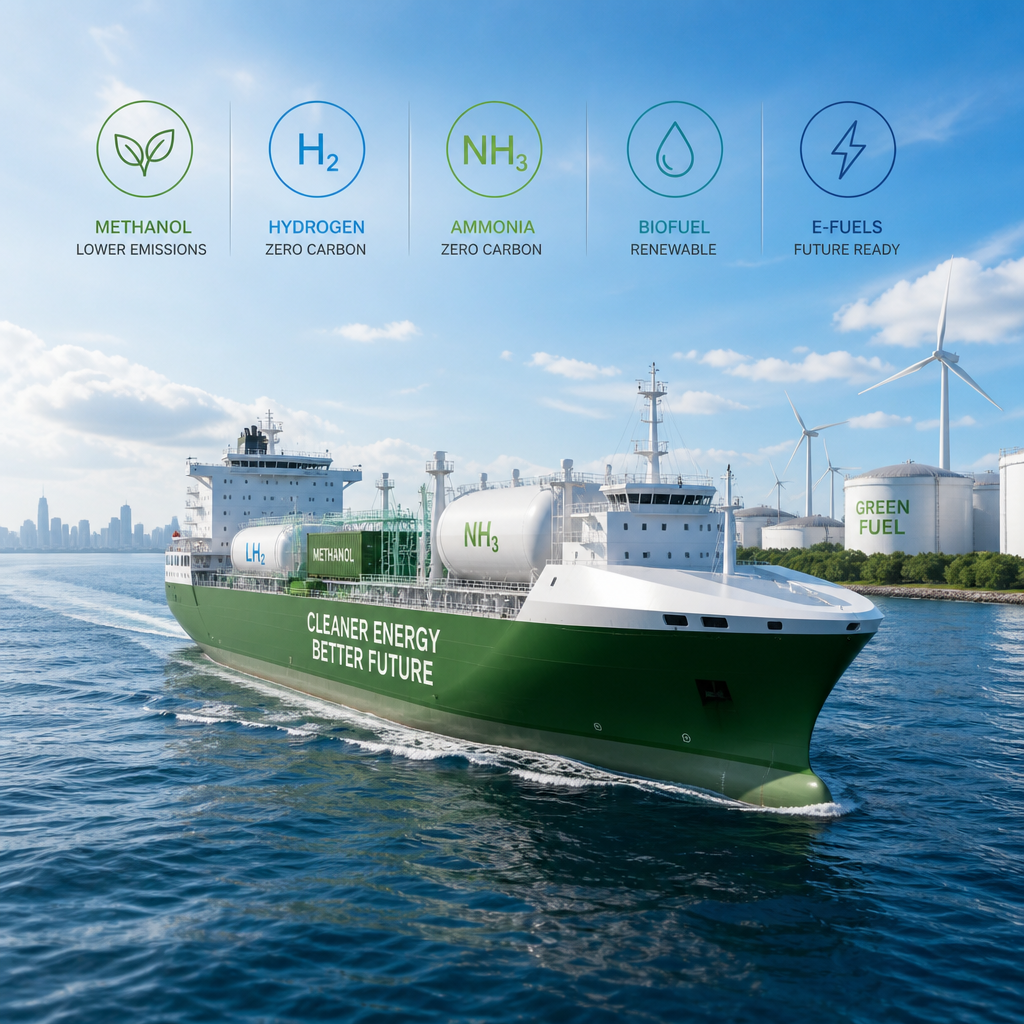
The global shipping industry moves most of the world’s goods, but it also faces growing pressure to cut emissions and reduce its dependence on fossil fuels. That’s why alternative marine fuels have become such an important topic for shipowners, ports, regulators, and cargo customers alike. From ammonia and methanol to biofuels, hydrogen, and even battery-electric systems for shorter routes, these fuels could reshape how ships power international trade.
The shift won’t happen overnight. Shipping fleets are massive, vessel lifespans are long, and fuel infrastructure at ports must evolve alongside the ships themselves. Still, the direction is clear: cleaner energy choices are no longer optional. They are becoming central to the future of global shipping.
Why Alternative Marine Fuels Matter
Shipping is often described as one of the most efficient ways to move large volumes of cargo, but efficiency alone does not make it sustainable. Conventional marine fuels, especially heavy fuel oil and marine diesel, release greenhouse gases and other pollutants that affect air quality and the climate.
Alternative marine fuels matter because they offer a pathway to:
Lower carbon emissions across maritime transport
Reduce sulfur oxides, nitrogen oxides, and particulate matter
Help shipping companies meet tightening environmental regulations
Support long-term energy diversification
Improve the sustainability profile of global supply chains
For many companies, the question is no longer whether to explore alternative marine fuels, but which options make sense for their routes, vessel types, and budgets.
The Main Types of Alternative Marine Fuels
No single fuel will solve every shipping challenge. Different vessel classes and trade routes need different solutions. Here’s a practical look at the most discussed options.
Methanol
Methanol is gaining attention because it can be easier to store and handle than some other low-carbon fuels. It works as a liquid at ambient temperature, which simplifies onboard storage compared with cryogenic fuels.
It can be produced from fossil sources, but the real climate advantage comes from green methanol made using renewable electricity and captured carbon dioxide or biomass-based feedstocks.
Why it stands out:
Easier fuel logistics than liquefied gases
Can be used in dual-fuel engines
Fits well with short-sea and deep-sea applications
Lower sulfur emissions than conventional marine fuel
Ammonia
Ammonia is one of the most closely watched alternative marine fuels because it contains no carbon, meaning it does not produce carbon dioxide when burned. That makes it a promising zero-carbon fuel in principle.
However, ammonia comes with serious safety and technical challenges. It is toxic, requires careful handling, and combustion technology is still maturing.
Potential advantages:
No direct CO2 emissions at the point of use
Could be produced using renewable energy
Suitable for long-distance shipping if engine and safety systems continue to improve
Hydrogen
Hydrogen is another zero-carbon fuel candidate, especially for shorter routes or vessels with access to frequent bunkering. It can power fuel cells or combustion engines, depending on the application.
The biggest limitations are storage and infrastructure. Hydrogen requires either high pressure or extremely low temperatures, which makes onboard storage more complex.
Best suited for:
Ferries
Coastal shipping
Port operations
Smaller vessels with predictable routes
Biofuels
Biofuels are among the most immediately usable alternatives because many ships can blend or even run on them with minimal equipment changes, depending on the fuel type and engine compatibility.
They are often seen as a practical transitional solution, particularly for shipowners seeking near-term emissions reductions.
Important considerations:
Sustainability depends on feedstock and production methods
Supply can be limited
Life-cycle emissions vary widely
LNG and Renewable LNG
Liquefied natural gas, or LNG, has been used as a bridge fuel because it can reduce certain air pollutants and lower carbon dioxide emissions compared with some conventional marine fuels. But LNG is still a fossil fuel, and methane slip remains a concern.
Renewable LNG, made from biogenic or synthetic sources, may offer a lower-emissions alternative, but availability remains limited.
Battery-Electric Systems
Battery-electric propulsion is not practical for every vessel, but it can work well for short routes, harbor craft, and ferries. As battery energy density improves, more marine applications may become viable.
Battery power is especially useful when paired with shore charging and predictable route planning.
What Is Driving the Shift Toward Alternative Marine Fuels?
Several forces are pushing the shipping sector toward cleaner energy.
Regulatory Pressure
International and regional regulations are raising the bar for maritime emissions. Shipping companies must prepare for stricter carbon intensity targets, fuel standards, and reporting requirements.
This regulatory environment is one of the strongest drivers of investment in alternative marine fuels.
Customer and Investor Expectations
Cargo owners increasingly want to reduce emissions throughout their supply chains. At the same time, investors and lenders are paying closer attention to environmental performance and transition planning.
Shipping firms that adapt early may gain a competitive edge in contracts, financing, and reputation.
Technology Maturity
The industry is no longer starting from zero. Dual-fuel engines, fuel-cell pilots, advanced storage systems, and bunkering projects are already moving from concept to deployment.
Although not every technology is ready for universal use, progress has accelerated enough to make real-world adoption possible.
Energy Security
Diversifying fuel sources can help reduce dependence on any single market or supply chain. For shipowners, that can mean greater resilience against price spikes and fuel availability challenges.
The Infrastructure Challenge
Even the most promising fuel cannot transform shipping without a support system. Ships need ports, storage tanks, bunkering equipment, trained personnel, and reliable fuel supply chains.
What Ports Must Develop
To support alternative marine fuels, ports may need to invest in:
Safe storage and transfer systems
Specialized bunkering terminals
Fire and toxicity protection measures
Emergency response training
Fuel-quality monitoring and certification
This is a major undertaking, especially for ports that serve multiple vessel types and international routes. The transition will likely unfold unevenly, with some major hubs moving faster than smaller regional ports.
Why Standardization Matters
Shipping is global, so fuel systems must work across jurisdictions. Common safety standards, certification practices, and emissions accounting methods are essential to make alternative fuels commercially practical at scale.
Without standardization, shipowners may hesitate to commit capital to a fuel that works in one region but not another.
Economic Realities Shipowners Must Consider
Cleaner fuels are only part of the equation. Cost matters, and so does total operational performance. Alternative marine fuels may have higher upfront costs, different storage requirements, or lower energy density than conventional bunker fuel.
Key Cost Factors
Shipowners usually evaluate:
Fuel price
Engine conversion or newbuild costs
Storage and bunkering infrastructure
Crew training
Maintenance and safety systems
Compliance and emissions-related costs
A fuel that looks expensive at the pump may still make sense if it reduces regulatory risk, improves access to green financing, or avoids future carbon penalties.
Newbuilds vs. Retrofits
Some alternative fuels are easier to adopt on new vessels than on existing ships. For older vessels, retrofitting may be technically possible but costly or limited by space constraints.
That’s why many shipowners are taking a portfolio approach:
Use transitional options like biofuels where appropriate
Invest in dual-fuel capability for flexibility
Plan newbuilds around likely future fuel availability
Monitor regional infrastructure development before locking in a single choice
How Alternative Marine Fuels Could Change Global Shipping
The move to alternative marine fuels is about more than cleaner engines. It could reshape the structure of shipping itself.
Fleet Design Will Evolve
Future vessels may be designed around:
Lower-emission engines
Larger or differently shaped fuel storage systems
Fuel-cell integration
Electrification for auxiliary systems
Improved energy management software
As a result, naval architecture and engineering priorities will change in meaningful ways.
Port Strategy Will Change
Ports that become early leaders in clean fuel infrastructure could attract more traffic, more investment, and more long-term business. In contrast, ports that lag behind may struggle to serve low-emissions fleets.
This creates an opportunity for smart port planning and public-private partnerships.
Supply Chains Will Become More Transparent
As companies track emissions more carefully, shipping data will likely become more detailed and more transparent. Customers may begin comparing not just cost and transit time, but also the carbon intensity of different shipping lanes.
That shift could influence routing, procurement, and carrier selection across global trade.
Realistic Challenges That Still Need Solving
The promise of alternative marine fuels is real, but the industry must overcome several obstacles.
Safety
Some fuels, such as ammonia and hydrogen, introduce hazards that require new training, emergency planning, and vessel design standards.
Fuel Availability
Many promising fuels are not yet available at global scale. Limited supply can make it hard for shipping companies to commit to one pathway.
Life-Cycle Emissions
A fuel’s climate impact depends on how it is produced, transported, and used. A low-emission label does not automatically mean a fuel is truly sustainable in practice.
Global Coordination
Shipping is international by nature. If rules, incentives, and infrastructure develop unevenly, adoption could slow. Coordinated policy will be essential.
What Shipowners and Cargo Companies Can Do Now
The best strategy is usually to begin with informed planning rather than waiting for a perfect solution.
Practical Next Steps
Shipowners and logistics leaders can:
Assess vessel routes and fuel suitability
Compare fuel options by total lifecycle cost and emissions impact
Pilot transitional fuels where operationally feasible
Invest in crew training and safety planning
Monitor regulatory developments and port readiness
Build relationships with fuel suppliers and port authorities
Cargo owners can also play a role by rewarding lower-carbon transport, asking for emissions data, and supporting carriers that invest in cleaner fleets.
The Road Ahead for Alternative Marine Fuels
The future of shipping will likely be shaped by a mix of fuels, not a single winner. Methanol may grow quickly in certain segments. Ammonia may become more important for long-haul shipping if safety and engine technology advance. Biofuels may continue to serve as a practical bridge. Hydrogen and battery systems may dominate smaller, shorter-range applications.
The common thread is clear: alternative marine fuels are moving from theory to implementation. Their success will depend on technology, policy, economics, and global coordination working together.
Shipping has always adapted to new trade patterns, new regulations, and new technologies. This transition is another major chapter in that history.
Frequently Asked Questions
1. What are alternative marine fuels?
Alternative marine fuels are nontraditional fuels used to power ships instead of conventional heavy fuel oil or marine diesel. They include methanol, ammonia, hydrogen, biofuels, LNG, renewable LNG, and battery-electric systems. The goal is to reduce emissions and support cleaner shipping operations.
2. Which alternative marine fuel is best for shipping?
There is no single best fuel for every ship. The right choice depends on vessel size, route length, fuel availability, regulatory needs, and infrastructure access. Methanol, ammonia, and biofuels are among the most discussed options, while hydrogen and battery power are often better suited to shorter routes or smaller vessels.
3. Are alternative marine fuels available now?
Yes, some are available now, especially biofuels, methanol in certain markets, and LNG in established bunkering regions. However, global availability is still uneven, and some fuels require new engines, safety systems, or port infrastructure before they can be used widely.
4. Why is ammonia considered a promising marine fuel?
Ammonia is attractive because it contains no carbon, so it can eliminate direct carbon dioxide emissions at the point of use. It may also be produced using renewable electricity. The main challenges involve toxicity, safe handling, and developing engines and infrastructure that can support large-scale use.
5. How can shipping companies prepare for the transition?
Companies can start by evaluating their routes, vessel age, fuel consumption, and compliance exposure. They can also test transitional fuels, invest in dual-fuel readiness, train crews on new safety requirements, and follow developments in port infrastructure and fuel regulation.
Alternative marine fuels are no longer a distant concept. They are becoming a practical part of the shipping industry’s future, driven by climate goals, regulatory change, customer demand, and the need for long-term resilience. While challenges remain—especially around cost, infrastructure, safety, and scalability—the momentum behind cleaner maritime energy is strong and growing.
For shipowners, ports, and supply chain leaders, the smartest move is to plan early and stay flexible. Different routes and vessel types will likely require different solutions, and the transition will unfold in stages rather than all at once. Companies that understand the tradeoffs today will be better positioned to make informed decisions tomorrow.
The next phase of global shipping will reward those who adapt, invest wisely, and treat fuel strategy as a core business issue. By following developments in alternative marine fuels, the industry can move toward a more sustainable, efficient, and competitive future.
Peter B holds a degree in Journalism and has 5 years of experience covering U.S. economic policy, labor markets, and financial news. He writes data-driven news content on topics like inflation, interest rates, and employment trends.