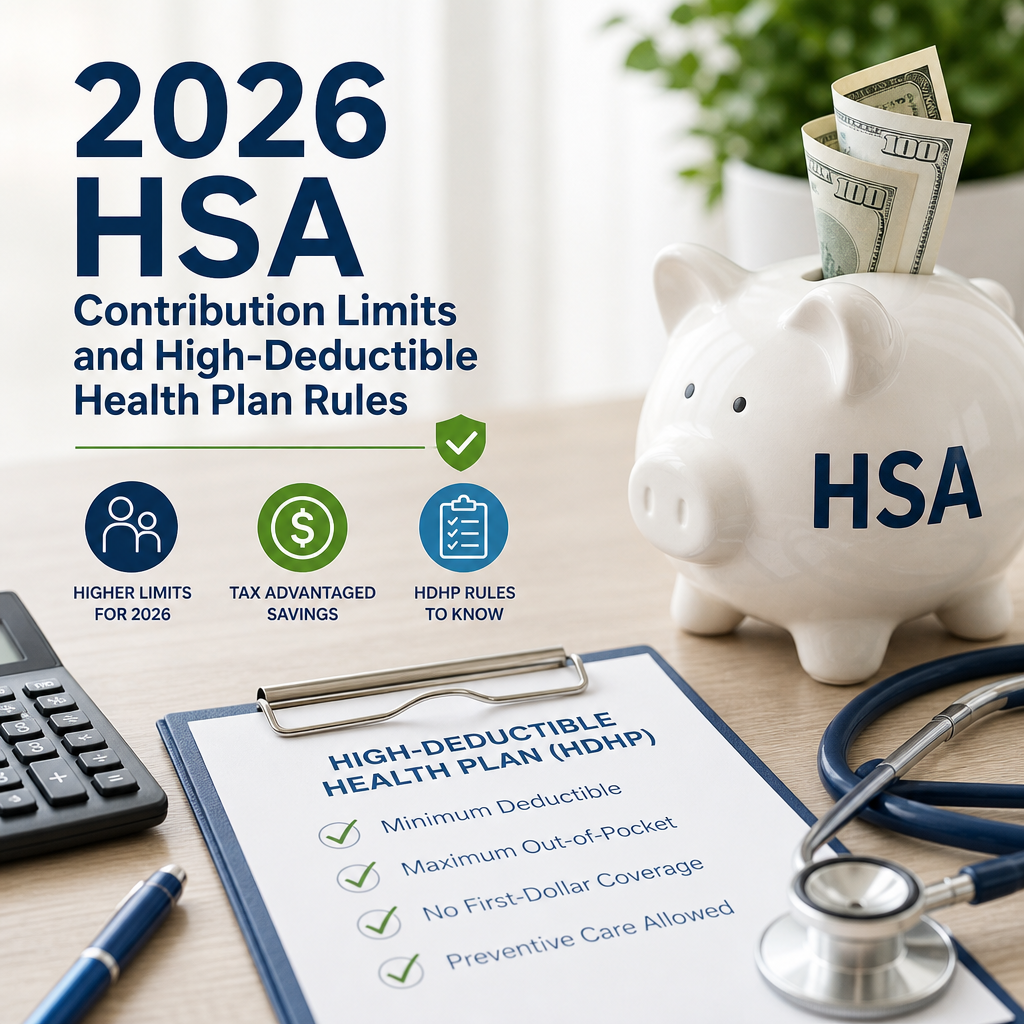
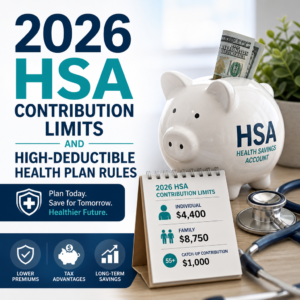
2026 HSA Contribution Limits and High-Deductible Health Plan Rules
Learn how the 2026 HSA contribution limits and HDHP rules may affect your ability to save pre-tax for medical expenses. This guide breaks down what to watch for so you can stay eligible and make the most of your HSA.
By: Mary Mitchell on July 28, 2026
Health savings accounts remain one of the most valuable tools for managing healthcare costs, and the 2026 HSA contribution limits and high-deductible health plan rules will matter for anyone trying to save on taxes while preparing for medical expenses. If you have a qualifying high-deductible health plan (HDHP), an HSA can help you set aside pre-tax money, grow it tax-free, and use it later for eligible healthcare costs.
Understanding the rules is important because HSA eligibility depends on more than just having a deductible. Your plan must meet specific federal standards, and your contributions must stay within the annual IRS limits. In 2026, those details will affect employees, self-employed individuals, and families who want to maximize tax advantages without accidentally losing eligibility.
What Is an HSA and Why Does It Matter?
A Health Savings Account is a tax-advantaged savings account designed for people enrolled in an HSA-qualified HDHP. It can be used for qualified medical expenses such as:
Doctor visits
Prescriptions
Urgent care
Dental and vision care
Certain over-the-counter items
Medical supplies and equipment
What makes an HSA especially attractive is its triple tax advantage:
Contributions are tax-deductible or pre-tax through payroll.
Earnings can grow tax-free.
Withdrawals for qualified medical expenses are tax-free.
Unlike a flexible spending account, HSA funds generally roll over year to year. That makes an HSA useful not only for current healthcare costs but also for long-term savings.
2026 HSA Contribution Limits
The IRS updates HSA contribution limits annually to account for inflation. While the official 2026 figures are set by federal guidance, the important thing to know is that the contribution cap will likely differ depending on whether you have self-only coverage or family coverage.
What to Expect From the 2026 Limits
For 2026, the HSA contribution limits will apply to:
Self-only coverage
Family coverage
Catch-up contributions for people age 55 and older
Your total annual contribution includes money you put in plus any employer contributions. That means if your workplace contributes to your HSA, it counts toward the same annual limit.
Why the Limit Matters
If you exceed the annual contribution cap, the IRS may assess taxes and penalties unless you correct the excess in time. To avoid that, review:
Payroll deductions
Employer contributions
Personal contributions made outside payroll
Contributions from a spouse’s account, if applicable
A common mistake is assuming the full annual limit is available even when an employer has already contributed part of it.
Catch-Up Contributions for Age 55+
If you turn 55 or older by the end of the tax year, you may be eligible to contribute an additional catch-up amount. This can be especially useful if you are:
Approaching retirement
Paying higher healthcare costs
Trying to build a tax-advantaged medical reserve
Keep in mind that catch-up contributions have separate rules, and they must be made to the eligible account owner’s HSA.
High-Deductible Health Plan Rules for 2026
To contribute to an HSA, you must be covered by an HSA-qualified high-deductible health plan. Not every HDHP qualifies, and the plan must meet IRS minimum deductible and maximum out-of-pocket requirements.
Basic HDHP Qualification Rules
An HSA-eligible HDHP generally must:
Have a deductible at or above the IRS minimum
Have out-of-pocket maximums at or below the IRS limit
Not provide non-preventive benefits before the deductible is met, with limited exceptions
Be the only disqualifying health coverage you have
That last point matters because even if your health plan qualifies, other coverage can make you ineligible.
Other Coverage That Can Disqualify You
You generally cannot contribute to an HSA if you have certain additional health coverage, such as:
A general-purpose health flexible spending account
A non-HDHP medical plan
Medicare
TRICARE, in many situations
A plan that pays for most care before the deductible
Some exceptions apply, so it is wise to verify your exact situation before contributing.
Preventive Care Still Allowed
One of the most common misconceptions is that HDHPs do not cover anything until the deductible is met. In reality, preventive care is often covered before the deductible under IRS rules and federal health plan standards.
Examples may include:
Annual physicals
Certain vaccinations
Routine screenings
Preventive medications in some cases
This helps HDHPs remain usable for everyday wellness care while preserving the HSA tax benefits.
How to Know If Your Plan Is HSA-Eligible
If you are unsure whether your plan qualifies, do not guess. Check the plan summary or ask your insurer or benefits administrator directly. You want to confirm:
The deductible amount
The out-of-pocket maximum
Whether the plan is HSA-qualified
Whether any embedded coverage affects eligibility
Whether your spouse’s or employer’s coverage creates a conflict
A Simple Eligibility Checklist
Before contributing to an HSA, make sure all of the following are true:
You are enrolled in an HSA-qualified HDHP.
You are not enrolled in disqualifying coverage.
You are not enrolled in Medicare.
No one else claims you as a tax dependent.
You understand any employer contributions already made.
Your total contributions stay within the annual limit.
If you can answer yes to the first item and no to the disqualifying items, you may be eligible to contribute.
How the 2026 HSA Rules Affect Employees and Families
The 2026 HSA contribution limits and high-deductible health plan rules will affect people differently depending on how they get coverage and how they use healthcare services.
For Employees With Employer Coverage
If your employer offers an HDHP and HSA, you may benefit from:
Payroll deductions that avoid income and payroll taxes
Employer HSA contributions
A simple way to save for medical expenses
Lower monthly premiums than richer health plans
A practical example: Suppose your employer contributes part of your annual HSA limit. You can still contribute on your own, but you need to subtract the employer amount from the total annual cap to avoid overfunding.
For Self-Employed Individuals
If you buy your own HDHP and qualify for an HSA, you can make contributions directly and claim the tax benefit when filing. This can be especially helpful if you:
Want control over your healthcare savings
Need a tax-efficient way to plan for future medical bills
Prefer to invest unused HSA money for long-term growth
For Families
Family coverage allows a higher contribution limit than self-only coverage, but families also need to watch for:
Dependents covered under other plans
Spousal coverage that may interfere with HSA eligibility
Shared healthcare spending that can draw down the account quickly
Many families use HSAs as both a spending account and a backup emergency fund for medical costs.
What You Can Use HSA Funds For
HSA funds can be used for a wide range of qualified medical expenses, including many costs that people do not realize are eligible.
Common Eligible Expenses
Copays and coinsurance
Prescription drugs
Dental cleanings and fillings
Eyeglasses and contact lenses
Hearing aids
Crutches and braces
Some mileage to and from medical care
Certain long-term care expenses, subject to limits and rules
Expenses That Usually Do Not Qualify
HSA money generally cannot be used tax-free for:
Cosmetic procedures
General wellness items without medical necessity
Gym memberships, unless specifically allowed under limited circumstances
Insurance premiums, with limited exceptions
Anything not considered a qualified medical expense under IRS guidance
Always keep receipts and documentation. Even if you do not reimburse yourself right away, proof matters if the IRS ever asks how you used the funds.
Smart Strategies for Maximizing an HSA in 2026
If you expect to contribute in 2026, a few simple strategies can help you get the most from your account.
1. Contribute Early if You Can
The sooner money goes into the account, the sooner it can grow. If your budget allows, front-loading contributions can be useful, especially if you plan to invest the balance.
2. Use Payroll Deduction When Available
Payroll contributions are often the easiest way to save tax-efficiently, because they are taken out before taxes. In many cases, this also saves on FICA taxes.
3. Avoid Missing Employer Contributions
Some employers make matching or seed contributions. Read your benefits materials closely so you do not leave money on the table.
4. Invest the Long-Term Balance
Many HSA providers allow you to invest once the account reaches a minimum cash balance. If you can pay current medical expenses out of pocket and save receipts, you may let the HSA grow for future care.
5. Track Eligibility Changes
An HSA is not a “set it and forget it” account if your coverage changes. Watch for life events that can affect eligibility, such as:
Switching health plans midyear
Getting covered by a spouse’s non-HDHP
Enrolling in Medicare
Starting a general-purpose FSA
Common Mistakes to Avoid
Even experienced savers make HSA mistakes, especially when plan changes happen during the year.
Overcontributing
The most common error is contributing too much because of:
Employer contributions
Midyear coverage changes
Mistaken assumptions about family vs. self-only status
Contributing While Ineligible
If you contribute while not eligible, you may need to remove the excess and report it correctly. This can become complicated if eligibility ended in the middle of the year.
Using HSA Funds for Nonqualified Expenses
If you use HSA money for something that does not qualify, the distribution can be taxable and may carry penalties if you are under age 65.
Forgetting Coordination With a Spouse’s Benefits
If your spouse has a health FSA or other non-HDHP coverage, it could affect your HSA eligibility even if your own plan looks fine.
2026 Planning Tips for Open Enrollment
Open enrollment is the best time to evaluate whether an HDHP and HSA make sense for you in 2026.
Ask These Questions During Enrollment
Will I have HSA eligibility for the full year?
How much will my employer contribute?
What is the deductible and out-of-pocket maximum?
Do I expect high medical costs next year?
Can I comfortably afford the deductible if needed?
Will my spouse or dependents affect eligibility?
When an HDHP May Make Sense
An HDHP with an HSA can be a strong choice if you:
Want lower premiums
Are generally healthy
Can handle the deductible if needed
Value tax savings and long-term savings
Prefer to build a medical reserve
When You May Want to Reconsider
A different plan may be better if you:
Expect frequent medical visits
Have predictable high healthcare costs
Need access to broad pre-deductible coverage
Are nearing Medicare enrollment
Do not have room in your budget to fund the deductible
Frequently Asked Questions
What are the 2026 HSA contribution limits?
The 2026 HSA contribution limits will depend on whether you have self-only or family coverage, and they also include catch-up contributions for people age 55 and older. The IRS publishes the official annual amounts, and your employer contributions count toward the same total limit.
What makes a health plan HSA-qualified?
A health plan must meet IRS rules for a high-deductible health plan, including minimum deductible and maximum out-of-pocket thresholds. It also cannot provide disqualifying coverage that would make you ineligible to contribute to an HSA.
Can I have an HSA if my spouse has different coverage?
Maybe, but it depends on the spouse’s coverage. If your spouse has a general-purpose health FSA or another type of coverage that extends to you, it may affect your HSA eligibility. Review both plans carefully before contributing.
Do employer HSA contributions count toward the annual limit?
Yes. Employer contributions count toward your total annual HSA contribution limit. If your employer adds money to your account, you must subtract that amount from what you can contribute yourself.
Can I keep HSA money if I change jobs or health plans?
Yes. An HSA belongs to you, not your employer. If you change jobs or move to another health plan, you can usually keep the account. However, you can only contribute during periods when you are eligible under IRS rules.
The 2026 HSA contribution limits and high-deductible health plan rules are more than technical details—they directly affect how much you can save, how you plan for medical expenses, and whether your health coverage truly fits your financial goals. If you are eligible for an HSA, the account can offer meaningful tax advantages and long-term flexibility, but only if you understand the rules that govern contributions and eligibility.
Before the new year begins, review your health plan, confirm whether it qualifies as an HDHP, and check how much your employer may contribute. Then compare your expected healthcare spending with the benefits of lower premiums and tax-advantaged savings. A little planning now can help you avoid costly mistakes later and make the most of your HSA in 2026.
Mary S, CFP®, is a Certified Financial Planner with over 12 years of experience in personal finance, retirement planning, and wealth management. She writes educational content that helps readers understand financial concepts and make informed decisions based on reliable information.