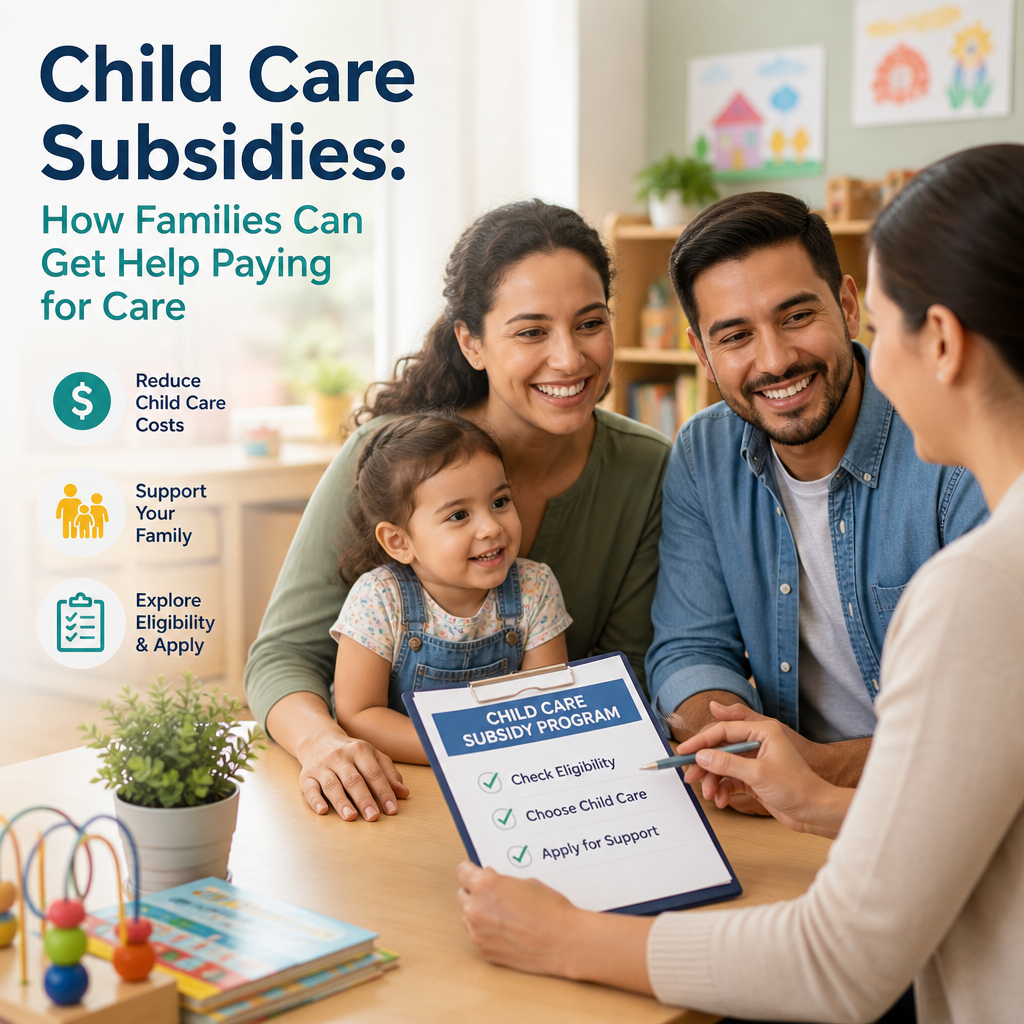
Child Care Subsidies: How Families Can Get Help Paying for Care
Child care subsidies can help take the pressure off family budgets by covering part of the cost of care. If you’re juggling work, school, or training, these programs may make quality child care more affordable and easier to access.
By: Emily Adams on July 29, 2026
Finding affordable child care can feel overwhelming, especially when work schedules, household budgets, and waitlists all collide. That’s where child care subsidies can make a real difference. These programs help eligible families pay for child care so parents and guardians can keep working, attend school, or participate in training without carrying the full cost of care on their own.
If you’ve been searching for practical ways to lower child care expenses, understanding how child care subsidies work is a smart place to start. While the process can vary by state, the core idea is the same: public funding helps reduce what families pay for licensed child care, after-school programs, or other approved care arrangements.
What Are Child Care Subsidies?
Child care subsidies are financial assistance programs that help families cover part of the cost of child care. In many states, these programs are funded through federal and state dollars and administered locally.
In plain terms, a child care subsidy lowers the out-of-pocket cost for care. Depending on where you live and your eligibility, the support may cover:
Full or partial child care costs
Care for infants, toddlers, preschoolers, or school-age children
Licensed center-based care
Family child care homes
Before- and after-school care
In some cases, relative care or other approved providers
These programs are often designed to support low-income working families, families in job training or school, and parents who need dependable care to remain employed.
Who Can Qualify for Child Care Subsidies?
Eligibility rules differ by state, but most programs consider a few common factors:
Income
Family income is usually the first thing reviewed. Many states set income limits based on a percentage of the state median income or federal poverty level. Households with lower incomes may qualify more easily, though exact thresholds vary.
Work, School, or Training Status
Some families must show that a parent or caregiver is:
Working
Enrolled in school
Participating in approved job training
Looking for work, if allowed by the state program
Child’s Age
Subsidies often apply to children under 13, though some states extend support to older children with special needs.
Citizenship or Residency Requirements
Some programs require state residency. Documentation rules vary widely, and immigration-related requirements differ by program and state.
Need for Care
States often ask whether child care is necessary for the parent to work or attend school. A family may not qualify if there is no documented need for care.
How Child Care Subsidies Work
While the details vary, the process usually follows a similar pattern.
Step 1: Apply Through Your State or Local Agency
Most families apply through a state child care assistance office, human services agency, or a local contracted organization. Applications may be available online, by mail, or in person.
Step 2: Provide Documentation
You may need to submit proof of:
Identity
Residency
Income
Employment or school enrollment
Child’s age
Household size
Keeping these documents organized can speed up the process.
Step 3: Get an Eligibility Decision
The agency reviews your application and determines whether you qualify. If approved, the family may receive a child care voucher, certificate, or direct billing arrangement, depending on the state.
Step 4: Choose an Approved Provider
In many cases, you must use a provider that meets state licensing or approval requirements. Some programs allow parents to choose from a list of eligible providers.
Step 5: Pay Your Share
Subsidies rarely cover the entire cost. Most families pay a copayment, which is usually based on income and family size. The state pays the rest directly to the provider or through a reimbursement system.
Types of Child Care Assistance Available
Child care subsidies are the most common form of support, but they are not the only option. Families may also find help through other programs and benefits.
Subsidy Vouchers
A voucher helps pay an approved provider directly or reimburses part of the cost. This is one of the most common forms of child care assistance.
Sliding-Scale Fees
Some states use a sliding scale so families with lower incomes pay less. This structure helps make care more affordable without eliminating parent responsibility entirely.
Head Start and Early Head Start
These federal programs provide early learning and child development services for eligible families. They are not the same as a child care subsidy, but they can significantly reduce child care costs for qualifying households.
Employer-Sponsored Child Care Benefits
Some employers offer flexible spending accounts, dependent care assistance, on-site child care, or child care stipends. These benefits can work alongside public child care subsidies in some situations.
State and Local Grants
Community organizations, nonprofits, and local agencies sometimes offer temporary help with child care expenses, especially for families facing hardship.
How to Apply for Child Care Subsidies
Applying may seem intimidating at first, but breaking it into clear steps makes it more manageable.
1. Find Your State’s Child Care Assistance Program
Search for your state’s official child care assistance or child care subsidy office. State websites usually explain:
Eligibility rules
Required documents
Waiting list status
Provider requirements
Application instructions
2. Gather Your Documents Early
Before you apply, collect paperwork such as:
Pay stubs or tax forms
Proof of school enrollment or training
Lease, utility bill, or other residency proof
Birth certificates or school records for children
Photo ID
Having documents ready can reduce delays.
3. Submit the Application
Complete the form carefully and answer all questions honestly. Missing information can slow down approval or lead to denial.
4. Follow Up
Some programs take time to process applications, especially if funds are limited. Check your application status, respond promptly to requests for additional information, and keep copies of everything you submit.
5. Review Provider Rules
If you already have a child care provider, make sure the provider is eligible under the subsidy program. If not, ask the agency whether you can switch to an approved provider.
What Families Should Know About Copayments
A common misconception is that child care subsidies eliminate child care costs completely. In reality, many families still pay a copayment.
What Is a Copayment?
A copayment is the portion of child care expenses the family pays directly. It is typically based on:
Household income
Family size
Number of children needing care
Type of care used
Why Copayments Matter
Even with a subsidy, budgeting for a copay is important. Families should ask:
How much will I pay each month?
Is the copay fixed or based on hours used?
What happens if my income changes?
Are there extra charges from the provider?
Knowing the full picture helps prevent surprises later.
Common Challenges Families Face
Child care subsidies can help, but families may still run into obstacles.
Limited Funding and Waitlists
Some states have limited spots, and waitlists can be long. Applying early is often the best move.
Complex Paperwork
Eligibility paperwork can be burdensome, especially for working parents with unpredictable schedules. Staying organized and asking for help from the local agency can make a difference.
Provider Availability
Not every child care provider accepts subsidies. This can limit your options, especially in areas with few licensed providers.
Recertification Requirements
Families often need to renew eligibility periodically. If you miss a deadline, you could lose assistance, even if you still qualify.
Tips for Increasing Your Chances of Success
If you’re applying for child care subsidies, a few practical steps can improve your experience.
Stay Organized
Create a folder for:
Applications
Notices
Verification documents
Provider contracts
Renewal dates
Apply as Early as Possible
If your state has a waitlist, early application matters. Even if you’re not ready to start care right away, getting in line can help.
Ask Questions
If anything in the application is unclear, contact the agency directly. A quick question now may save weeks later.
Keep Income and Contact Information Updated
Report changes promptly. In many programs, changes in income, address, employment, or family size can affect eligibility.
Explore Backup Options
If approved care is unavailable, ask about approved relatives, temporary care arrangements, or other local resources.
How Child Care Subsidies Support Families and Communities
Child care subsidies do more than reduce monthly bills. They help stabilize families and support broader community goals.
For parents and caregivers, these programs can:
Make it easier to stay employed
Support education and job training
Reduce financial stress
Improve access to reliable child care
Help children receive safe, consistent care
For employers and communities, child care support can contribute to:
Better employee retention
Fewer work disruptions
Stronger local workforce participation
Greater economic stability
When families can access dependable care, it often creates a ripple effect that benefits everyone.
Frequently Asked Questions
1. What is the difference between a child care subsidy and a tax credit?
A child care subsidy helps pay for child care costs upfront or through provider reimbursement, while a tax credit reduces the amount of tax you owe when you file your return. A subsidy helps with monthly expenses, which can be especially important for families who need immediate relief.
2. Can I use child care subsidies with a relative caregiver?
Sometimes. Some states allow approved relative care, but the relative may need to meet specific rules such as registration, background checks, or licensing requirements. Always check with your state agency before assuming a family member will qualify as a provider.
3. Do both parents need to be working to qualify?
Not always. Many programs help single parents, and some allow eligibility if one or both caregivers are working, attending school, or in training. The exact rule depends on the state program and the family’s situation.
4. What happens if my income increases after I’m approved?
You usually must report income changes, and your subsidy amount may change during recertification. In some cases, families can keep assistance for a period of time after a pay increase, but this depends on state policy. It’s always better to report changes quickly than risk losing benefits.
5. Can I still apply if I’m on a waitlist?
Yes. In fact, you should still apply if you think you may qualify. Many states have waitlists, and applications are often processed in the order received. Being on the list now can help you move forward when funding becomes available.
Child care subsidies can be a lifeline for families trying to balance work, school, and the high cost of dependable care. While the process can feel complicated, the basic path is straightforward: check eligibility, gather documents, apply through your state or local agency, and follow through on any required updates or renewals. Even if you don’t qualify right away, exploring related options like Head Start, employer benefits, and local assistance programs can still help reduce your child care costs.
The most important step is to start early and stay informed. Waiting too long can mean missing out on funding, approved providers, or program openings. If child care is stretching your budget, don’t assume help is out of reach. Many families qualify for support they didn’t know existed, and a little research can open the door to more affordable, stable care.
Take time to review your state’s child care assistance program, prepare your paperwork, and ask questions when needed. A well-informed application can bring real relief and give your family more room to focus on what matters most.
Emily A, holds a Master's degree in Public Administration (MPA) and has over 7 years of experience researching federal and state assistance programs. She writes educational content focused on government benefits, public policy, and community resources, using information from official agencies to help readers understand available programs and eligibility requirements.