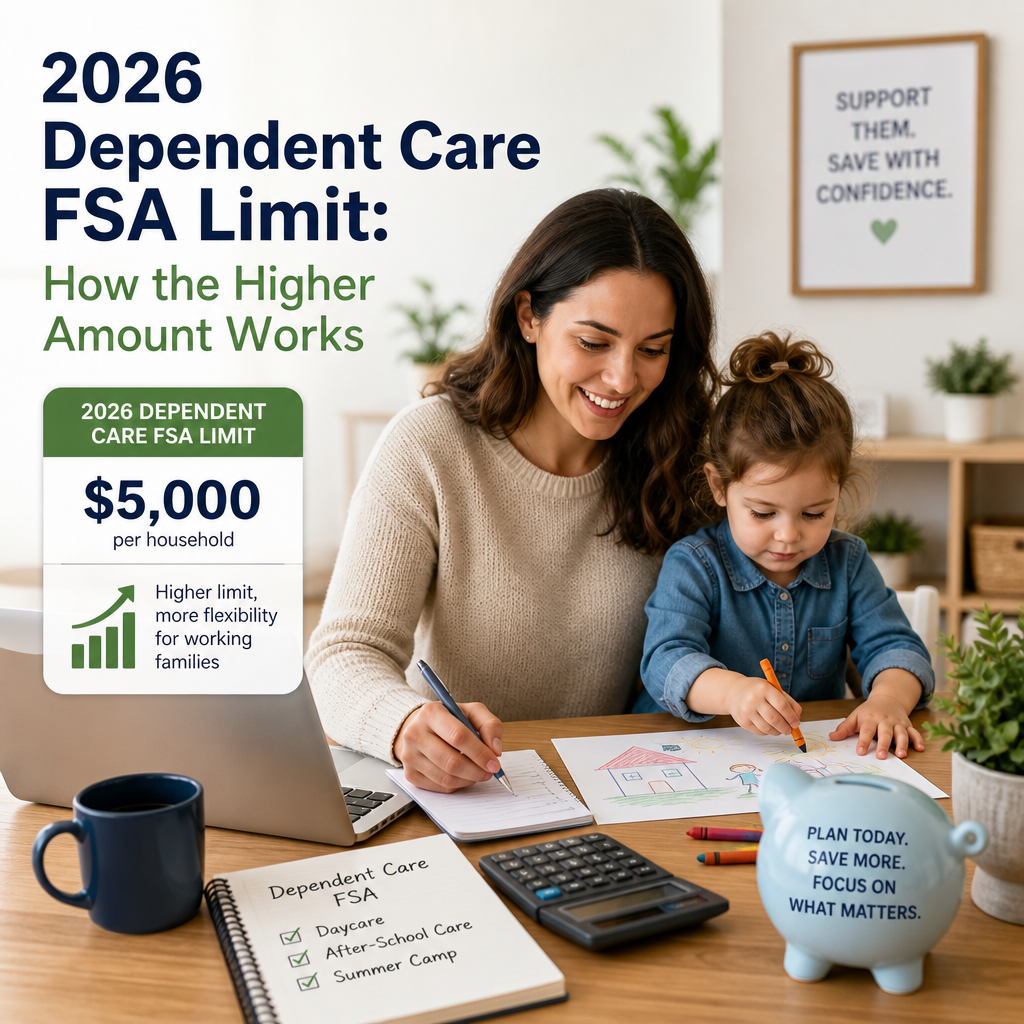
2026 Dependent Care FSA Limit: How the Higher Amount Works
The dependent care FSA limit for 2026 could give working families more room to save on eligible care costs before taxes, making it easier to manage child care and other dependent care expenses. Here’s how the higher amount works, who can use it, and how it compares with other tax-saving options.
By: Mary Mitchell on July 28, 2026
The 2026 dependent care FSA limit is an important topic for families trying to stretch every pre-tax dollar. If you pay for child care or care for another qualifying dependent so you can work, a dependent care flexible spending account can help reduce your taxable income while covering eligible expenses. In 2026, understanding the higher amount—how it works, who qualifies, and how it compares with the Child and Dependent Care Tax Credit—can make a meaningful difference in your household budget.
For many working parents and caregivers, this benefit is more than a tax strategy. It can shape monthly cash flow, influence open enrollment choices, and help determine which combination of benefits delivers the best value. The key is knowing the rules before you contribute.
What Is a Dependent Care FSA?
A dependent care FSA, sometimes called a dependent care assistance program, is an employer-sponsored benefit that lets you set aside money on a pre-tax basis to pay for eligible care expenses.
Common qualified expenses include:
Day care for children under age 13
Before- and after-school care
Summer day camps
Care for a spouse or dependent who cannot care for themselves and lives with you for more than half the year
The account is designed to help you work, look for work, or attend school full time. Unlike a health FSA, the money does not have to be used for medical care. It is specifically for dependent care expenses that allow you and your spouse, if married, to maintain employment.
The 2026 Dependent Care FSA Limit Explained
The 2026 dependent care FSA limit is the maximum amount an employee can contribute to a dependent care FSA during the year, subject to federal tax rules and any employer plan restrictions.
For tax years before 2026, the annual federal cap for many taxpayers has historically been $5,000 per household or $2,500 if married filing separately, unless future law changes increase that amount. Because tax law can change, the exact 2026 limit should be confirmed through your employer, plan documents, and IRS guidance when available.
What matters most is how the higher amount works if Congress or the IRS establishes an increased cap. A higher limit would let eligible families shelter more of their dependent care spending from federal income tax, and in many cases payroll taxes as well, depending on plan design and your income.
Why a higher limit matters
A larger contribution cap can help families who face rising child care costs. It may also help:
Parents with multiple children in care
Households with full-time daycare expenses
Families paying for both child care and summer care
Caregivers supporting an adult dependent
Even a moderate increase in the contribution limit can improve monthly budgeting because contributions are taken out of payroll before taxes.
How the Higher Amount Works
If the 2026 dependent care FSA limit is higher than the traditional cap, the mechanics are usually simple: you elect a higher pre-tax contribution amount during your employer’s enrollment period, then your payroll deductions are spread throughout the year.
Here is how it typically works:
You estimate eligible expenses for the year.
This includes only care that qualifies under IRS rules.
You choose an annual contribution amount.
Your employer may allow you to contribute up to the federal maximum or a lower plan limit.
Your payroll is reduced throughout the year.
Contributions are taken from each paycheck before taxes.
You pay care expenses and submit claims.
Depending on the plan, you may be reimbursed after paying the provider or through direct payment options.
You receive tax savings as you go.
Because the money is withheld before taxes, your taxable wages go down.
Example of how a higher limit may help
Suppose your family spends $7,500 a year on eligible child care, and the available dependent care FSA cap for 2026 is increased enough to let you contribute more than the traditional $5,000 cap. If you contribute the full higher amount, more of your care costs could be paid with pre-tax dollars.
That does not mean every extra dollar always produces the same savings. The actual tax benefit depends on:
Your federal tax bracket
State income tax rules
Whether payroll taxes are reduced under your employer’s plan
Your household filing status
Still, the higher the eligible contribution, the more income can potentially be sheltered from taxation.
Who Can Use a Dependent Care FSA?
Not everyone qualifies. To use a dependent care FSA, you must meet both plan rules and federal tax requirements.
You generally need to:
Be employed, or have a spouse who is employed, looking for work, or a full-time student
Have qualifying care expenses for a dependent child under age 13 or another qualifying dependent
Use care so that you and your spouse can work or seek work
Submit claims for expenses that meet IRS standards
Married couples should pay attention to earned income rules
If you are married, your contribution usually cannot exceed the lesser of:
The annual plan limit, or
The earned income of the lower-earning spouse
That rule matters even when the 2026 dependent care FSA limit is higher. A larger cap only helps if your household income and eligible expenses support it.
Dependent Care FSA vs. Child and Dependent Care Tax Credit
Many families confuse the dependent care FSA with the Child and Dependent Care Tax Credit. They are not the same, though they can both help reduce the cost of care.
Dependent care FSA
Saves money by using pre-tax payroll deductions
Reduces taxable income
Usually benefits you during the year
Has a contribution cap
Child and Dependent Care Tax Credit
Claimed on your tax return
Based on a percentage of eligible expenses
Depends on adjusted gross income and tax rules
May still provide value if care costs exceed your FSA limit
In some cases, families can use both, but not on the same exact expenses. If you have more care costs than your FSA can cover, the tax credit may help with remaining eligible expenses. The best combination depends on your income, filing status, and total care costs.
How to Decide How Much to Contribute
A higher 2026 dependent care FSA limit is helpful, but only if you contribute an amount that fits your real expenses. Overfunding can be risky because most dependent care FSAs follow a use-it-or-lose-it rule, with limited carryover or grace period options depending on the employer plan.
A practical way to estimate your election
Review your expected expenses for the year:
Weekly daycare or preschool tuition
Before- and after-school care
Summer camp
Backup care for school breaks
Adult dependent care that qualifies under IRS rules
Then subtract:
Any employer child care subsidy
Other pre-tax assistance
Expenses you do not expect to qualify
If your annual total is well above the traditional cap and the 2026 limit increases, you may have room to contribute more. If your estimates are uncertain, choose a conservative amount to avoid losing funds.
A simple planning checklist
Review your provider contracts
Estimate costs by month
Compare your FSA limit with expected expenses
Consider whether your spouse has access to a similar benefit
Check whether your employer offers a grace period or carryover feature
Important Rules You Should Know
Even with a higher limit, dependent care FSAs have strict rules. A few of the most important ones include:
1. Expenses must be work-related
The care must enable you and your spouse to work or look for work. A babysitter hired for a date night is not eligible.
2. The provider must be eligible
You generally cannot pay a dependent care FSA to:
Your spouse
Your child under age 19
Another dependent you claim on your tax return
A provider who does not meet IRS reporting requirements
3. Claims must be documented
Keep receipts and provider information. Your plan may require:
Provider name
Dates of service
Amount charged
Dependent’s name
4. Reimbursements follow plan rules
Some employers reimburse only after the service is provided. Others may offer debit-card functionality or direct claims processing. Either way, you need proper documentation.
5. You may need to report provider information on your tax return
The IRS may require information about who provided the care, especially when filing for the tax credit or reconciling your tax forms.
How the Higher Limit Can Affect Tax Planning
If the federal cap increases in 2026, it may improve tax planning flexibility for families with high care costs. A larger dependent care FSA can lower your taxable wages, which may also influence eligibility for some income-based tax provisions.
Potential benefits include:
Lower federal taxable income
Possible payroll tax savings
Easier monthly budgeting
Less reliance on after-tax savings for routine care costs
But remember these tradeoffs:
Contributions are not flexible once payroll deductions begin
Unused funds may be forfeited depending on your plan
A higher limit does not automatically mean a better outcome for every family
You still need to compare the FSA with the Child and Dependent Care Tax Credit
For some households, the smartest move is to use the dependent care FSA for predictable expenses and rely on the tax credit for costs above the cap.
Common Mistakes to Avoid
Families often leave money on the table by making preventable errors. Watch out for these:
Contributing more than you expect to spend
Forgetting that both spouses must have earned income
Submitting ineligible expenses
Assuming all daycare providers qualify
Ignoring state tax differences
Missing open enrollment deadlines
A little planning can prevent costly surprises later.
Example: A Family Budget Scenario
Imagine a family with one preschooler and one school-age child. Their eligible care costs include:
Full-time daycare for the younger child
After-school care for the older child
Summer camp for both children during school breaks
If their annual eligible expenses are far above the base FSA cap, a higher 2026 dependent care FSA limit could let them shelter more of those costs pre-tax. That could free up cash for other household needs, such as groceries, housing, or emergency savings.
The family would still want to confirm:
Which expenses are eligible
Whether their provider can supply documentation
How much they can safely contribute without risking forfeiture
That practical step-by-step review often matters more than the headline number alone.
Frequently Asked Questions
1. What is the 2026 dependent care FSA limit?
The 2026 dependent care FSA limit is the maximum amount you can set aside through an employer-sponsored dependent care flexible spending account for eligible care expenses in 2026. The exact amount depends on federal law and your employer’s plan rules. If the limit increases, it allows families to contribute more pre-tax dollars toward qualified dependent care.
2. Can I use a dependent care FSA for daycare and summer camp?
Yes, in many cases you can use a dependent care FSA for eligible daycare and summer day camp expenses, as long as the care is necessary for you and your spouse to work, look for work, or attend school full time. Overnight camp is generally not eligible, and the provider must meet IRS rules.
3. What happens if I contribute too much to my dependent care FSA?
If you contribute more than you spend on eligible expenses, you may lose unused funds depending on your employer plan. Some plans offer a short grace period or a limited carryover feature, but dependent care FSAs often have stricter use-it-or-lose-it rules than health FSAs. That is why estimating expenses carefully is important.
4. Can both spouses contribute to a dependent care FSA?
If both spouses have access to a dependent care FSA, their combined annual contributions usually cannot exceed the federal household limit. The total also cannot exceed the earned income of the lower-earning spouse. Couples should coordinate elections carefully to avoid going over the allowable amount.
5. Can I use both a dependent care FSA and the Child and Dependent Care Tax Credit?
Yes, you may be able to use both, but not for the same expenses. The dependent care FSA can cover part of your eligible costs pre-tax, and the Child and Dependent Care Tax Credit may apply to remaining qualified expenses. Whether combining them helps depends on your income, expenses, and tax situation.
The 2026 dependent care FSA limit matters because it can directly affect how much of your child care or dependent care spending you can cover with pre-tax dollars. If the limit rises, families with substantial care costs may gain more room to save on taxes and improve monthly cash flow. But the best outcome still depends on careful planning.
Before enrolling, review your expected expenses, confirm what your employer allows, and compare the dependent care FSA with the Child and Dependent Care Tax Credit. Make sure you understand the eligible expense rules, provider documentation requirements, and any use-it-or-lose-it provisions in your plan. A higher cap is valuable only when it matches your real-life care needs.
For working parents and caregivers, small tax advantages can add up. Taking time now to understand the rules can help you make a smarter benefits decision and avoid surprises later in the year.
Mary S, CFP®, is a Certified Financial Planner with over 12 years of experience in personal finance, retirement planning, and wealth management. She writes educational content that helps readers understand financial concepts and make informed decisions based on reliable information.