Credit Freezes vs Fraud Alerts: What’s the Difference?
A credit freeze is one of the strongest ways to protect your credit, especially if you want to stop new accounts from being opened in your name. In this article, we’ll explain how a credit freeze compares with a fraud alert so you can choose the right protection for your situation.
By: Mary Mitchell on July 28, 2026
If you’re worried about identity theft, one of the most effective ways to protect your credit is to understand credit freezes and fraud alerts. These two tools can both help reduce the risk of someone opening accounts in your name, but they work very differently. Knowing which one to use—and when—can save you time, stress, and potentially a lot of money.
In this guide, we’ll break down the difference between a credit freeze and a fraud alert, explain how each one works, and help you decide which option fits your situation best. Whether you’re proactively protecting your credit or responding to suspicious activity, the right choice starts with the right information.
What Is a Credit Freeze?
A credit freeze, also called a security freeze, restricts access to your credit report. When your credit is frozen, most lenders cannot view your report, which makes it much harder for identity thieves to open new accounts in your name.
A credit freeze does not affect your existing accounts. You can still use your credit cards, pay loans, and manage your current accounts normally. It only blocks new creditors from checking your report unless you temporarily lift the freeze.
How a Credit Freeze Works
When you place a freeze with each of the three major credit bureaus—Experian, Equifax, and TransUnion—you create a barrier around your credit file. If a lender cannot access your credit report, they usually will not approve a new line of credit.
You may need to:
Create an account with each credit bureau
Set a PIN or password for access
Temporarily lift or remove the freeze when applying for credit
When a Credit Freeze Makes Sense
A credit freeze is a strong option if you want maximum protection and do not plan to apply for credit soon. It is especially useful if:
Your personal information was exposed in a data breach
You lost your wallet or important documents
You have already been a victim of identity theft
You want to prevent unauthorized new accounts
Because a freeze is so restrictive, it is often considered one of the strongest consumer protections available.
What Is a Fraud Alert?
A fraud alert tells lenders to take extra steps to verify your identity before approving new credit. Unlike a credit freeze, it does not block access to your credit report. Instead, it places a warning on your file that says the lender should be cautious.
Fraud alerts are easier to place than freezes and are often used when you suspect fraud but still want some flexibility in applying for credit.
How a Fraud Alert Works
When a lender sees a fraud alert, they are expected to verify your identity using additional steps. That might include:
Calling you directly
Asking for government-issued identification
Requesting proof of address
Confirming other personal details
This added verification can help prevent fraudulent applications while still allowing legitimate credit applications to move forward.
Types of Fraud Alerts
There are two main types of fraud alerts:
Initial Fraud Alert
An initial fraud alert is designed for people who believe they may be at risk of identity theft but have not necessarily become victims yet. It usually lasts one year and can be renewed.
Extended Fraud Alert
An extended fraud alert is available if you are an identity theft victim and have filed an appropriate identity theft report. It typically lasts seven years and may also remove your name from certain prescreened credit offers.
Credit Freeze and Fraud Alert: The Key Difference
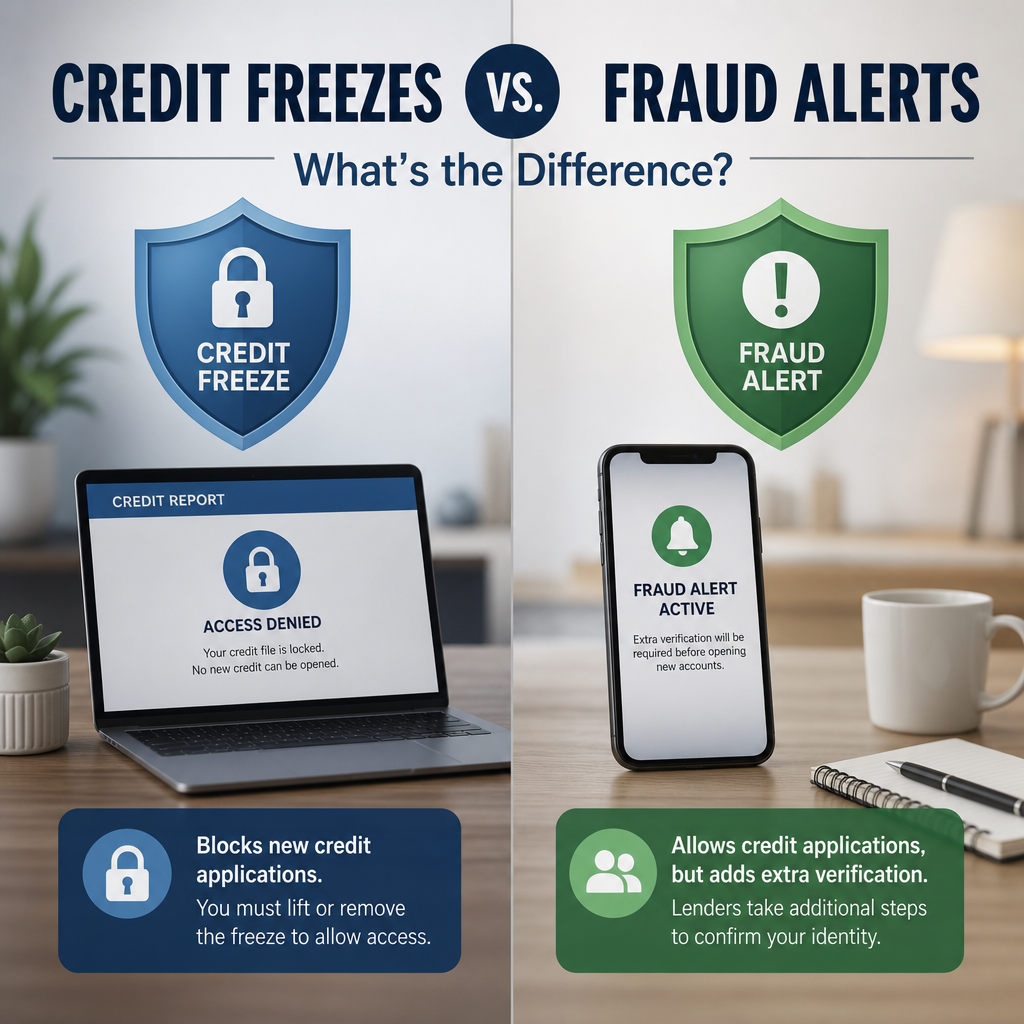
The biggest difference between a credit freeze and fraud alert is this:
A credit freeze blocks access to your credit report unless you lift it
A fraud alert allows access but requires lenders to verify your identity more carefully
In simple terms, a freeze is a lock, while a fraud alert is a warning sign.
Quick Comparison
Feature
Credit Freeze
Fraud Alert
Stops access to your credit report
Yes
No
Helps prevent new credit accounts
Strongly
Moderately
Requires lender identity verification
No, because report is blocked
Yes
Easy to manage for credit applications
Must temporarily lift
Usually still accessible
Best for
Strongest protection
Suspicious activity or moderate concern
Which Option Offers Better Protection?
If your goal is the strongest possible protection against new-account fraud, a credit freeze is generally the better choice. Since most lenders can’t access your report, they can’t easily approve new credit in your name.
A fraud alert still helps, but it relies on lenders noticing the alert and following the extra verification steps. That added protection can be useful, but it is not as restrictive as a freeze.
Choose a Credit Freeze If You:
Want to lock down your credit report
Don’t expect to apply for new credit soon
Are concerned about identity theft after a breach
Have already experienced fraud
Choose a Fraud Alert If You:
Want some protection without fully freezing access
Plan to apply for credit in the near future
Suspect suspicious activity but are not ready to freeze your credit
Have been a victim of identity theft and want added verification
Can You Use Both?
Yes. In some situations, people use both a credit freeze and a fraud alert. However, if your credit is frozen, the freeze is usually the more powerful protection. The fraud alert may still be placed on your file, but it doesn’t add much if lenders can’t access the report in the first place.
That said, there can be situations where the combination is useful, especially if you want to maximize protection and keep an additional warning on your file.
How to Place a Credit Freeze
Placing a credit freeze usually takes only a few minutes online, though you will need to do it with each credit bureau separately.
Steps to Freeze Your Credit
Visit the websites of Experian, Equifax, and TransUnion.
Create an account or verify your identity.
Request a credit freeze.
Save your PIN or password securely.
Unfreeze your credit temporarily when needed.
Important Things to Know
Freezing your credit is free under federal law.
You must place the freeze with all three bureaus separately.
You can lift the freeze temporarily or permanently.
A freeze does not lower your credit score.
If you plan to apply for a mortgage, auto loan, or new credit card, remember to unfreeze your credit before the lender checks your report.
How to Place a Fraud Alert
A fraud alert is also free to place. You only need to contact one of the three major credit bureaus, and that bureau is supposed to notify the others.
Steps to Place a Fraud Alert
Contact Experian, Equifax, or TransUnion.
Request either an initial or extended fraud alert.
Provide any required identity or fraud report documentation.
Confirm that the alert has been added to your file.
What Happens Next
Once the fraud alert is active, lenders should take steps to verify your identity before extending new credit. You may also receive fewer prescreened credit offers, depending on the type of alert.
Real-Life Scenarios: Which One Should You Use?
Understanding the difference becomes easier when you look at practical examples.
Scenario 1: You Were in a Data Breach
If your Social Security number or financial data was exposed in a breach, a credit freeze is usually the best first step. It gives you strong protection against new-account fraud.
Scenario 2: You Lost Your Wallet
If your wallet was stolen, you might start with a fraud alert while you assess the situation. If you later learn that sensitive information was exposed, a freeze may be the better move.
Scenario 3: You’re Buying a House Soon
If you plan to apply for a mortgage, a fraud alert may be more convenient because it doesn’t block access to your report. A freeze could still work, but you would need to remember to lift it before the lender pulls your credit.
Scenario 4: You’ve Already Been a Victim of Identity Theft
An extended fraud alert may be helpful if you have documented identity theft, but many consumers also choose to freeze their credit for stronger protection.
Common Misunderstandings About Credit Freezes and Fraud Alerts
A lot of people confuse these tools or assume they work the same way. Here are a few common myths.
“A freeze will hurt my credit score.”
It won’t. A credit freeze does not affect your score or the information in your credit report.
“A fraud alert blocks all credit applications.”
Not exactly. It does not block access; it just tells lenders to verify your identity more carefully.
“I only need to contact one credit bureau for a freeze.”
For a freeze, you need to contact each bureau separately. For a fraud alert, contacting one bureau should trigger the others to add the alert.
“These tools stop all fraud.”
They are powerful, but they do not stop every type of identity theft. They mainly help prevent new credit accounts from being opened. They do not protect bank accounts, tax returns, or medical records by themselves.
Best Practices for Protecting Your Credit
A credit freeze or fraud alert is a smart move, but it works best as part of a broader security habit.
Keep an Eye on Your Accounts
Review your bank and credit card statements regularly for unfamiliar charges.
Check Your Credit Reports
You can review your credit reports for free through the official annual credit report service.
Use Strong Passwords
Protect financial and email accounts with unique passwords and multifactor authentication where available.
Respond Quickly to Suspicious Activity
If you spot fraud, report it immediately to the relevant institution and consider filing an identity theft report.
Save Important Security Details
Keep records of PINs, passwords, confirmation numbers, and bureau contact information in a secure place.
Which Is Better for Most People?
For most people who want strong, long-term protection, a credit freeze is usually the better option. It offers the most direct defense against someone opening new credit in your name.
A fraud alert is a useful alternative when you want protection but still expect to apply for credit soon, or when you want added verification without fully locking down your file.
A simple rule of thumb:
Use a credit freeze for maximum security
Use a fraud alert for flexible, lighter protection
Frequently Asked Questions
1. Does a credit freeze prevent me from using my current credit cards?
No. A credit freeze only restricts access to your credit report for new applications. Your existing credit cards, loans, and accounts continue to work as usual.
2. Is a fraud alert enough to stop identity theft?
A fraud alert helps reduce the risk of new-account fraud, but it is not as strong as a credit freeze. Because it does not block access to your report, a lender could still approve credit if verification is not done carefully.
3. How long does a credit freeze last?
A credit freeze stays in place until you remove it. You can temporarily lift it or permanently delete it whenever you choose.
4. Will I need to pay to place a freeze or fraud alert?
No. Credit freezes and fraud alerts are free under federal law.
5. If I freeze my credit, do I still need a fraud alert?
Usually, the freeze offers stronger protection on its own. A fraud alert may not add much if your report is already inaccessible, but some consumers choose to use both for added peace of mind.
Understanding credit freezes and fraud alerts is one of the smartest steps you can take to protect your financial identity. Both tools can help reduce the risk of new-account fraud, but they serve different purposes. A credit freeze offers the strongest barrier because it blocks access to your credit report. A fraud alert offers more flexibility by allowing access while requiring lenders to verify your identity more carefully.
If you want the highest level of protection and don’t need to apply for credit right away, a credit freeze is often the best choice. If you’re actively seeking credit or want a lighter layer of defense, a fraud alert may be a better fit. In either case, acting early is key. Pair whichever option you choose with regular account monitoring, careful password habits, and prompt action if anything looks suspicious.
The sooner you take control of your credit, the better prepared you’ll be to stop fraud before it starts.
Mary S, CFP®, is a Certified Financial Planner with over 12 years of experience in personal finance, retirement planning, and wealth management. She writes educational content that helps readers understand financial concepts and make informed decisions based on reliable information.