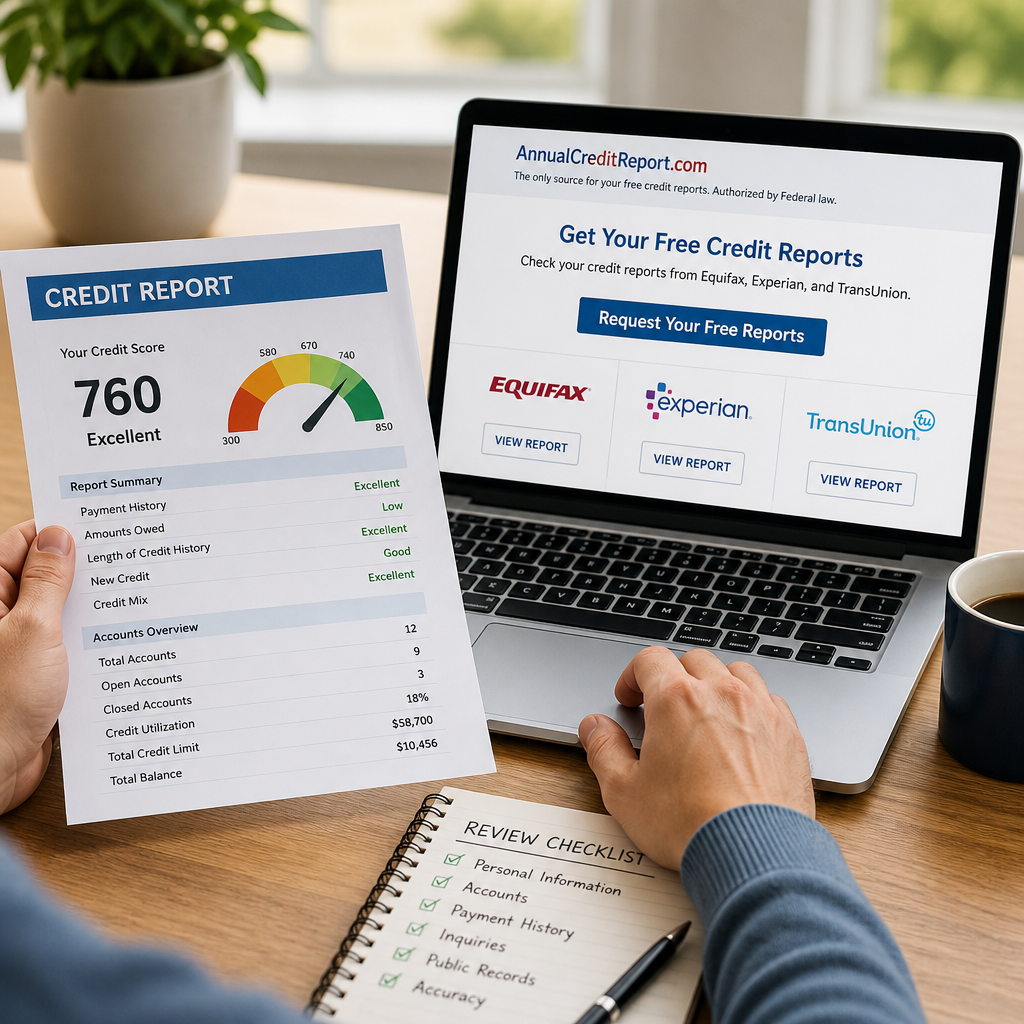
Learn how to get and review your free credit reports so you can spot errors, catch identity theft early, and better understand what lenders see. Checking all three reports regularly is a simple habit that can protect your financial health.
By: Mary Mitchell on July 28, 2026
Understanding how to get and review your free credit reports is one of the smartest financial habits you can build. Your credit reports affect whether you qualify for loans, credit cards, apartments, and even some jobs. The good news is that you can access your free credit reports without paying a third-party site or signing up for anything unnecessary.
Reviewing your reports regularly helps you spot errors, catch identity theft early, and understand how lenders see your credit history. It also gives you a clearer picture of what may be helping—or hurting—your financial profile.
What a Credit Report Actually Shows
A credit report is a detailed record of how you’ve used credit over time. It does not include your credit score, but it contains the information that credit bureaus use to calculate it.
Main sections of a credit report
Most credit reports include:
Personal information such as your name, current and past addresses, and sometimes your employer
Credit accounts including credit cards, auto loans, student loans, and mortgages
Payment history showing whether you paid on time or missed payments
Credit inquiries from lenders or other authorized parties
Public records such as bankruptcies, if applicable
Collections accounts if unpaid debts were sent to a collection agency
Each credit bureau may report slightly different information, which is why checking all three reports matters.
How to Get Your Free Credit Reports
Federal law gives you the right to request free credit reports from the three major credit bureaus: Equifax, Experian, and TransUnion. The official source is the only place where you can get your free reports from all three in one place.
Before you can view your reports, you’ll usually need to answer identity verification questions. Be ready with:
Your full legal name
Social Security number
Date of birth
Current address
Previous addresses if you moved recently
If the system cannot verify you online, you may need to request your reports by mail.
How Often Can You Check Them?
You can get free credit reports from each bureau through the official site. Even if the timing or access options change from year to year, the important habit is to check regularly.
A practical approach is to spread out your requests so you review one report at a time every few months. This helps you monitor your credit throughout the year instead of looking only once.
Why staggered review can help
Staggering your requests gives you:
More frequent opportunities to spot problems
A better view of changes over time
Less chance of missing an error on one bureau’s report
For example, you might review one bureau’s report in January, another in May, and the third in September.
How to Review Your Free Credit Reports Step by Step
Getting the report is only half the job. The real value comes from reviewing it carefully.
1. Check your personal information
Start with the top section of the report. Look for:
Misspelled names
Wrong addresses
Incorrect employers
Duplicate identity entries
Small errors can sometimes point to mixed files or clerical mistakes. If you see something that does not belong to you, make a note of it.
2. Review every account listed
Go line by line through your open and closed accounts. Verify:
Account names
Balances
Credit limits
Opening dates
Payment status
Make sure each account is familiar. A loan or credit card you don’t recognize could signal identity theft or a reporting mistake.
3. Look closely at payment history
Payment history is one of the most important parts of your report. Review whether:
Payments are marked on time
Late payments are accurate
Closed accounts show the correct status
Delinquencies match your records
If you find a late payment that you know was made on time, gather proof before disputing it.
4. Examine inquiries
Credit inquiries show who accessed your report. There are two common types:
Hard inquiries happen when you apply for credit
Soft inquiries happen when you check your own credit or when companies pre-screen you
Hard inquiries should match applications you actually submitted. Unfamiliar inquiries may deserve closer attention.
5. Watch for collections and public records
Collections accounts and public records can have a major impact on your credit profile. Check whether:
A collection account is legitimate
The balance looks correct
The account is too old to be reported
Public records are accurate and complete
If a collection has already been paid, confirm whether it is marked correctly.
Common Credit Report Errors to Look For
Credit reports can contain mistakes, and even small errors matter. Knowing what to look for can save you time later.
Frequent credit report mistakes
Some of the most common issues include:
Accounts that don’t belong to you
Payments reported late when they were on time
Incorrect account balances
Wrong credit limits
Duplicate accounts
Outdated personal information
Closed accounts listed as open
Incorrect dates for account opening or closing
Why errors happen
Errors may come from:
Clerical mistakes by lenders
Reporting delays
Identity confusion between people with similar names
Fraud or identity theft
Old information that should have been removed
If something looks wrong, don’t ignore it. Credit report errors can affect loan approvals, interest rates, and housing applications.
What to Do if You Find an Error
If you see inaccurate information, you can dispute it with the credit bureau reporting the error. You can also contact the lender or company that supplied the information.
Steps to dispute an error
Gather evidence
Save statements, payment confirmations, letters, or screenshots that support your claim.
File a dispute with the bureau
Use the bureau’s online dispute system, mail, or other official process.
Contact the creditor if needed
If the lender made the mistake, ask them to correct the record.
Track your dispute
Keep copies of all documents and note dates and case numbers.
Review the updated report
Once the investigation is complete, check whether the correction was made.
What to expect
The bureau will generally investigate the dispute and respond with the results. If the item is corrected, your report should reflect the change. If not, you may be able to add a consumer statement explaining your side of the issue.
Why Reviewing Your Free Credit Reports Matters
Checking your free credit reports is about more than fixing mistakes. It gives you a clearer picture of your financial health.
Key benefits
Regular review can help you:
Detect identity theft early
Prepare for major financial goals
Understand why a lender may approve or deny you
Spot old debts or unfamiliar accounts
Monitor the progress of debt payoff and credit rebuilding
For example, if you plan to apply for a mortgage, reviewing your reports several months in advance gives you time to correct errors before a lender reviews your file.
Helpful Habits for Staying on Top of Your Credit
Once you know how to get and review your free credit reports, it helps to build a simple routine.
Smart credit monitoring habits
Consider these practical habits:
Check one report every few months
Save copies of each report
Review for changes, not just obvious mistakes
Compare reports from all three bureaus
Set calendar reminders for your next review
Freeze your credit if you suspect identity theft
Example of a simple annual routine
You could create a basic schedule like this:
January: Review Equifax report
May: Review Experian report
September: Review TransUnion report
December: Recheck anything disputed or unresolved
This approach keeps credit monitoring manageable without overwhelming you.
How Credit Reports Differ from Credit Scores
People often confuse credit reports with credit scores, but they are not the same.
Credit report
A credit report is the detailed history of your credit activity.
Credit score
A credit score is a numerical summary based on the information in your credit report.
Why this matters: if your score seems lower than expected, the reason is usually found in the report. That’s why reviewing the underlying data is so important.
Tips for Protecting Your Credit Information
Your credit report contains sensitive data, so protecting it is essential.
Good security practices
Use the official request site
Avoid clicking on suspicious credit-report emails or ads
Shred paper documents with personal information
Use strong passwords on financial accounts
Monitor bank and credit card statements
Consider a credit freeze if your information has been exposed
A credit freeze can help stop new accounts from being opened in your name without your permission.
AnnualCreditReport.com is the official source authorized to provide free credit reports from the major bureaus. Be cautious of sites that look similar or ask you to sign up for unrelated services. Always verify the web address before entering personal information.
2. Do free credit reports include my credit score?
No, a credit report usually does not include your credit score. It shows the account history, payment activity, and other data used to calculate a score. If you want a score, you may need to get it separately from your bank, lender, or a credit monitoring service.
3. What should I do if I see an account I don’t recognize?
First, confirm that the account is not something you forgot about, such as a store card or old loan. If you still don’t recognize it, review it carefully and consider placing a fraud alert or credit freeze if you suspect identity theft. Then dispute the item with the credit bureau and contact the creditor if necessary.
4. How long do negative items stay on a credit report?
The length of time depends on the type of item. Late payments, collections, and other negative marks can remain for several years, while bankruptcies may stay longer. The reporting period can vary based on the item type and applicable rules, so review each negative entry carefully and confirm whether it is still being reported correctly.
5. Can I dispute credit report errors myself?
Yes. You can dispute errors directly with the credit bureau and, in many cases, with the company that reported the information. You do not need to pay a credit repair company to do this. Keep copies of all supporting documents and track the progress of your dispute.
Knowing how to get and review your free credit reports puts you in control of one of the most important parts of your financial life. Your reports reveal how lenders, landlords, and other decision-makers may view your credit history, and they can also expose errors or signs of identity theft before they cause serious problems.
The process is straightforward: request your reports through the official channel, review every section carefully, and dispute anything that looks inaccurate. A consistent review habit can help you prepare for major purchases, protect your identity, and make better financial decisions with confidence. Even if your credit is already in good shape, checking your reports regularly is a simple step that can pay off in a big way.
If you haven’t reviewed your reports recently, now is a good time to start. A few minutes of attention today can help protect your credit tomorrow.
Mary S, CFP®, is a Certified Financial Planner with over 12 years of experience in personal finance, retirement planning, and wealth management. She writes educational content that helps readers understand financial concepts and make informed decisions based on reliable information.