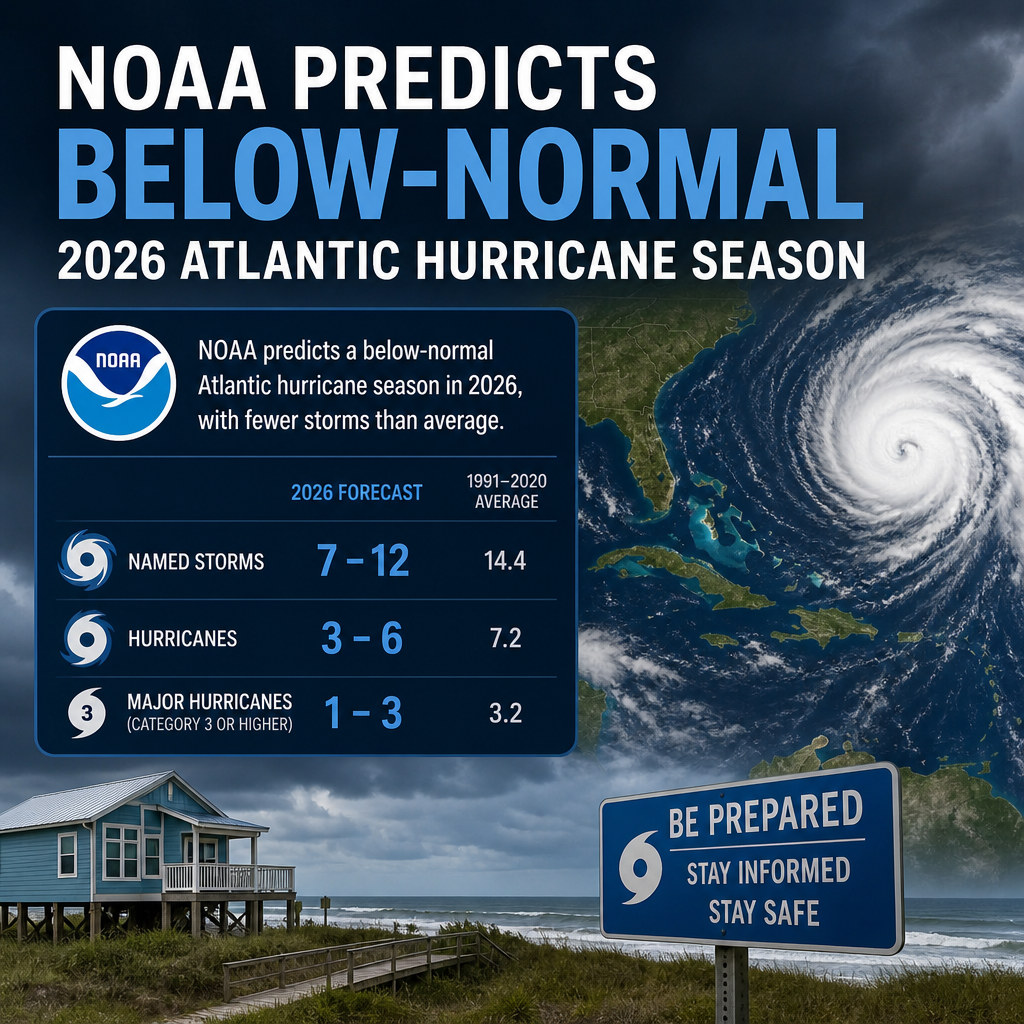
NOAA Predicts Below-Normal 2026 Atlantic Hurricane Season
NOAA’s prediction of a below-normal hurricane season may sound reassuring, but it’s really a reminder to stay prepared, not to relax. Even with fewer storms expected, one well-placed system can still bring flooding, damage, and dangerous conditions to communities across the Atlantic basin.
By: pedropadm2025@gmail.com on July 28, 2026
When people hear NOAA predicts a below-normal 2026 Atlantic hurricane season, the first reaction is often relief. But seasonal outlooks are not the same as an all-clear signal. Even in a quieter year, one landfalling storm can cause major flooding, wind damage, power outages, and evacuations. That’s why understanding what NOAA’s forecast means matters just as much as the headline itself.
The Atlantic hurricane season always deserves attention, but a below-normal outlook can help communities, homeowners, and businesses prepare more strategically. In this article, we’ll break down what a below-normal forecast means, why NOAA may issue one, and how to use that information without letting your guard down.
What a Below-Normal Atlantic Hurricane Season Means
A below-normal forecast means NOAA expects fewer named storms, hurricanes, and major hurricanes than a typical season. It does not mean there will be no storms or no danger.
In practical terms, NOAA’s seasonal hurricane outlook is based on climate patterns and ocean conditions that can influence storm formation. These forecasts help people understand the overall risk level for the season, but they do not predict exactly where or when a storm will strike.
Why “Below-Normal” Does Not Mean “Safe”
This is the most important takeaway:
A below-normal season can still produce a powerful hurricane.
A single storm can become a disaster if it hits a populated area.
Tropical storms can cause deadly flooding even without hurricane-force winds.
Forecasts apply to the whole Atlantic basin, not your specific neighborhood.
That’s why emergency readiness still matters, even if NOAA predicts a below-normal 2026 Atlantic hurricane season.
Why NOAA Makes Seasonal Hurricane Forecasts
NOAA issues seasonal outlooks to help the public, emergency managers, insurers, and local governments prepare for risk. These forecasts are not based on guesswork. They rely on observed and expected conditions in the ocean and atmosphere.
Key Factors NOAA Often Considers
Seasonal hurricane outlooks commonly take into account:
Sea surface temperatures in the Atlantic and tropical Pacific
Wind shear, which can disrupt storm development
El Niño or La Niña patterns, which can affect hurricane activity
Atmospheric moisture and stability
Historical hurricane activity patterns
When these conditions tend to suppress storm formation, the Atlantic may see a quieter season than average.
Why Forecasts Can Change
Seasonal forecasts are useful, but they are not fixed. Conditions can shift before or during hurricane season. For example:
Ocean temperatures can warm faster than expected.
Wind patterns can become more favorable for storm development.
A single storm cluster can form during a quiet period.
That’s why the phrase NOAA predicts a below-normal 2026 Atlantic hurricane season should be viewed as a planning tool, not a guarantee.
NOAA Predicts a Below-Normal 2026 Atlantic Hurricane Season: What It Means for You
If NOAA’s outlook points to a below-normal year, your preparation strategy should still focus on resilience. The goal is not to assume less risk overall, but to be ready for the storms that do develop.
Homeowners Should Still Prepare Early
Even during a quieter season, homeowners should review basic hurricane readiness:
Check your roof, gutters, and loose outdoor items.
Trim weak tree branches near your home.
Review your insurance coverage, especially flood insurance.
Know where your emergency supplies are stored.
Make a family evacuation and communication plan.
A little preparation goes a long way, especially if a storm forms quickly or moves toward your area with limited warning.
Businesses Should Review Continuity Plans
Businesses can also benefit from a below-normal forecast by using the season to strengthen operations. Good hurricane preparation can include:
Backing up data off-site or in the cloud
Protecting critical equipment from flooding
Updating emergency contact trees
Identifying remote-work procedures
Reviewing vendor and supply chain continuity plans
A calm forecast window is the perfect time to test plans before a real emergency arrives.
Understanding the Limits of Seasonal Forecasts
Seasonal hurricane forecasts are helpful, but they have limits. They cannot predict every storm or every impact.
What Seasonal Outlooks Can Tell You
They can help estimate:
The likelihood of an active or quiet season
General basin-wide hurricane activity
Broader preparedness priorities
What They Cannot Tell You
They cannot tell you:
Whether your town will be hit
Which storm will make landfall
The exact timing or intensity of a future hurricane
How much damage a particular storm will cause
That’s why local weather updates and official emergency alerts are always more important than the seasonal headline alone.
How to Prepare Even in a Below-Normal Season
A below-normal outlook may mean lower overall odds, but the best time to prepare is still before a storm forms. Preparation does not need to be complicated.
Build or Refresh an Emergency Kit
A reliable emergency kit should include:
Water
Nonperishable food
Flashlights and extra batteries
First aid supplies
Prescription medications
Phone chargers and backup power
Copies of important documents
Cash in small bills
Keep enough supplies for several days, and check expiration dates before hurricane season begins.
Protect Important Documents
Store essential paperwork in a waterproof, portable container. Include:
Insurance policies
IDs
Medical records
Property documents
Emergency contacts
Digitally backing up documents is also a smart move, especially if you may need to evacuate quickly.
Make a Communication Plan
During a hurricane, family members may be separated. Decide in advance:
Who you will contact first
Where you will meet if communication fails
Which out-of-town relative can serve as a contact point
How you’ll share updates if cell service is unreliable
Simple planning can reduce stress during an emergency.
How Coastal Communities Can Use the Forecast
For coastal towns, a seasonal outlook can support budgeting, staffing, and emergency planning. When NOAA predicts a below-normal 2026 Atlantic hurricane season, local leaders may still use the forecast to fine-tune operations rather than scale back readiness.
Useful Steps for Local Governments
Communities can:
Review evacuation routes and shelter plans
Test emergency alert systems
Inspect drainage and stormwater systems
Confirm debris removal contracts
Coordinate with hospitals and utility providers
These steps matter whether the season is above normal, below normal, or right on average.
Why Flooding Remains a Serious Risk
People often focus on wind speeds when they think about hurricanes, but flooding is one of the most dangerous threats. Tropical systems can dump heavy rain far inland.
Flooding Can Affect Areas Far from the Coast
Even communities outside the immediate coast may face:
Flash flooding
River flooding
Road washouts
Sewer overflows
Home and business damage from standing water
That means a below-normal season still requires attention to flood risk, especially in low-lying or poorly drained areas.
Flood Insurance Deserves a Closer Look
Many homeowners assume standard insurance covers flood damage, but that is often not the case. Review your policy before hurricane season begins and find out whether you need separate flood coverage.
Smart Ways to Stay Informed During Hurricane Season
The best defense is accurate information from trusted sources. Don’t rely on rumors, social media speculation, or outdated posts.
Follow Official Updates
Stay tuned to:
NOAA and the National Hurricane Center
Local National Weather Service offices
State and local emergency management agencies
Official city or county alert systems
Use Multiple Alert Methods
Set up more than one way to receive warnings:
Wireless emergency alerts on your phone
Weather radio
Local news notifications
Email or text alerts from emergency agencies
The more ways you receive information, the less likely you are to miss an important warning.
Common Misconceptions About a Below-Normal Forecast
A quiet season can create false confidence. Let’s clear up a few common misunderstandings.
“Below-Normal Means No Big Storms”
Not true. A below-normal season can still include dangerous hurricanes. It only means the season is expected to be less active than average overall.
“I Don’t Live on the Coast, So I’m Safe”
Also not true. Hurricanes can cause inland flooding, tornadoes, and wind damage far from landfall.
“If the Forecast Is Quiet, I Can Wait to Prepare”
This is risky. Preparation is easiest before storms are on the radar. Waiting until a storm is approaching often means shortages, long lines, and rushed decisions.
Practical Hurricane Readiness Checklist
Use this checklist to stay ahead of the season:
Review your insurance policies
Create or update your emergency kit
Secure outdoor furniture and equipment
Trim trees and inspect the roof
Back up important digital files
Refill prescriptions early
Know your evacuation zone
Sign up for local alerts
Plan for pets and livestock if needed
Discuss emergency procedures with family or coworkers
Completing these tasks early can reduce stress later.
Frequently Asked Questions
What does it mean when NOAA predicts a below-normal 2026 Atlantic hurricane season?
It means NOAA expects fewer storms and hurricanes than average across the Atlantic basin. However, it does not mean there will be no hurricanes or no serious impacts. Even one storm can cause major damage, flooding, and disruptions.
Should I still prepare for hurricane season if the outlook is below normal?
Yes. Preparation is important every year because seasonal forecasts do not predict where storms will go. A quiet season can still produce a dangerous landfalling hurricane, so it’s wise to review your emergency plan, supplies, and insurance coverage.
How accurate are NOAA seasonal hurricane forecasts?
Seasonal forecasts are useful for understanding broad trends, but they are not exact predictions. They can suggest whether conditions favor more or less storm activity, but they cannot identify specific landfalls or storm paths months in advance.
What should I do if I live far inland?
Even inland areas can experience heavy rain, flash flooding, wind damage, and tornadoes from tropical systems. You should still monitor official alerts, understand your flood risk, and prepare for power outages and possible travel disruptions.
When is the best time to get ready for hurricane season?
The best time is before hurricane season begins or as soon as you can. Early preparation gives you time to stock supplies, review insurance, protect your property, and make a family communication plan without last-minute stress.
A forecast that NOAA predicts a below-normal 2026 Atlantic hurricane season may sound reassuring, but it should be treated as a planning signal rather than a reason to relax. Seasonal outlooks can help communities and families understand the broader risk environment, yet they cannot rule out a destructive storm or the kind of flooding that often causes the most damage.
The smartest response to a quieter forecast is not complacency — it’s preparation. Use the calmer conditions to review your emergency kit, update your insurance, protect your property, and make sure your communication and evacuation plans are ready. Businesses and local governments should do the same by testing continuity plans and strengthening response systems.
Hurricane season always rewards people who prepare early. Whether the year turns out to be quieter than average or not, readiness gives you more control, more options, and less stress when weather conditions change quickly. Stay informed through official sources, keep your plans current, and treat every season as an opportunity to be better prepared than the one before.
Peter B holds a degree in Journalism and has 5 years of experience covering U.S. economic policy, labor markets, and financial news. He writes data-driven news content on topics like inflation, interest rates, and employment trends.