The Basics of Investing: Risk, Diversification, and Long-Term Planning
The basics of investing start with understanding risk, diversification, and long-term planning, three ideas that can help you make smarter decisions with less stress. When you spread your money wisely and stay focused on your goals, investing becomes a steadier path to building wealth over time.
By: Mary Mitchell on July 28, 2026
Investing can feel intimidating at first, but it becomes much more approachable once you understand a few core ideas. At the heart of the basics of investing are three concepts that shape nearly every financial decision: risk, diversification, and long-term planning. Whether you’re saving for retirement, building wealth, or simply trying to make your money work harder, these fundamentals can help you invest with more confidence and less guesswork.
You do not need to be a financial expert to get started. You do need a clear process, realistic expectations, and a willingness to stay focused on the long term. That is what this guide is all about.
What Investing Really Means
Investing means putting money into assets with the expectation that they may grow in value or produce income over time. Common investments include:
Stocks
Bonds
Mutual funds
Exchange-traded funds (ETFs)
Real estate
Retirement accounts
Unlike saving, which usually aims to preserve money and keep it accessible, investing accepts some level of uncertainty in exchange for the possibility of greater growth. That tradeoff is where risk comes in.
Understanding Risk in Investing
Risk is the possibility that an investment will not perform as expected. In simple terms, you may lose some or all of the money you invest, or your return may be lower than you hoped.
Every investment carries some risk. The key is not to avoid risk entirely, but to understand it and manage it wisely.
Common Types of Investment Risk
Here are a few of the most important risks investors should know:
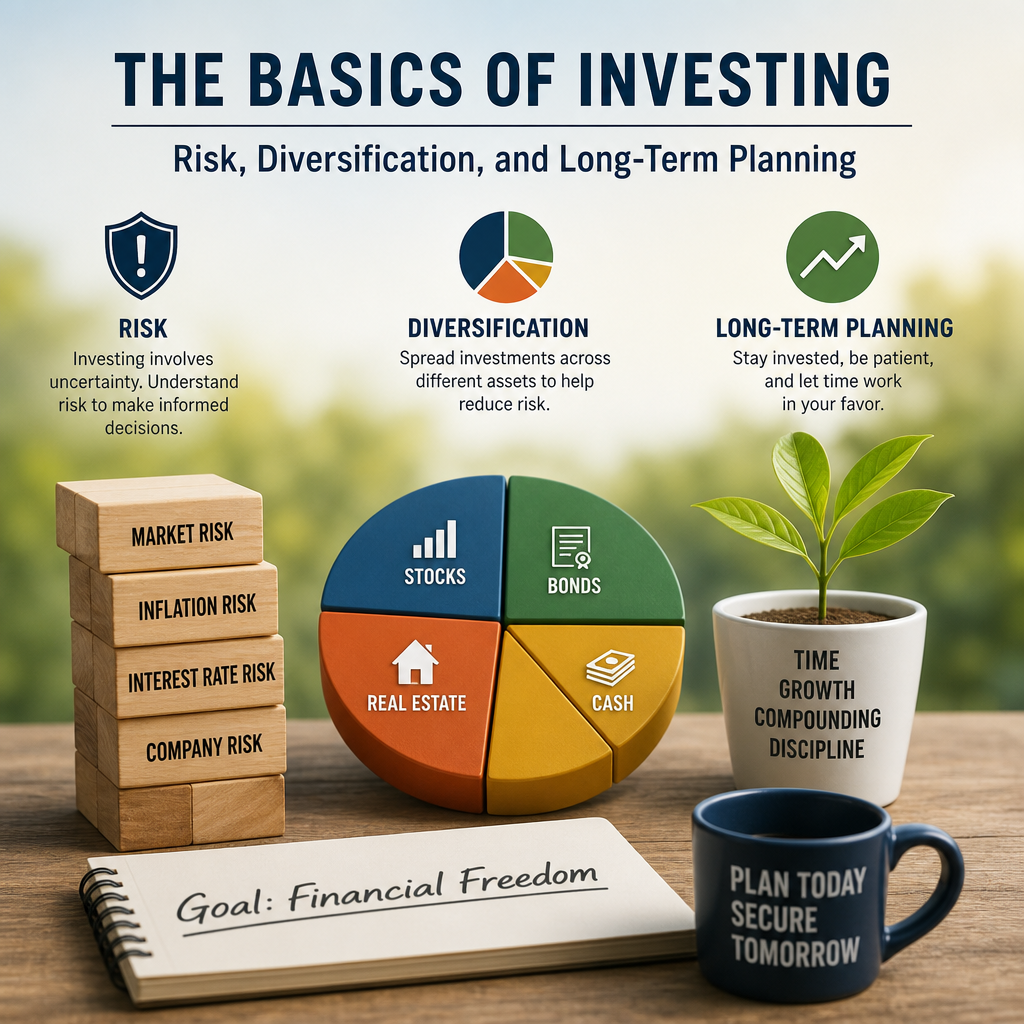
Market risk: The value of investments can rise or fall because of broader market movements.
Inflation risk: If your investments do not grow faster than inflation, your purchasing power may decline.
Interest rate risk: Rising rates can affect bond prices and other fixed-income investments.
Company-specific risk: A single business may struggle due to poor management, declining sales, or industry changes.
Liquidity risk: Some investments are harder to sell quickly without losing value.
Risk and Return Usually Go Together
A useful principle in investing is that higher potential returns often come with higher risk. For example, stocks may offer stronger long-term growth than savings accounts, but they can also be more volatile in the short term.
That does not mean you should avoid stocks. It means you should choose investments that match your goals, time horizon, and comfort with uncertainty.
How to Think About Your Risk Tolerance
Your risk tolerance is your emotional and financial ability to handle market ups and downs. Ask yourself:
How long can I leave this money invested?
Would a temporary drop in value cause me to panic?
Do I need this money soon, or is it for a goal many years away?
Am I investing for growth, income, or both?
Someone saving for retirement 30 years away can often take more risk than someone planning to buy a home in two years.
Why Diversification Matters
Diversification means spreading your money across different investments so that one poor performer does not hurt your portfolio too much. It is one of the most practical ways to manage investment risk.
Instead of putting all your money into one company, one industry, or one asset type, diversification helps you balance potential ups and downs.
A Simple Example of Diversification
Imagine you invested all your money in a single tech company. If that company performs well, you may benefit. But if it struggles, your portfolio could take a major hit.
Now imagine spreading that same money across:
Large U.S. companies
Small companies
International stocks
Bonds
Real estate funds
If one area declines, another may hold steady or grow. That balance can make your portfolio more resilient over time.
Different Ways to Diversify
You can diversify in several ways:
Across Asset Classes
This means investing in different categories, such as:
Stocks for growth
Bonds for stability and income
Cash or cash equivalents for liquidity
Across Industries
Different industries behave differently depending on the economy. For example, healthcare, technology, energy, and consumer goods do not always move in the same direction.
Across Geography
International investing can reduce reliance on the U.S. economy alone. Global exposure may add opportunity, though it also introduces currency and political risk.
Across Time
Investing consistently over time can reduce the impact of market timing. This approach, often called dollar-cost averaging, means investing a fixed amount regularly, regardless of market conditions.
Diversification Does Not Eliminate Risk
Diversification helps reduce risk, but it does not guarantee profits or prevent losses. In a major market downturn, many investments may decline at the same time. Still, diversification remains a cornerstone of sound investing because it helps avoid concentrated losses.
Long-Term Planning: The Investor’s Advantage
One of the most powerful ideas in investing is that time can be your ally. Long-term planning allows you to ride out short-term volatility and benefit from compounding, which is the process of earning returns on both your original money and your past gains.
Why Long-Term Thinking Works
Markets naturally rise and fall. Short-term movements can be noisy and unpredictable, but over longer periods, a disciplined strategy often matters more than trying to predict every market shift.
Long-term planning helps you:
Stay focused on your goals
Avoid emotional decisions
Give investments time to recover from downturns
Benefit from compounding growth
Set Clear Goals Before You Invest
Investing without a goal is like traveling without a destination. Your financial goals should shape your strategy.
Common goals include:
Retirement
Buying a home
Funding education
Building an emergency reserve
Creating passive income
Leaving a financial legacy
Each goal may require a different mix of risk, liquidity, and time horizon.
Match Investments to Your Timeline
A short timeline usually calls for more conservative investments, while a longer timeline may allow for more growth-oriented assets.
For example:
Short-term goal: A down payment in two years may require safer, more liquid options.
Long-term goal: Retirement in 25 years may support a heavier allocation to stocks.
The closer you are to needing the money, the less room you typically have to recover from market declines.
Building a Simple Investment Approach
You do not need a complicated strategy to invest well. In fact, many investors do better with a simple, consistent plan than with frequent trading or market speculation.
Start With an Emergency Fund
Before investing aggressively, make sure you have a basic emergency fund. This cash reserve can help cover unexpected expenses without forcing you to sell investments at the wrong time.
Use Low-Cost Investment Options
Fees matter. High costs can quietly reduce your returns over time. Many investors choose:
Index funds
Broad-market ETFs
Target-date funds
Low-cost mutual funds
These options often provide built-in diversification and are easy to maintain.
Automate Your Contributions
Consistency is one of the most underrated investing habits. Automatic contributions make it easier to stay on track and remove emotion from the process.
You might:
Transfer money to an investment account each payday
Increase contributions after a raise
Reinvest dividends automatically
Rebalance Periodically
Over time, some investments may grow faster than others, changing your original allocation. Rebalancing means adjusting your portfolio back to your target mix.
For example, if stocks rise sharply and become a larger share of your portfolio than planned, you may sell some stocks and buy more bonds or other assets to restore balance.
Common Beginner Mistakes to Avoid
Many new investors make similar mistakes. Knowing them ahead of time can save you stress and money.
Chasing Hot Trends
It is tempting to buy whatever is popular right now, but performance often changes quickly. Investing based on hype can lead to poor timing and unnecessary risk.
Trying to Time the Market
Even experienced professionals struggle to predict short-term market moves. Instead of guessing when to buy or sell, focus on steady, long-term investing.
Ignoring Fees and Expenses
Small fees may not seem important at first, but they can add up over time. Review expense ratios, account fees, and trading costs before you invest.
Putting All Your Money in One Place
Concentrated portfolios can be risky. Diversification helps reduce the damage if one investment underperforms.
Panic Selling During Declines
Market downturns are uncomfortable, but selling in fear often locks in losses. A long-term plan can help you stay disciplined when markets get rough.
A Practical Example: A Long-Term Beginner Portfolio
Suppose you are a new investor in your 30s with a retirement goal 25 years away. You want growth, but you also want some stability.
A simple diversified approach might include:
70% stock funds
25% bond funds
5% cash or short-term reserves
That mix may not be right for everyone, but it shows how risk and diversification work together. The stock portion provides growth potential, the bond portion adds balance, and the cash reserve offers flexibility.
As you get older or closer to your goal, you may shift gradually toward more conservative investments.
How to Stay Focused Over Time
Investing success often comes down to behavior. You do not need perfect timing; you need consistency and patience.
Helpful Habits for Long-Term Investors
Review your goals once or twice a year
Avoid checking your portfolio every day
Reinvest dividends and interest when possible
Increase contributions as your income grows
Keep your investment strategy aligned with your timeline
Use Market Volatility to Stay Disciplined
When markets swing sharply, remember that volatility is normal. Short-term declines can be unsettling, but they are part of the process. If your plan matches your goals and risk tolerance, you are more likely to stay the course.
Frequently Asked Questions
What is the safest investment for beginners?
No investment is completely risk-free, but some are generally more conservative than others. Savings accounts, certificates of deposit, and short-term government bonds are often considered lower risk than stocks. The best choice depends on your goal, time frame, and need for access to the money. For long-term goals, low-cost diversified funds may offer better growth potential, though they carry more risk.
How much money do I need to start investing?
You can often start with a small amount. Many brokers and retirement platforms allow beginners to invest with modest contributions, especially through index funds or automated investing plans. What matters most is starting early and contributing consistently, even if the amounts are small.
Why is diversification important?
Diversification helps reduce the impact of one bad investment on your overall portfolio. By spreading money across different asset classes, industries, and geographies, you lower the chance that a single setback will derail your financial plan. It is one of the simplest ways to manage risk.
How long should I stay invested?
The right time horizon depends on your goal. Money for short-term needs may require safer investments, while long-term goals like retirement often benefit from staying invested for many years. In general, the longer your time horizon, the more opportunity your investments have to grow and recover from downturns.
Should I invest when the market is down?
For long-term investors, market declines can create opportunities to buy assets at lower prices. The important thing is to invest based on your plan, not emotion. If your financial situation is stable and your goals have not changed, staying consistent during downturns can be a smart move.
Understanding the basics of investing starts with three essential ideas: risk, diversification, and long-term planning. Risk reminds you that investing always involves uncertainty, but that uncertainty can be managed through thoughtful decisions. Diversification helps protect your portfolio by spreading money across different assets instead of relying on just one. Long-term planning gives your investments time to grow, recover, and compound.
The most successful investors are not usually the ones who chase trends or react to every headline. They are the ones who set clear goals, invest consistently, and stay disciplined through both good and bad markets. If you are just getting started, keep your strategy simple, focus on low-cost diversified investments, and choose a plan that fits your timeline and comfort with risk.
Investing is a long game, and the sooner you build good habits, the more time your money has to work for you. Start with what you can do today, stay patient, and continue learning as you go.
Mary S, CFP®, is a Certified Financial Planner with over 12 years of experience in personal finance, retirement planning, and wealth management. She writes educational content that helps readers understand financial concepts and make informed decisions based on reliable information.